
Last updated November 2, 2026
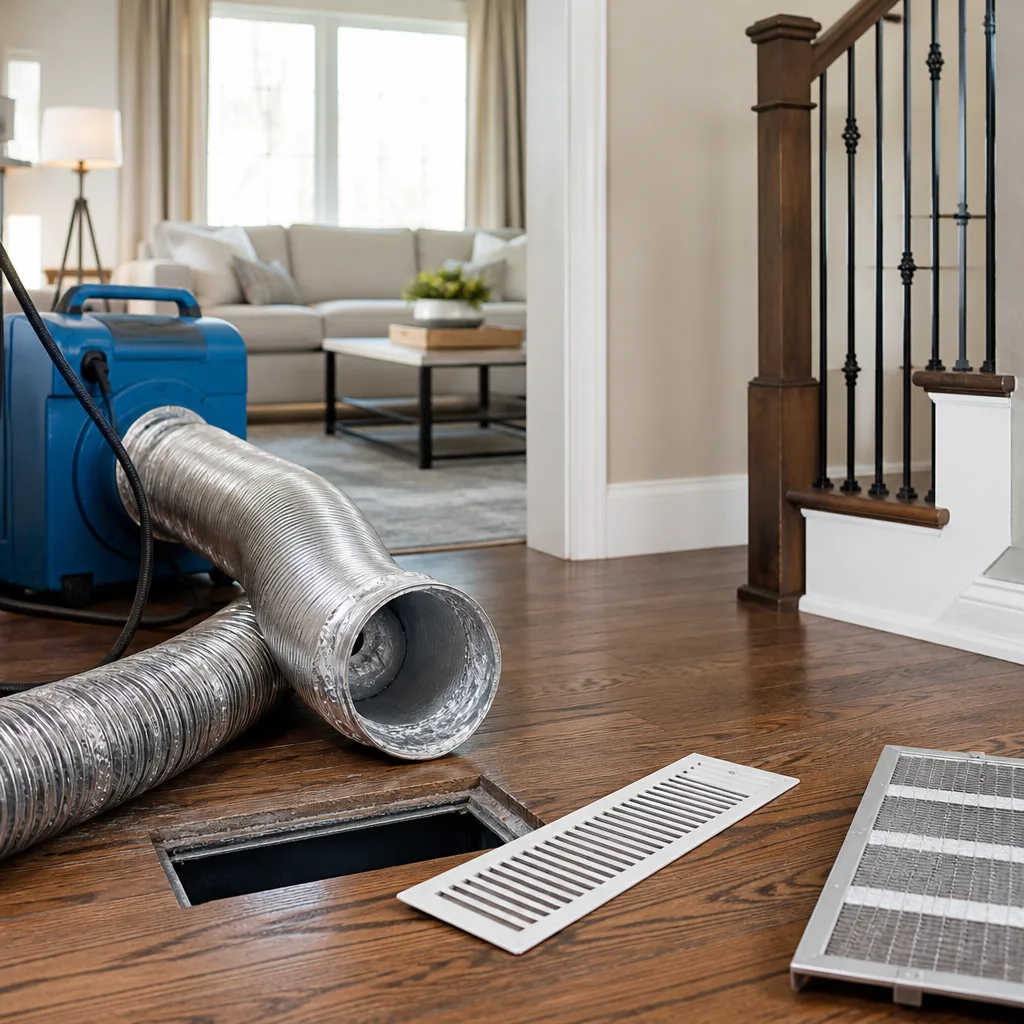 Whole-home duct cleaning
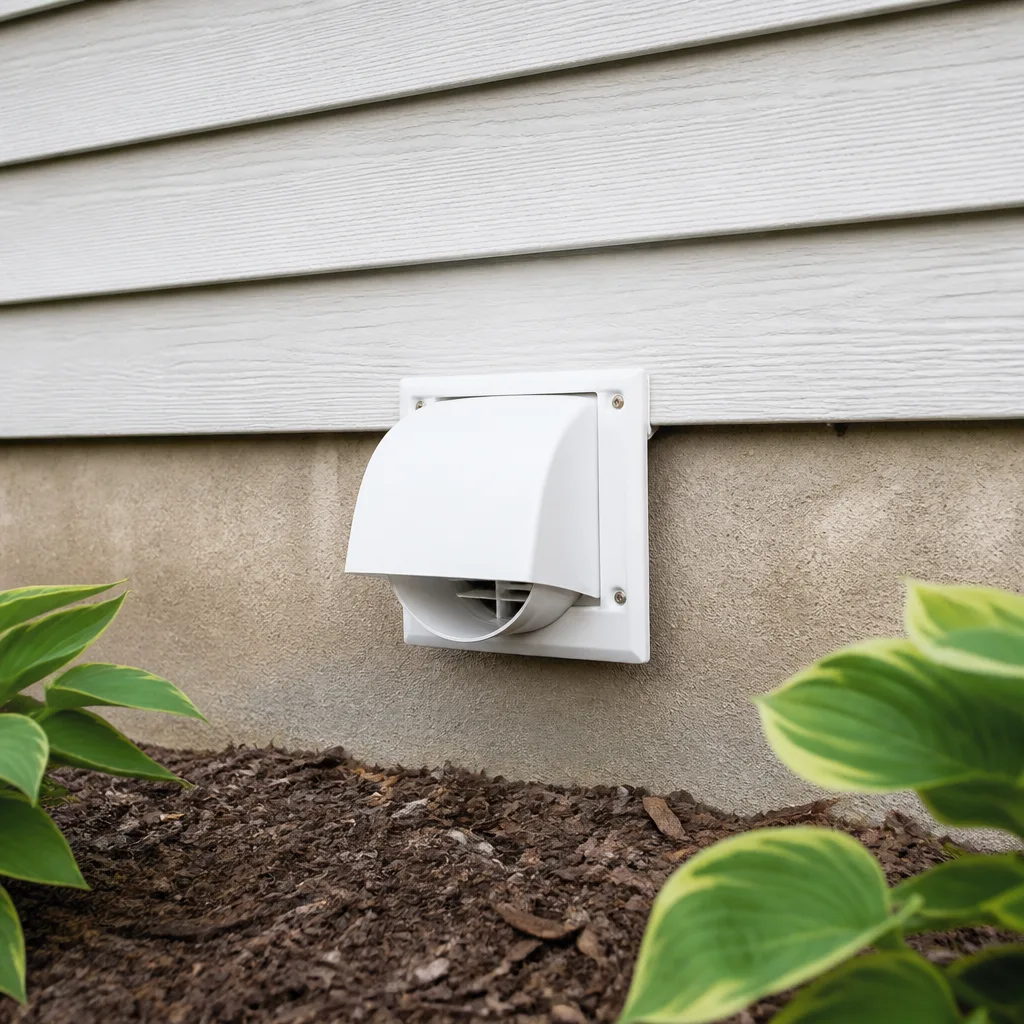 Dryer vent cleaning
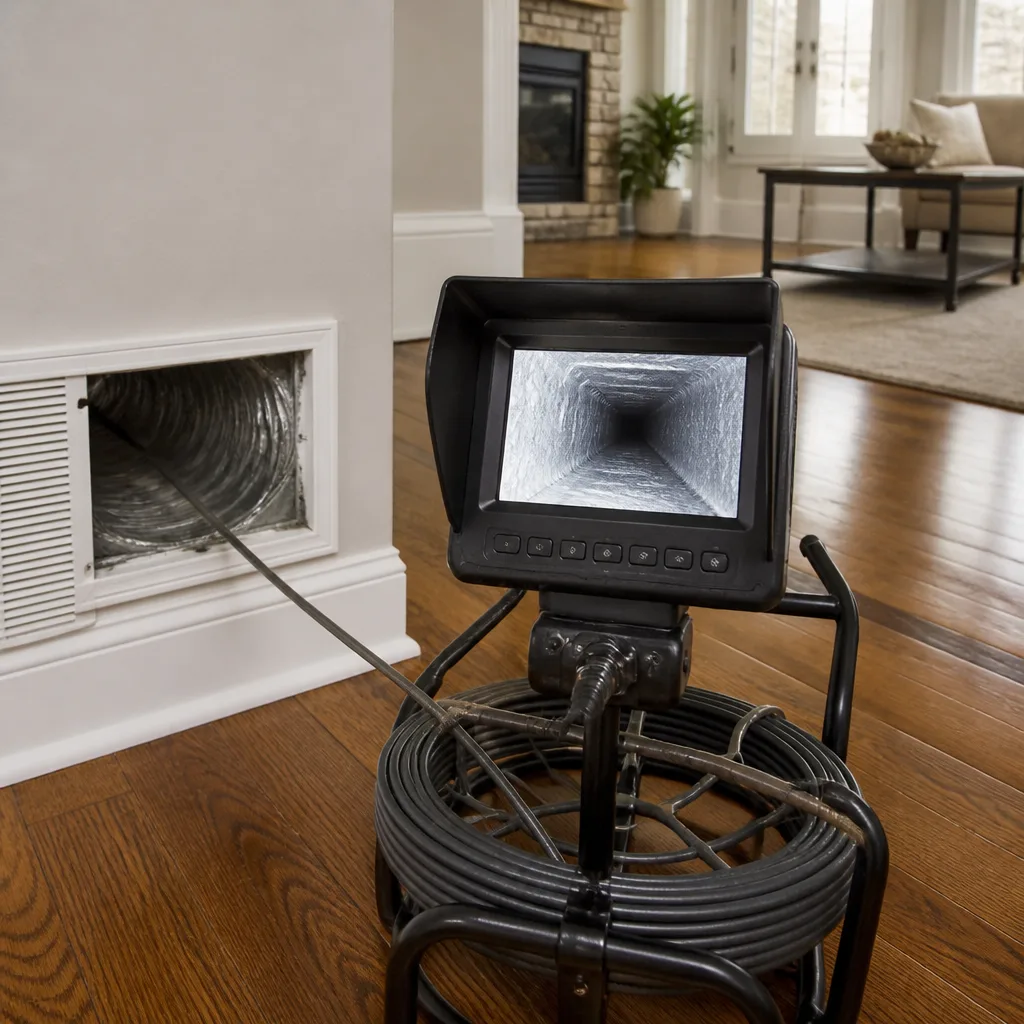 Camera inspection
 Sanitizing & deodorizing
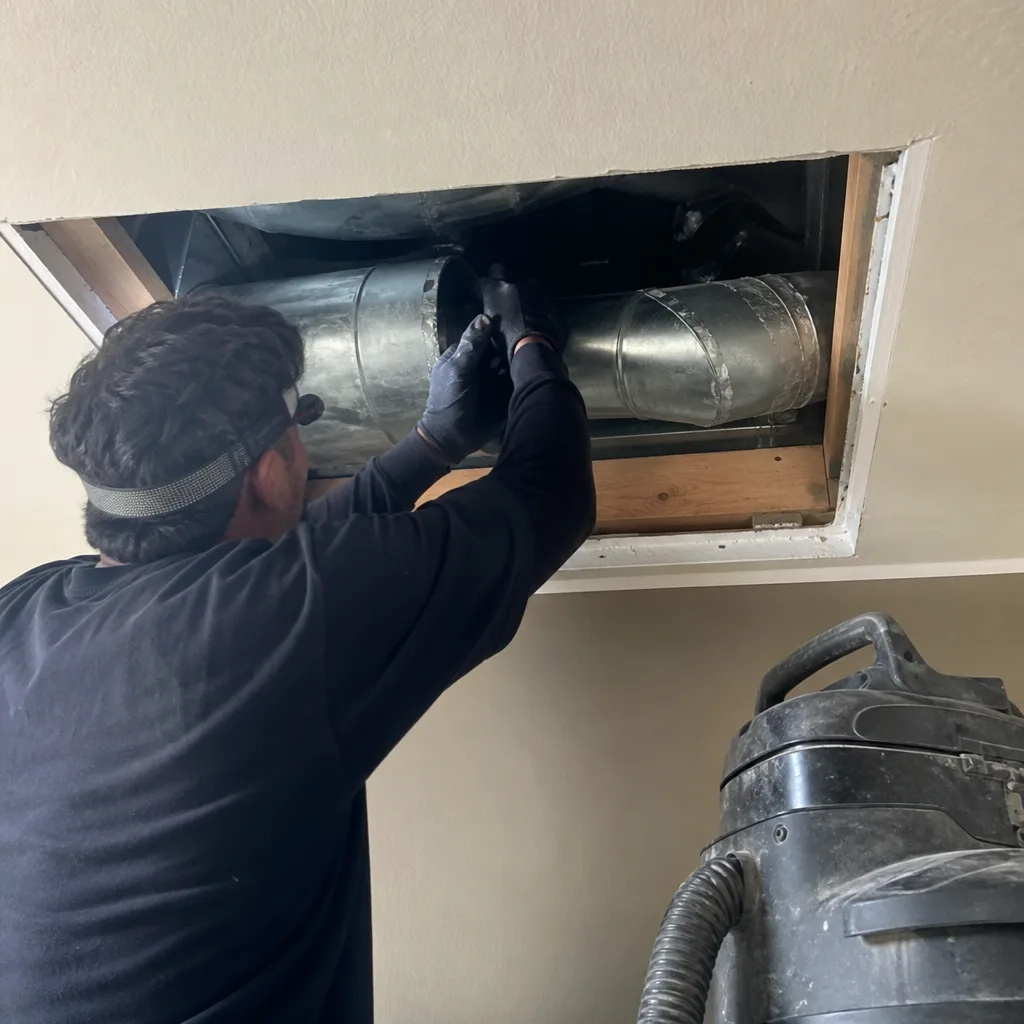
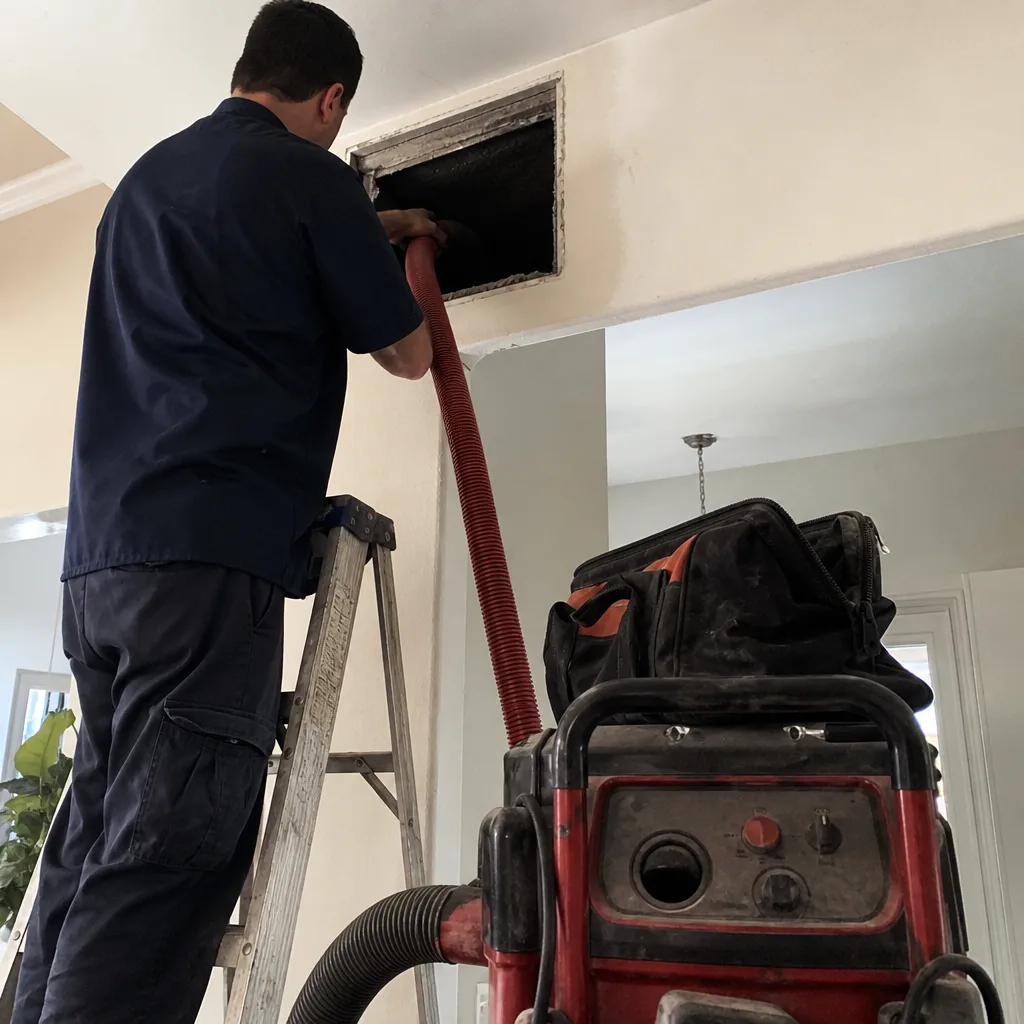
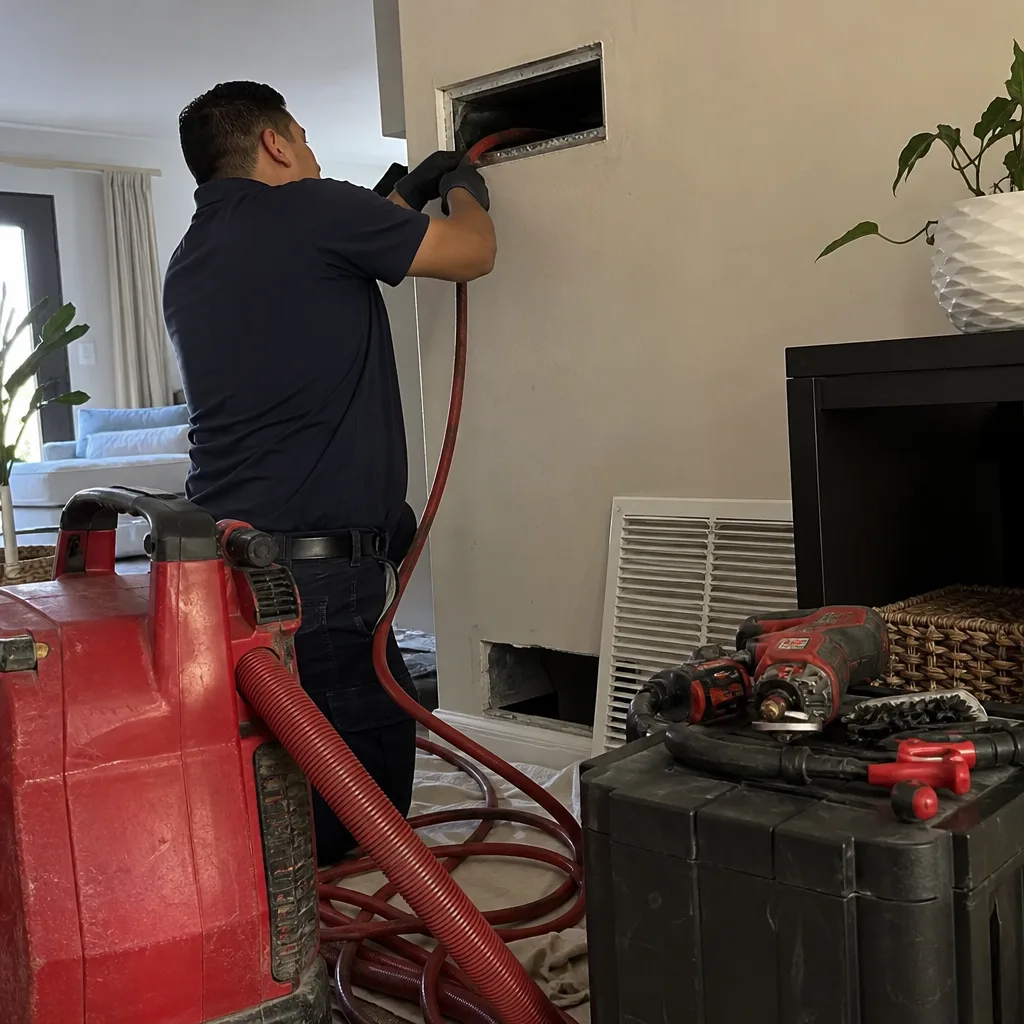
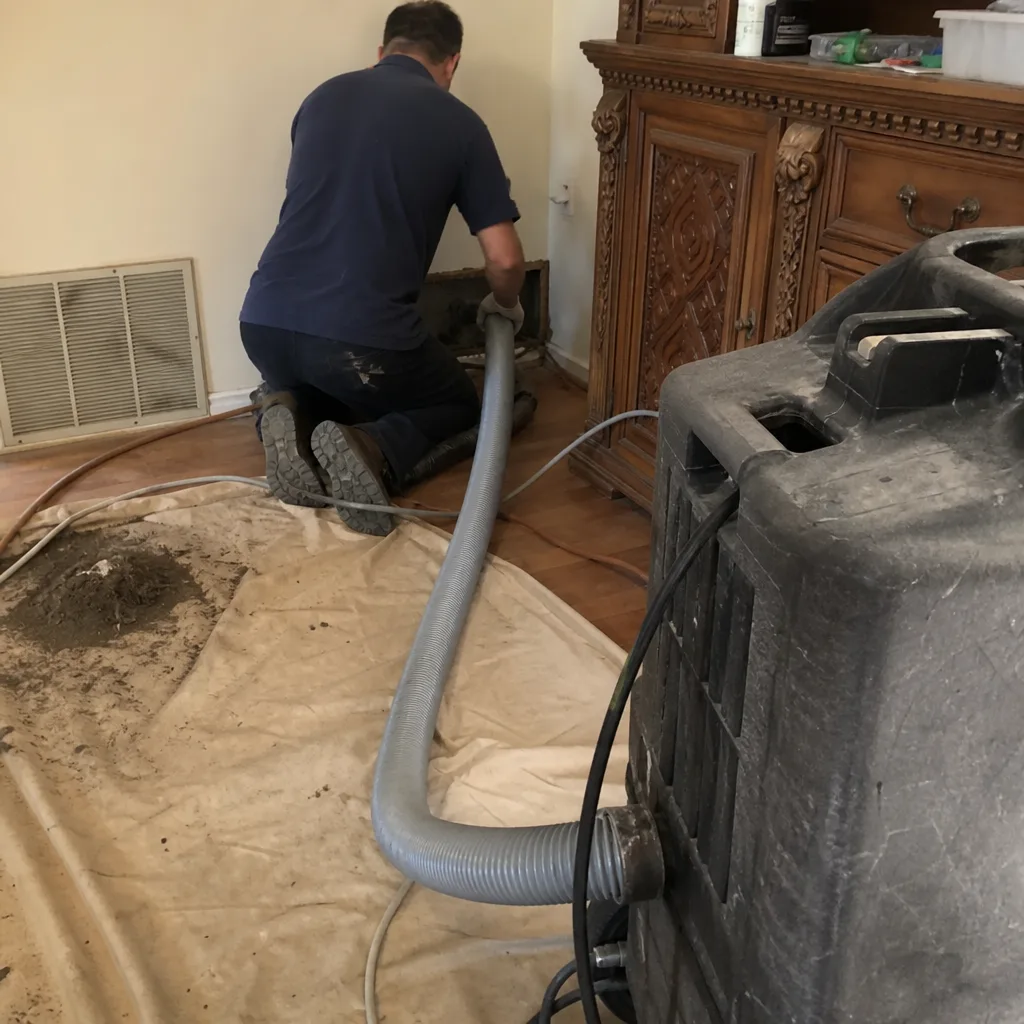
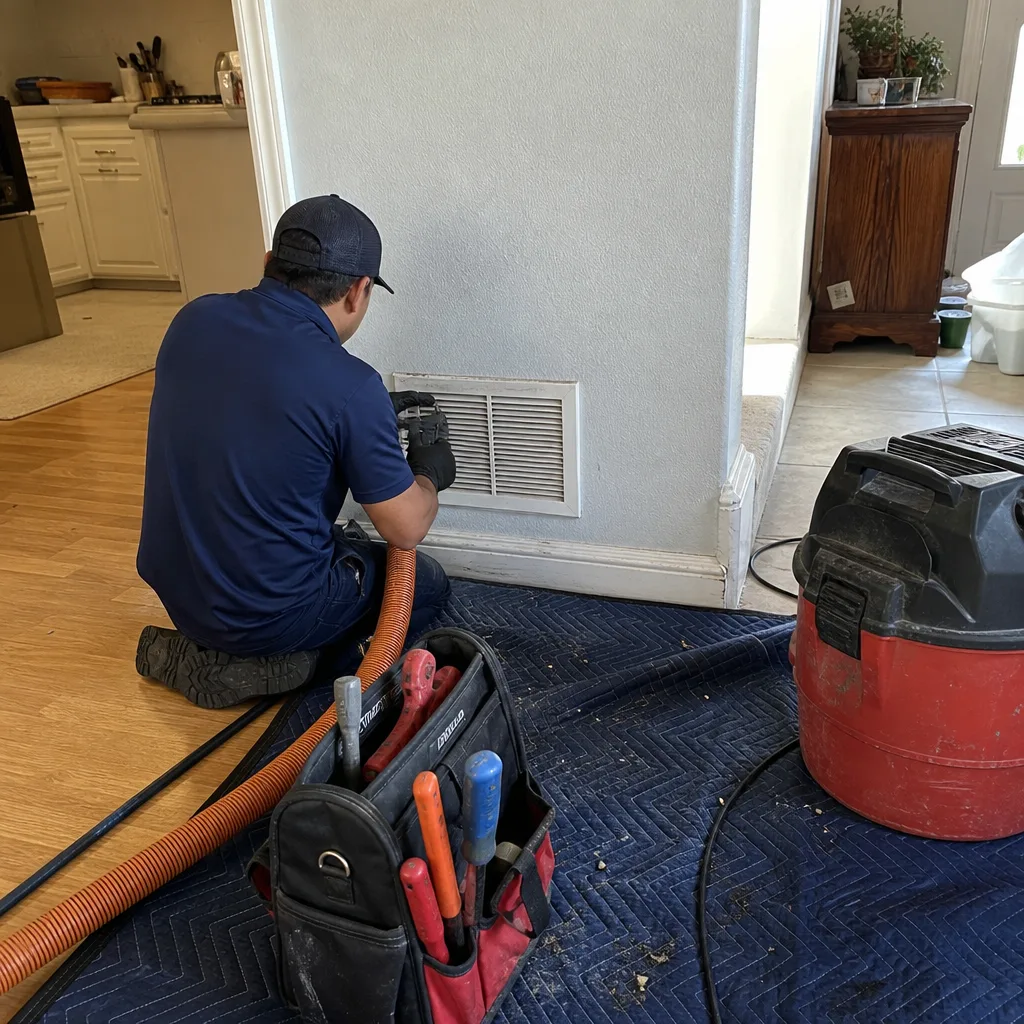
Whole-system duct and dryer vent check with before-and-after photos - you see exactly what came out of your vents
That "$99 whole-house special" is a bait ad - the real number appears once they are in your hallway, or the "clean" is a shop-vac at the register. We photograph the inside of your ducts before and after instead.
Air Duct Cleaning Permits, Codes & Inspections in CA: What You Need to Know
A duct cleaning job doesn’t need a permit. But if the technician reseals a duct connection, replaces a section of flex duct, or cuts a new access panel into your air handler, California building code says that work does. We’ve watched Tustin homeowners discover this distinction only after a cheap cleaning turned into an unpermitted modification, and it’s an expensive education. This guide walks you through exactly where the maintenance line sits under California law, what Tustin’s building department expects, and how to protect yourself before and after an Air Duct Cleaning visit.
Quick Answer
Routine air duct cleaning itself does not require a permit anywhere in California, including Tustin. However, any physical modification to the duct system, such as replacing duct sections, adding return-air runs, resizing plenums, or altering air handler access, falls under the California Mechanical Code and requires a building permit from the City of Tustin. The risk isn’t the cleaning, it’s the scope creep that some contractors perform without telling you.
Styles & brands we work with
- Whole-home duct cleaning
- Dryer vent cleaning
- Camera inspection
- Sanitizing & deodorizing
Table of Contents
- Where Maintenance Ends and Modification Begins
- What Title 24 and CMC Section 504 Actually Say
- How the City of Tustin Handles HVAC Permits
- What Your Contract Should Say Before Work Begins
- What to Do If You Discover Unpermitted Duct Work
- What an Inspector Actually Looks At
- How to Hire a Duct Company That Won’t Cross the Line
Where Maintenance Ends and Modification Begins
The California Mechanical Code (CMC) draws a line between maintaining an existing system and altering it. Maintenance keeps the system as it was designed. Modification changes what the system is. Understanding this distinction matters because a homeowner who allows unpermitted modifications becomes the party responsible for them, even if a contractor performed the work.
Here’s the practical breakdown for duct work:
- Maintenance (no permit): Cleaning duct interiors with brush-and-vacuum equipment, replacing standard air filters, sealing minor gaps at duct boots with mastic, cleaning the blower compartment, and replacing an access panel that already exists.
- Modification (permit required): Replacing a section of damaged duct with new material, adding a new return-air opening, enlarging or resizing a supply plenum, relocating a register, cutting a new access door into the air handler cabinet, or reconfiguring duct runs to serve a new room.
In Tustin, where many homes built between the 1970s and 1990s still have original flex duct systems, the line between cleaning and replacing gets blurry fast. A duct that’s 40 years old may tear when cleaned. The cleaner faces a choice: seal the tear (maintenance) or replace the section (modification). Homeowners should know which one they’re paying for before the work happens. Our team at Air Duct Repair in Tustin handles both, but we always flag where a permit applies and get it pulled before touching anything that changes the system.
What Title 24 and CMC Section 504 Actually Say
California’s Title 24 energy code and the California Mechanical Code govern duct systems in residential properties. Most homeowners never read either document, which is why the permit question causes so much confusion. Here’s the plain-language version.
CMC Section 504 covers exhaust systems and duct construction standards. The section most relevant to duct cleaning addresses duct materials, installation standards, and when duct systems may be altered or replaced. The key language: any duct system that is installed, altered, or extended requires compliance with current code and a permit. Cleaning is none of those three things. But replacing a six-foot section of torn flex duct is an alteration, which means the work must meet code and be inspected.
Title 24, Part 6 (Energy Code) adds another layer. When ducts are modified or replaced, the work must comply with current energy efficiency requirements for duct sealing and insulation. In practice, this means a replaced duct section needs to be sealed to a specific standard and inspected. A handyman with a roll of duct tape (yes, the irony) often doesn’t meet this standard, and the failed inspection lands on the homeowner.
What most homeowners in Tustin don’t realize is that Title 24 compliance isn’t a city-level option. It’s state law. If unpermitted duct modifications are discovered during a home sale, the buyer’s inspector can flag them, the lender can pause the deal, and the seller is stuck retroactively pulling permits at the worst possible time. We’ve seen this scenario play out in neighborhoods like Tustin Meadows and Columbus Square, where home turnover is steady and buyers’ inspectors are thorough; see our Air Duct Cleaning Warning Signs: A Tustin Homeowner’s Reference Guide to spot issues early.
How the City of Tustin Handles HVAC Permits
The City of Tustin Community Development Department processes mechanical permits for duct work that exceeds the maintenance threshold. Tustin is not lenient about this. The city requires permits for any duct system modification, and the process involves submitting plans or a detailed scope of work, paying the permit fee, and scheduling an inspection after the work is complete.
Here’s what the process looks like for a typical duct modification in Tustin:
- Scope identification: The contractor or homeowner documents exactly what duct work will change: the size, location, material, and connection points.
- Permit application: The City of Tustin reviews the scope and issues a mechanical permit. Fees vary by project valuation, but expect a few hundred dollars for a small duct replacement.
- Work completion: The contractor performs the work. Permitted work must comply with Title 24 duct sealing and insulation standards.
- Inspection: A Tustin building inspector visits the property to confirm the work matches the permit and meets code. The inspector typically checks duct connections, sealing, and insulation at the points where work was done.
- Final sign-off: Once the inspection passes, the permit is closed and the work is recorded. This record matters when you sell the home.
Tustin homes present specific challenges here. Many older homes in the Tustin Ranch area and the neighborhoods south of the 5 freeway have attic-mounted air handlers with tight access. A modification that requires opening the air handler cabinet to access the evaporator coil or blower often crosses into permit territory because it changes the system’s physical configuration. The city treats access modifications seriously because poorly sealed access panels degrade system efficiency, which runs against Title 24’s core purpose.
What Your Contract Should Say Before Work Begins
The most reliable protection against unpermitted scope creep is a written contract that draws the maintenance line explicitly. Without this, a homeowner has little recourse if a cleaner replaces duct sections and calls it part of the cleaning. The contract can’t erase code requirements, but it can make clear who bears responsibility if work crosses the line.
Here’s what to include in any duct cleaning contract in Tustin:
- Scope of work in plain English: The contract should state that the project is limited to cleaning existing duct surfaces using brush-and-vacuum or negative-air equipment, with no duct replacement, plenum modification, or air handler access changes included.
- Permit trigger language: A clause stating that any work requiring a permit under the California Mechanical Code will be identified in writing and priced separately, and that the permit will be pulled by a licensed contractor before that work begins.
- Repair authorization threshold: A dollar amount above which any repair recommendation requires separate written approval. Without this, a cleaner can discover damaged duct sections and replace them without your explicit consent.
- Remedy if unpermitted work occurs: Language stating that if the company performs work that required a permit without pulling one, the company pays all costs to correct the situation, including permit fees, code corrections, and inspection costs.
Some Tustin homeowners assume a contract is only for large projects. It’s not. A one-page scope agreement for a $300 cleaning is the cheapest insurance you’ll buy against a $5,000 retroactive permit problem. When we perform Air Duct Cleaning in Tustin, every job gets written scope documentation, and anything that crosses into repair or modification territory is flagged separately and quoted before work proceeds.
What to Do If You Discover Unpermitted Duct Work
Discovery usually happens one of two ways: a home inspection during a sale, or a later contractor points out that something doesn’t look right. Either way, the work doesn’t disappear, and ignoring it doesn’t make it compliant. Here’s the step-by-step path to resolution.
- Document everything: Photograph the modified duct work from multiple angles. Save any invoices, receipts, emails, or text messages from the original cleaning or repair visit. If the contractor’s company name appears on any communication, keep it.
- Get a professional assessment: Hire a licensed mechanical or HVAC contractor to evaluate the modifications and describe in writing what was done, whether it meets current code, and what corrective work is needed. This report becomes your basis for negotiation.
- File a permit retroactively: The City of Tustin allows retroactive permits. You’ll pay the permit fee plus a penalty (typically double the original fee), but retroactive permitting is widely understood as the correct path for work that’s already been done.
- Correct any code deficiencies: If the work doesn’t meet current Title 24 standards, the correction must happen before the city will close the permit. This might mean re-sealing duct connections, adding insulation, or replacing materials that don’t meet current specs.
- Schedule the inspection: Once corrections are complete, a Tustin inspector confirms compliance and the work becomes legal. Keep the final sign-off document with your home records.
If the unpermitted work happened during a prior cleaning job and the company still exists, you may have grounds to recover costs in small claims court. Most cases settle before that. The strongest evidence is a contract that says the cleaning company wouldn’t perform modification work without a permit, paired with photos showing they did. That’s why the contract section above matters.
What an Inspector Actually Looks At
Understanding what a Tustin mechanical inspector checks helps explain why permitted work adds real cost and why some contractors avoid it. Most homeowners assume an inspection is a formality. It isn’t. Mechanical inspectors in California are trained to evaluate duct work against specific code provisions, and they’ll fail work that looks wrong.
For a typical duct modification inspection, here’s what the inspector evaluates:
- Duct connections: All joints must be mechanically fastened, not just taped. Sheet metal screws or approved clamps, not friction-fit.
- Sealing standard: Duct sealant must be mastic or approved tape, not general-purpose duct tape. The seal must be continuous and airtight.
- Insulation: Supply ducts in unconditioned spaces (attics, crawl spaces) must meet current insulation R-value requirements. Replaced duct sections must not reduce the system’s overall insulation level.
- Support spacing: Flex duct must be supported at code intervals and not sag excessively. Improper support restricts airflow and fails inspection.
- Access clearance: If the air handler cabinet was modified for access, the access opening must be accessible for future service and properly sealed when closed.
Tustin’s climate adds a specific concern. Summer attic temperatures routinely exceed 130 degrees in Tustin Ranch and surrounding areas. Duct sections that aren’t properly insulated or sealed leak conditioned air into the attic, driving up cooling costs and straining the system. Inspectors in Orange County are especially attentive to attic duct work because the climate penalty for sloppy sealing is so high.
How to Hire a Duct Company That Won’t Cross the Line
Most homeowners don’t know what equipment or process separates a professional duct cleaner from a guy with a shop vac and a flyer, so check our Air Duct Cleaning Troubleshooting: Common Problems and How to Fix Them for guidance. The permit question is easier to answer when you can identify who’s actually doing the work and with what tools. Companies that invest in professional-grade equipment typically also invest in proper business practices, including pulling permits when required.
Here’s what we recommend looking for:
- Named equipment, not vague promises: Ask what specific cleaning system the company uses. If they can’t name it, walk away. Professional duct cleaning uses agitation systems paired with high-filtration vacuums: equipment like Rotobrush brush-and-vacuum systems and Nikro HEPA-rated vacuums are the contractor-grade standard. Vague answers like “powerful truck-mounted vacuum” without a brand or model usually means a generic setup.
- Filtration specifics: The difference between a good cleaning and a bad one is whether the dust removed from your ducts stays captured or gets blown back into the house. HEPA-rated filtration is the benchmark. If the company can’t describe its filtration method, assume the dust goes somewhere it shouldn’t.
- Repair capability as a signal: A company that can repair duct work in the same visit, and knows when that repair triggers a permit, is a fundamentally different operation than a cleaning-only outfit. Ask directly: “If you find a torn duct section, what happens next?” The right answer includes written scope, a separate quote, and permit discussion if required.
- Local Tustin familiarity: A company working in Tustin regularly should know that older flex duct systems in neighborhoods like Tustin Meadows present different risks than the newer rigid systems in Columbus Square or the custom homes in Lemon Heights. Local knowledge isn’t a permit substitute, but it’s a useful signal.
Our Duct Cleaning Tustin home page details the equipment lineup we run. We’ll tell you the specific machine we’re bringing before we arrive, because the right tool for your duct system isn’t a marketing phrase. It’s the difference between a cleaning that captures dust and one that rearranges it.
Common Mistakes to Avoid
- Signing an open-ended work authorization: A contract that says “perform cleaning and any necessary repairs” is a blank check for unpermitted modifications. Insist on specific scope language before anyone touches your ducts.
- Confusing a repair estimate with permission: A technician showing you a torn duct section and saying “I can fix that today” is not the same as getting a written quote and understanding whether a permit applies. Verbal conversations don’t protect you later.
- Assuming the city won’t find out: Tustin building records are permanent and searchable. The most common discovery moment is a home sale, which is the worst possible time to learn your duct modifications were unpermitted.
- Treating all duct companies as equivalent: The equipment gap in this industry is massive. A company using professional agitation and HEPA filtration systems is operating differently from one using entry-level consumer tools. That difference extends to how they handle permits.
- Skipping the written scope even for a “simple” cleaning: The smallest cleaning job can discover duct damage that leads to modification work. A written agreement drawn before anything is opened protects you from scope creep.
- Accepting “we’ll pull the permit later” as an answer: Permits are pulled before work begins, not after. If a contractor starts modifying ducts without a permit and promises to handle it later, stop the work.
- Confusing dryer vent service with duct cleaning for permit purposes: Dryer vent cleaning is its own scope with fire-safety implications, but it’s still maintenance. Dryer Vent Cleaning in Tustin doesn’t require a permit either. However, if the vent path is altered or replaced, the same modification rules apply.
See the difference
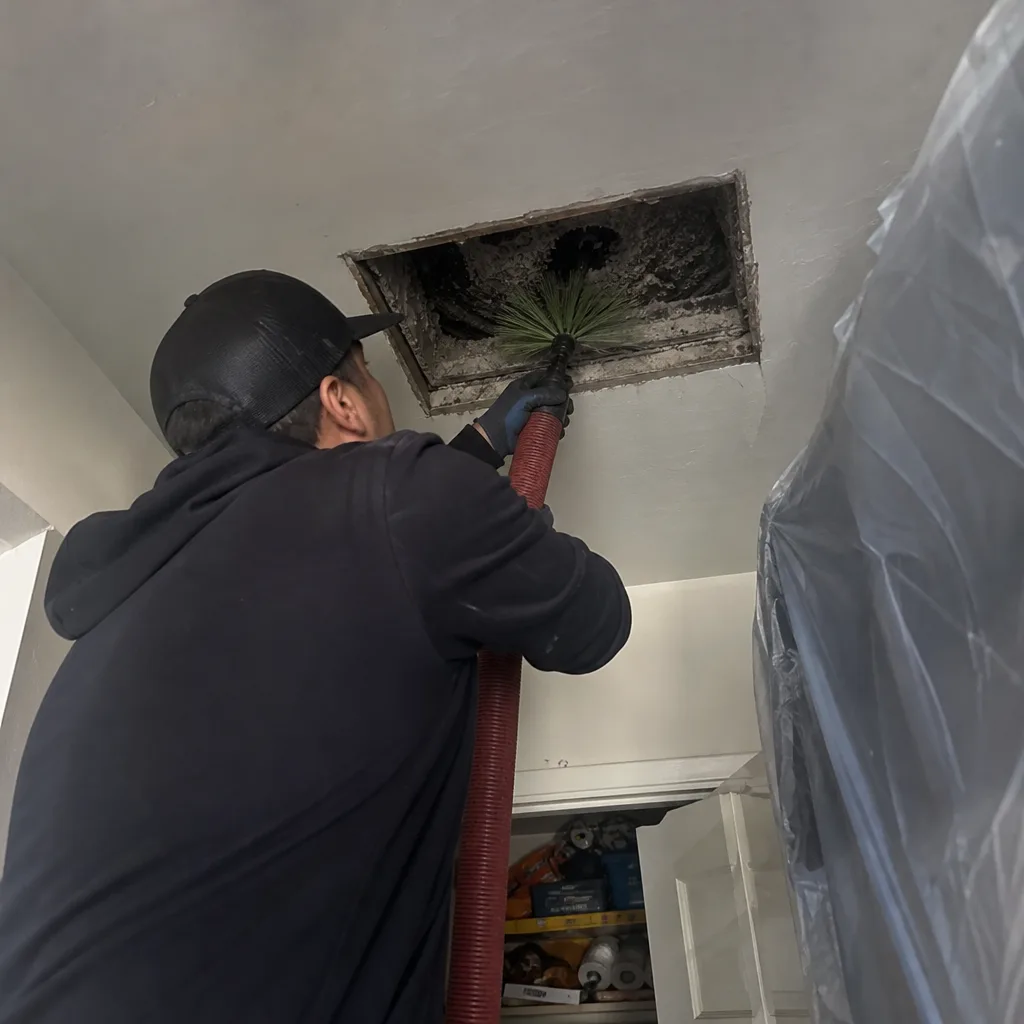 Before
 After
 Before
 After
 Before
 After
When to Call a Professional
You should bring in a professional duct specialist when you suspect past work crossed the modification line without permits, when you’re preparing to sell a Tustin home and want the duct system verified before a buyer’s inspector finds problems, or when cleaning recommendations from a previous contractor included repair work you didn’t authorize. A legitimate company will provide an honest assessment of what exists, what’s compliant, and what would need a permit to correct. Duct Cleaning Tustin offers free estimates in Tustin; call (855) 473-2840 to schedule a system review. We’ll tell you exactly what we see and exactly what needs a permit, in plain language, with no pressure.
Frequently Asked Questions
No. Routine air duct cleaning is classified as maintenance under the California Mechanical Code and does not require a permit anywhere in California, including Tustin. The work involves cleaning existing duct surfaces using brush-and-vacuum or negative-air systems, which doesn’t alter the system’s configuration. Permits become necessary only when the system is modified, which is a different scope than cleaning.
Any work that changes the duct system’s configuration triggers a mechanical permit in the City of Tustin. This includes replacing duct sections, adding return-air openings, resizing plenums, cutting new access panels into the air handler, relocating registers, or extending ducts to serve new areas. Sealing minor leaks with mastic and replacing existing access panels are maintenance and don’t require permits.
Mechanical permit fees in Tustin are based on project valuation, with small duct modifications typically falling in the $200 to $600 range for the permit itself. Retroactive permits for work already completed carry a penalty, usually doubling the base fee. The larger cost is often the correction work required to bring unpermitted modifications up to current Title 24 standards. Call (855) 473-2840 if you want an honest assessment of what your specific situation involves.
You can sell, but unpermitted duct modifications will likely surface during the buyer’s inspection and can delay or derail the transaction. Buyers’ inspectors in Orange County are trained to spot non-compliant duct work, and lenders may take issue with unpermitted mechanical work. The practical path is to retroactively permit and correct the work before listing, which removes the issue from the sale entirely.
Ask for the brand and model of their cleaning system. Professional duct cleaning companies use named, contractor-grade equipment like Rotobrush agitation systems, Nikro HEPA-rated vacuums, and Abatement Technologies filtration devices. If a company can’t name its equipment or describes it vaguely, that’s a signal they use entry-level gear. The right equipment matters because it determines whether the dust removed from your ducts stays contained or gets redistributed through your home.
Duct cleaning is maintenance and never requires a permit. Duct repair can go either way. Replacing a damaged section of duct, adding a return, or modifying access points requires a permit. Sealing a crack with mastic or reattaching a loose duct boot is maintenance and doesn’t. The distinction hinges on whether the system’s physical configuration changes. When in doubt, call (855) 473-2840 and we’ll tell you which side of the line your project sits on.
The Bottom Line
Duct cleaning in California requires no permit, period. But the moment a cleaning turns into a modification, the permit requirement activates, and Tustin homeowners who don’t recognize that moment can inherit liability for work they never understood. The protection is straightforward: a written scope agreement that defines the maintenance line, a company that respects when work crosses it, and a clear understanding of what the City of Tustin requires before duct systems change. Air duct cleaning is legitimate, useful work when done with proper equipment and honest boundaries. For more guides & resources, visit our blog. Know the difference between cleaning and modifying, and you’ll never pay for a mistake you didn’t make.
Written by the team at Duct Cleaning Tustin, serving Tustin since 2018.