
Last updated November 2, 2026
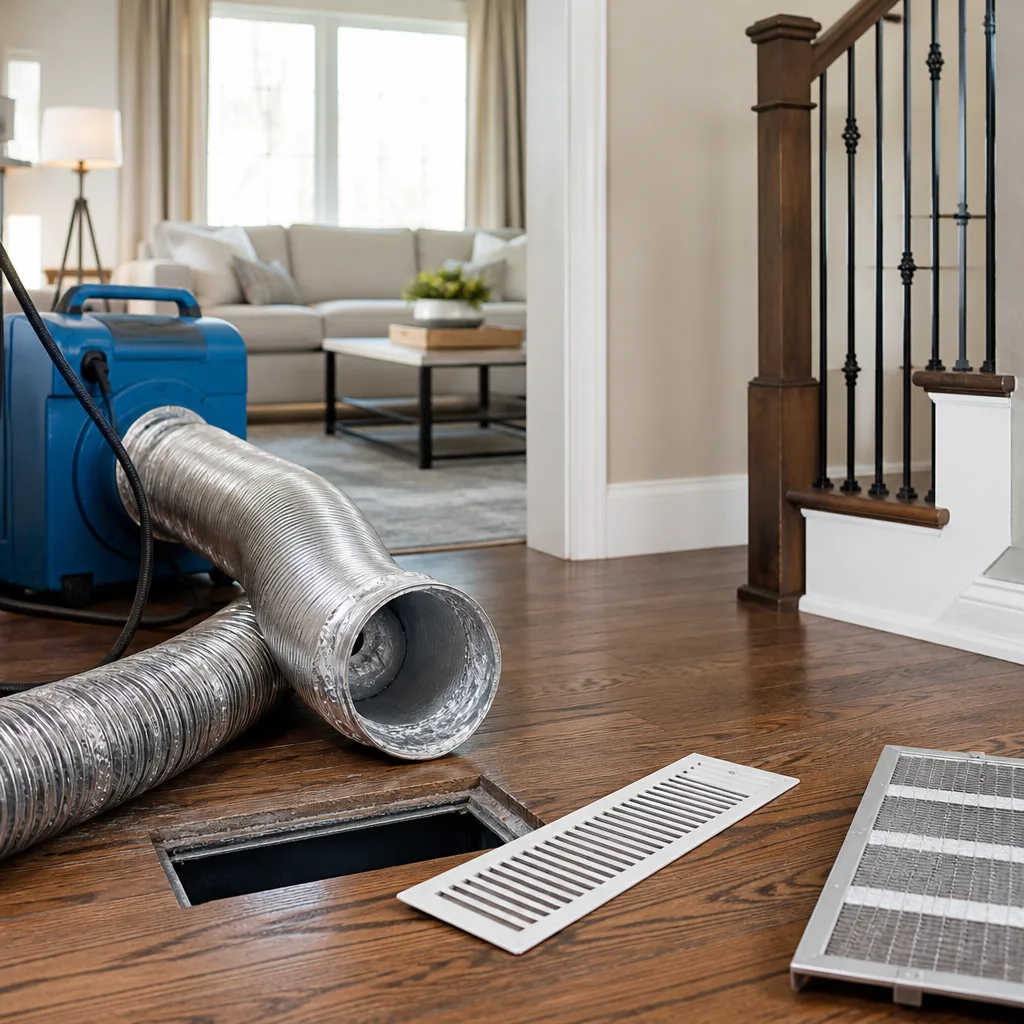 Whole-home duct cleaning
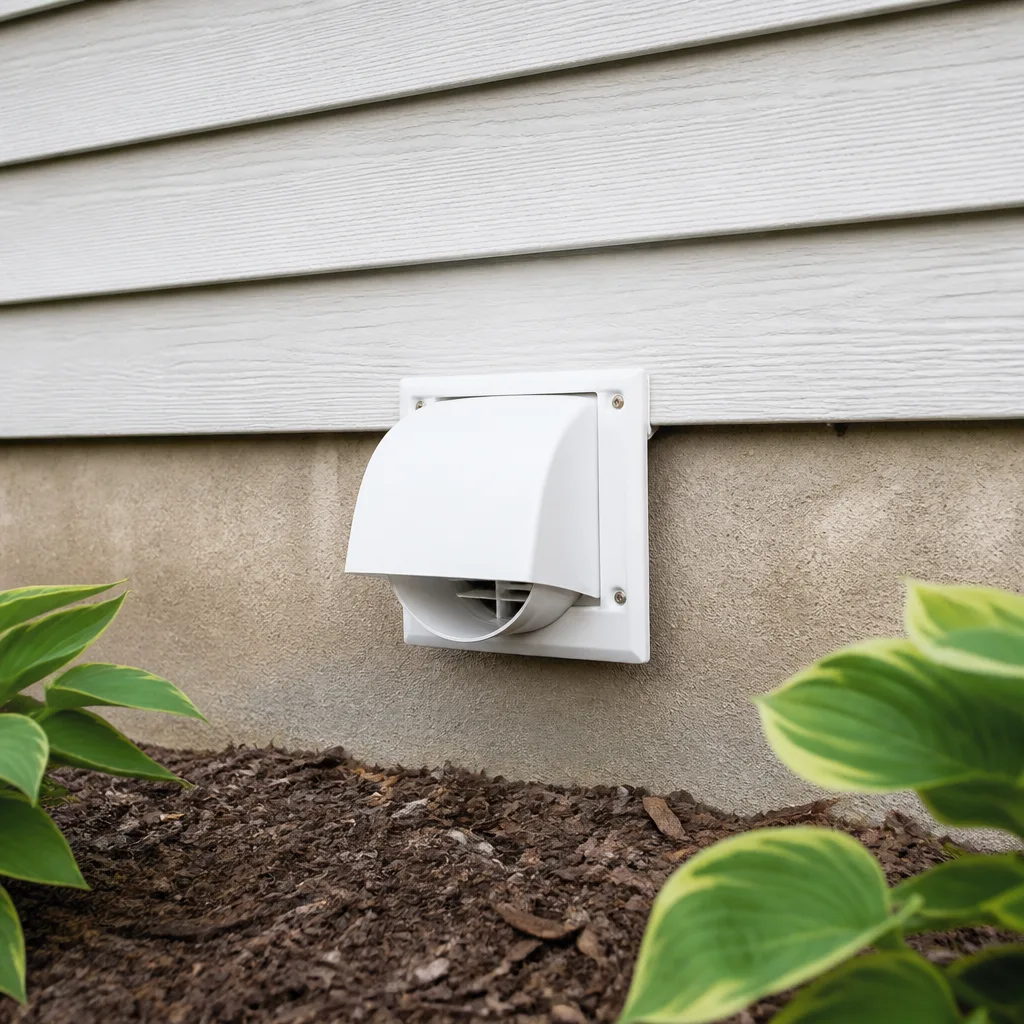 Dryer vent cleaning
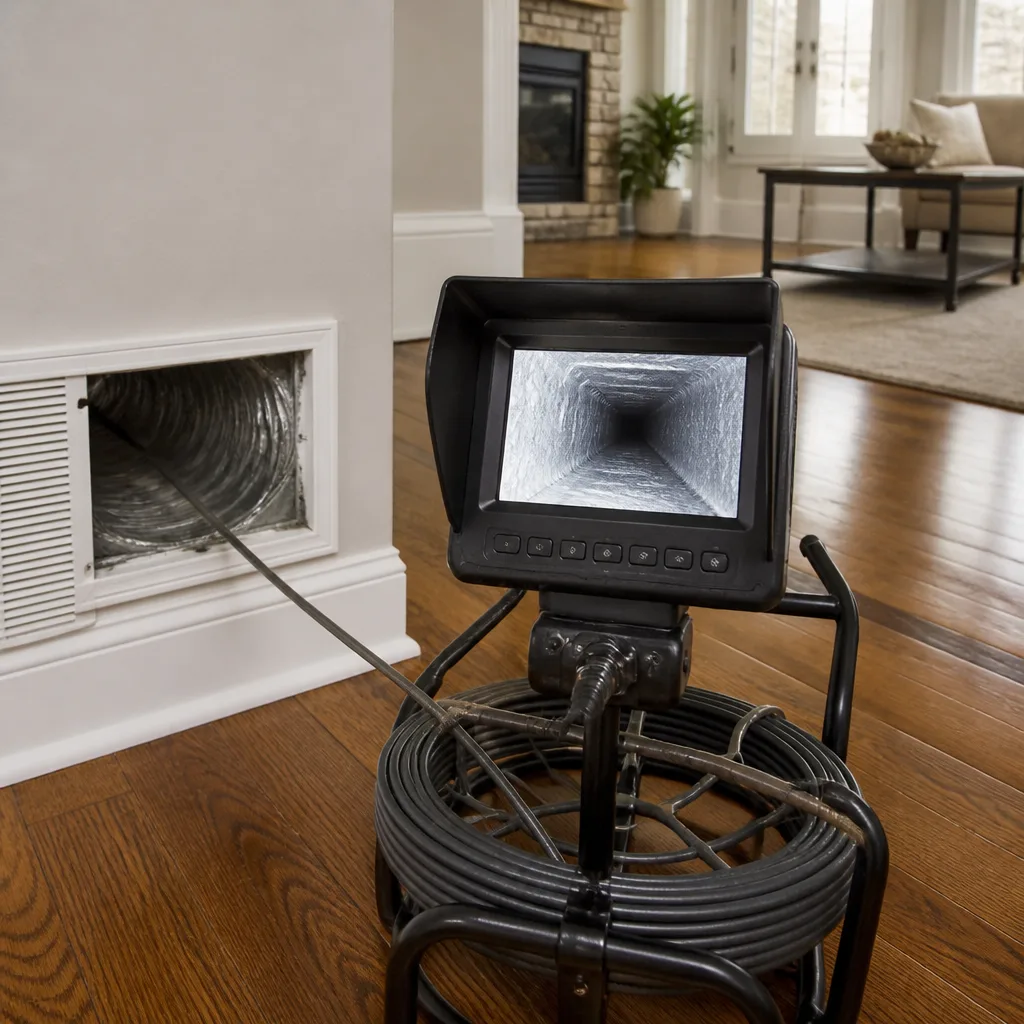 Camera inspection
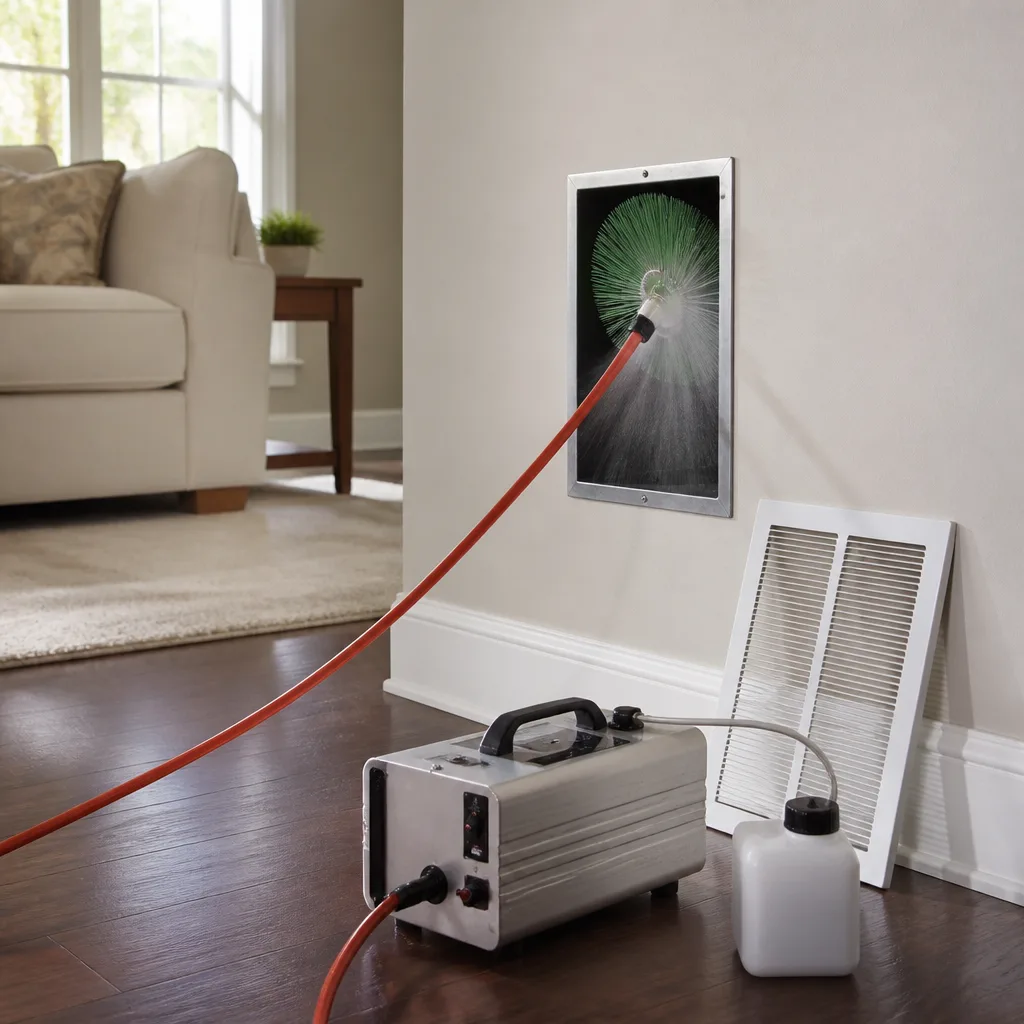 Sanitizing & deodorizing
Whole-system duct and dryer vent check with before-and-after photos - you see exactly what came out of your vents
That "$99 whole-house special" is a bait ad - the real number appears once they are in your hallway, or the "clean" is a shop-vac at the register. We photograph the inside of your ducts before and after instead.
The Complete Air Duct Cleaning Guide for Tustin Homeowners
A truck-mounted blower and a shop vac create the same amount of suction on paper. But one leaves 60% of debris behind. That gap between what Air Duct Cleaning should accomplish and what Tustin homeowners actually get is why we wrote this guide. You’ll learn what happens inside your ducts during a legitimate cleaning, step by step, so you can judge whether the company showing up at your door is doing the job or faking it.
Quick Answer
Air duct cleaning in Tustin involves a three-phase process: mechanical agitation to dislodge debris, negative-pressure containment to prevent cross-contamination, and HEPA extraction to remove particulates. A legitimate whole-home cleaning typically costs $450 to $1,000 depending on system size and contamination level, takes 3 to 6 hours, and should include a camera inspection before and after. Equipment determines outcomes, and homeowners who understand that stop getting taken advantage of.
Styles & brands we work with
- Whole-home duct cleaning
- Dryer vent cleaning
- Camera inspection
- Sanitizing & deodorizing
Table of Contents
- What Is Air Duct Cleaning, Actually?
- How Tustin Homes Accumulate Debris Differently
- The Three-Phase Cleaning Sequence, Explained
- What Rotobrush Agitation Does That Air Whips Don’t
- How Much Air Duct Cleaning Costs in Tustin
- How to Verify the Job Was Actually Done
- Red Flags Specific to the Tustin Market
- Common Mistakes to Avoid
- When to Call a Professional
- Frequently Asked Questions
What Is Air Duct Cleaning, Actually?
Air duct cleaning removes accumulated dust, debris, pet dander, and biological growth from the interior surfaces of your HVAC system: supply ducts, return ducts, registers, grilles, the blower compartment, and the air handler. The goal isn’t just suction. It’s agitation plus suction plus containment. Without all three working together, debris gets knocked loose and simply resettles elsewhere or recirculates into your living space.
A proper cleaning addresses the entire airflow path. That includes the plenum boxes where ducts connect to the furnace or air handler, the trunk lines running through your attic or crawlspace, and the branch runs feeding individual rooms. In our experience cleaning Tustin homes, the return side almost always carries more debris than the supply side because it pulls unfiltered air from the living space. Your Air Duct Cleaning in Tustin service should treat both sides with equal attention.
The difference between surface-level vacuuming and a real cleaning comes down to mechanical contact. Dust and debris that’s been sitting in a duct for five or ten years compacts under the weight of the airflow. It forms a film that sticks to the duct walls. A vacuum wand passed through the registers picks up loose dust but leaves the compacted layer behind. Dislodging that layer requires physical agitation, and that’s where equipment quality becomes the entire conversation.
How Tustin Homes Accumulate Debris Differently
Tustin sits close enough to the coast that marine air works its way inland most mornings. That moisture does something specific to ductwork: it causes dust to adhere instead of blow through. In drier inland cities like Riverside or Corona, dust tends to stay dry and granular. It falls to the bottom of duct runs and stays loose. In Tustin, the humidity from that coastal influence binds dust to duct walls, and over multiple heating and cooling seasons it layers up into a film that a simple air whip barely disrupts.
The older ranch-style homes in neighborhoods like Tustin Meadows, Laurelwood, and Broadway in the north of Tustin were built with duct layouts that compound this. Those systems often have long, low-clearance runs through crawlspaces and attics where access is tight. Duct runs take more turns, and debris accumulates at every elbow. The newer developments near the Tustin Legacy land and around the old Marine base tend to have straighter layouts, but many were built during the 2000s construction boom, which means flex duct with shallow interior ridges that dust catches on.
We also see renovation debris more often in Tustin than in surrounding cities. The constant remodeling of the mid-century housing stock near Old Town Tustin and the newer infill projects sends drywall dust, sawdust, and construction particulate into ductwork. If you bought a flipped home or remodeled before moving in, your ducts likely carry material from that job. Cleaning before you live with it is far easier than cleaning around it later.
The Three-Phase Cleaning Sequence, Explained
Every legitimate air duct cleaning follows the same underlying sequence. Skip a phase and the debris relocates instead of leaving. Here’s what happens inside a Tustin home, in order.
Phase 1: Mechanical Agitation
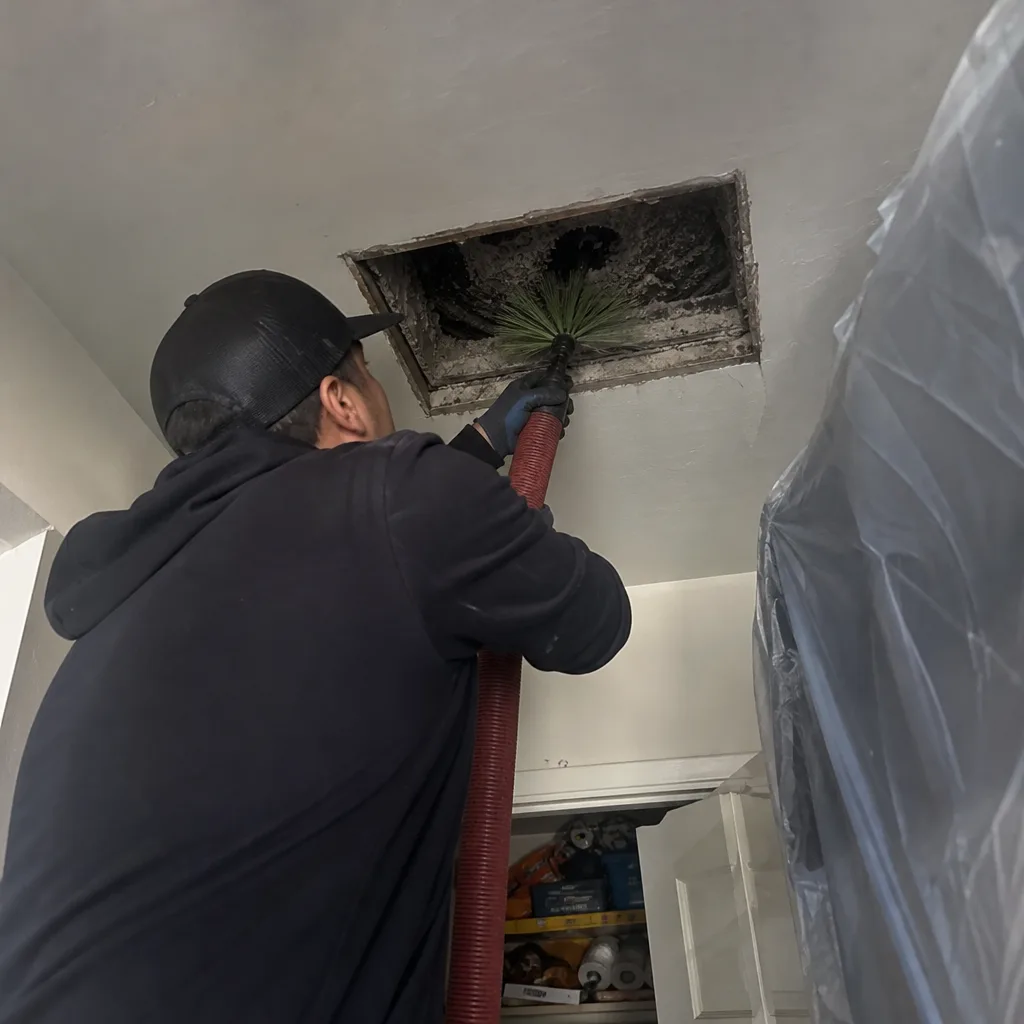
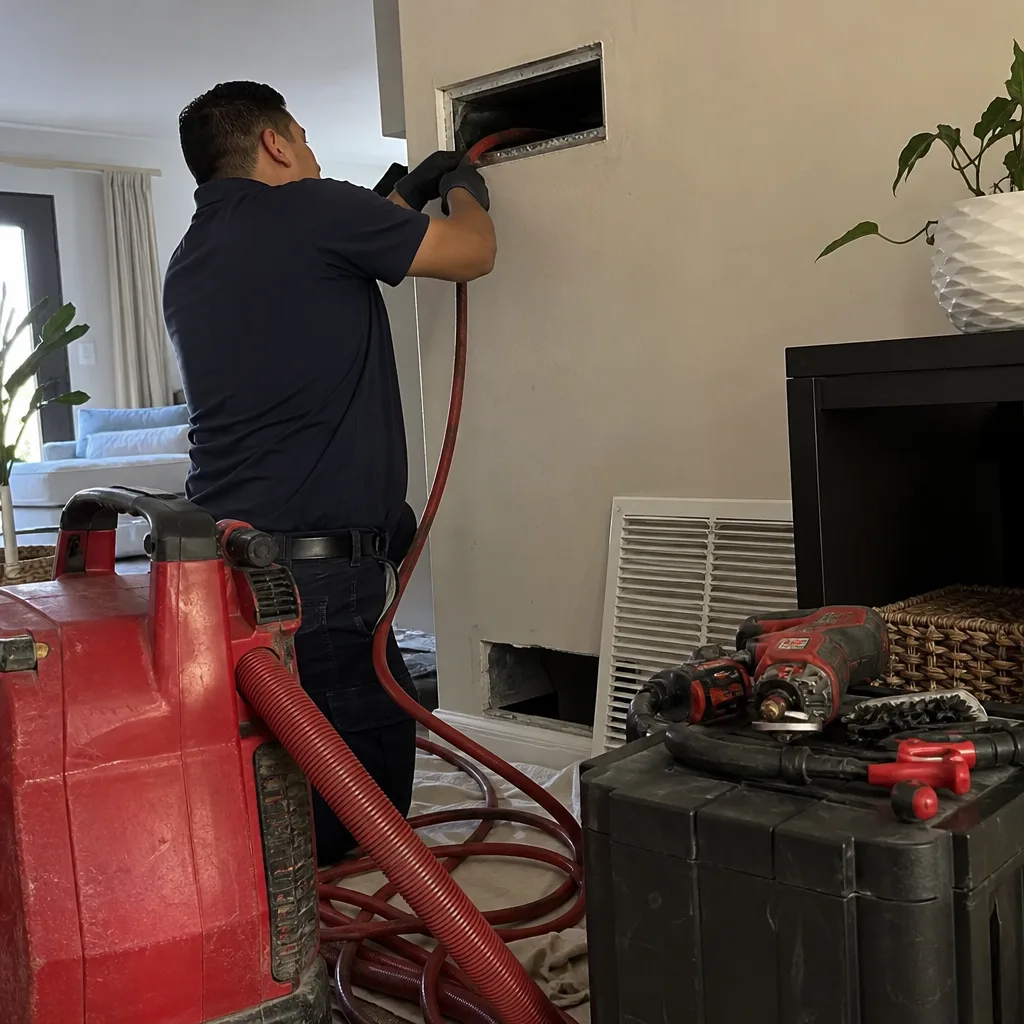
The technician inserts a rotating brush system into the duct run and physically scrubs the interior walls. This is the step that breaks the adhesion between dust and duct surface. The brush head spins while moving through the run, dislodging compacted layers, tearing at biofilm, and pushing debris toward the vacuum intake. A professional-grade rotary brush, like the Rotobrush systems we use, maintains contact with all four duct walls while rotating. That’s the critical distinction: an air whip that flaps around inside the duct makes noise and moves loose dust, but it doesn’t effectively scrub the surface where the problem lives.
Phase 2: Negative-Pressure Containment
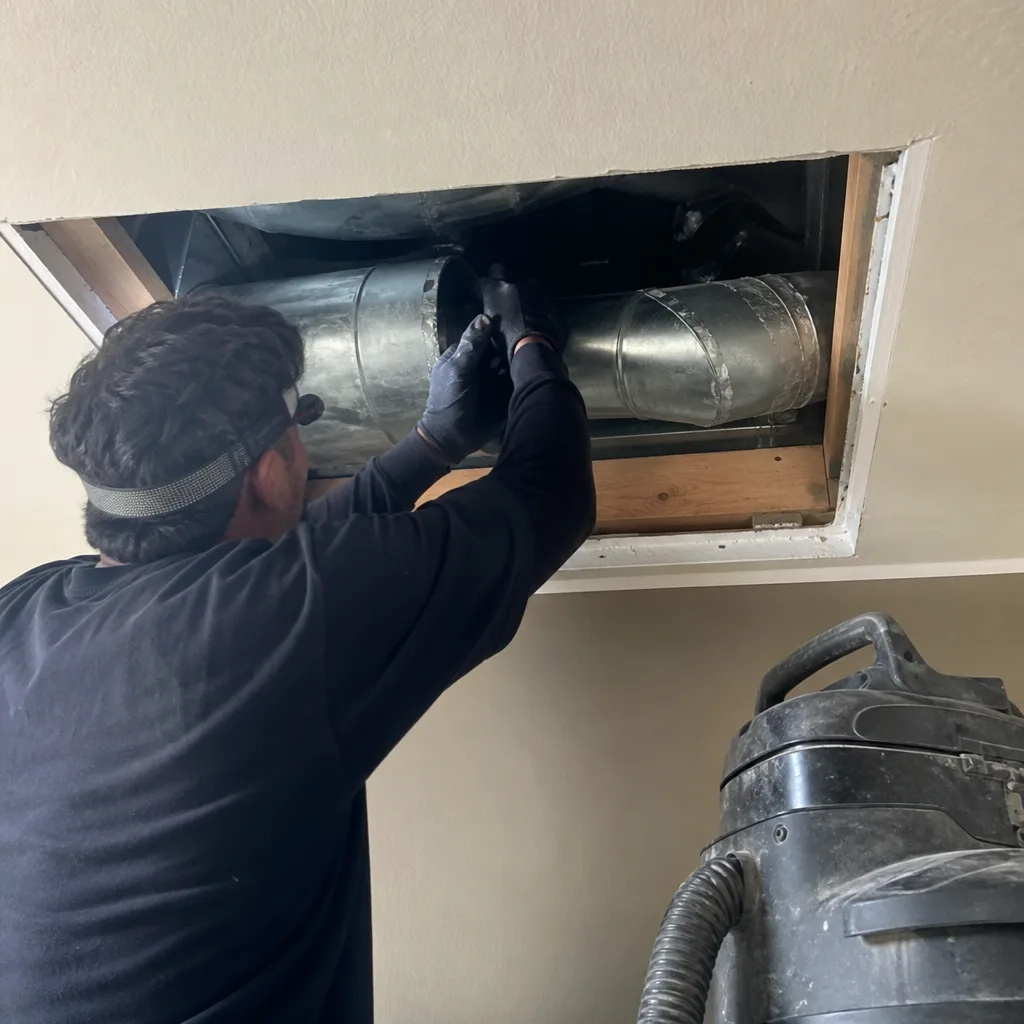
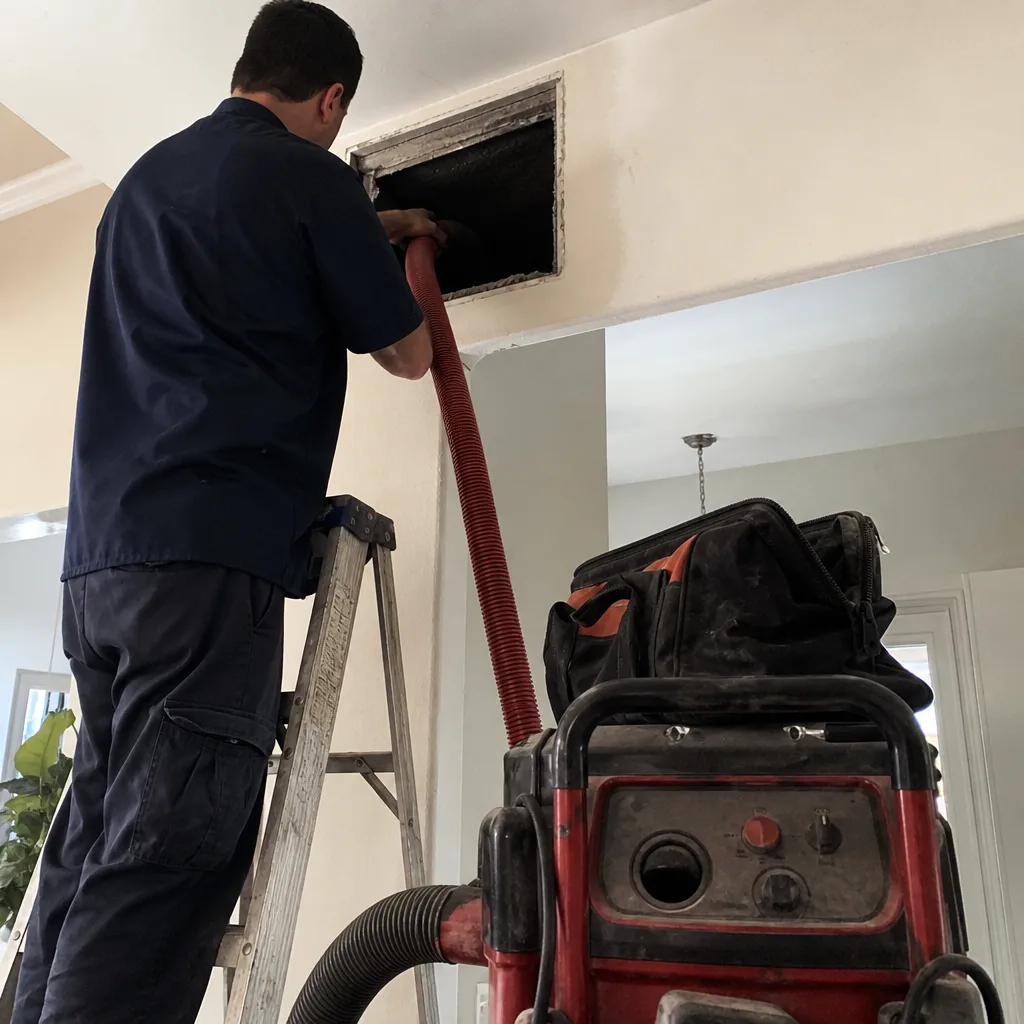
While the brush is working, a high-powered vacuum creates negative pressure inside the duct system. This isn’t the negative pressure of a shop vac at a register. A proper setup connects a heavy-duty vacuum unit to the main trunk line through the supply plenum or return drop. The vacuum pulls the entire duct run into negative pressure, which means any dust knocked loose during agitation gets pulled into the vacuum stream rather than leaking out of the seams, the boot connections, or the registers into your living room. At our company, we run Nikro HEPA-rated vacuum systems for this phase. The Abatement Technologies containment equipment we carry manages the airflow around the work area itself, keeping dislodged particulates from spreading through the home during the cleaning.
Phase 3: HEPA Extraction
The final pass removes the fine particulate that agitation knocked loose but that suspended in the air inside the duct. A HEPA-rated extraction unit filters down to 0.3 microns, capturing what a standard vacuum would recirculate. This is the phase that separates a restoration-quality job from a cosmetic one. If the vacuum on the truck isn’t HEPA-rated, the fine dust simply gets blown back through your system or out the vacuum exhaust. You’re paying for the dust to move, not to leave.
This sequence works whether the technician uses a rotary brush or a compressed air system. The point is that all three phases must happen, and the equipment quality in each phase determines what stays behind. If you’re researching services, ask which brand of agitation equipment and which brand of vacuum they run. A contractor who hesitates to name the equipment is telling you something about the equipment.
What Rotobrush Agitation Does That Air Whips Don’t
Compressed air whips are cheaper to run, which is why the lower-end operators in Orange County rely on them. The whip is a length of rubber or polymer line attached to an air compressor. It flails inside the duct and knocks loose dust. It does move dust. It does not scrub. The distinction matters because of how debris actually behaves inside a duct under real-world conditions.
In a Tustin home with coastal humidity, dust compacts into a semi-adhered film along the bottom of the duct and at the seams where the metal or flex sections join. A whip striking that film at speed breaks off the surface layer but leaves the lower, more compacted layer in place. The result is a cleaning that looks visually acceptable on the first few feet of the register boot but leaves measurable material in the trunk line. A rotary brush system, like the Rotobrush equipment our technicians run, uses rotating bristle contact against the duct surface. The brush head travels the entire run, scrubbing every wall, not just where the whip happens to land.
Rotobrush also handles biological growth differently. When biofilm forms on duct walls due to moisture exposure, it adheres more tightly than ordinary dust. The rotary brush disrupts that film mechanically, allowing the vacuum to remove it rather than polishing it in place. Add to this the advantage of a sealed, HEPA-filtered vacuum pulling the loosened material out of the duct as the brush works, and the comparison stops being close. Air whips are the duct-cleaning equivalent of dusting a room with a leaf blower. They move material around. The right tool removes it.
At Duct Cleaning Tustin home, we run Rotobrush agitation systems paired with Nikro HEPA vacuums. We carry Abatement Technologies air filtration devices for managing air quality during the job. We also supply and service Aprilaire filtration and humidity-control products, which means we can diagnose airflow problems beyond cleaning and offer equipment-based solutions where they fit.
How Much Air Duct Cleaning Costs in Tustin
Tustin homeowners should budget $450 to $1,000 for a legitimate whole-home air duct cleaning. That range covers a typical 1,500 to 2,800 square foot single-family home with one HVAC system, based on what we see across the Tustin market. Homes with multiple systems, extensive contamination, significant renovation debris, or inaccessible duct layouts can trend higher.
Here’s the honest breakdown of what drives that number.
- System size and number of vents: More registers and longer runs mean more time. A three-bedroom ranch home in Tustin Meadows has fewer vents than a five-bedroom build near the Tustin Legacy.
- Access difficulty: If your furnace is in a crawlspace or your duct runs are in tight attic spaces, the job takes longer. Some mid-century Tustin homes have unusually constrained mechanical access.
- Contamination level: Light dust is straightforward. Thick dust, pet hair embedded in return ducts, construction debris, or biological growth changes the time and equipment required.
- Equipment quality: This is the part most pricing guides won’t tell you. A $99 “special” covers the time it takes to push a small vacuum wand into a few registers. It does not cover rotary brush agitation, HEPA extraction, or containment. A company running Rotobrush and Nikro equipment has real operating costs, and the price reflects it.
- Additional services: Some Tustin homes need dryer vent cleaning in the same visit, which carries separate pricing. Duct repair, like sealing a separated boot or patching a rusted section, is billed as additional work. We offer Air Duct Repair in Tustin as a standalone capability, which is less common in this market and can save a second service call.
One flat price per system agreed before work starts. That’s how a legitimate company operates, and it’s how we run our estimates for Tustin customers. If a company quotes per-vent pricing or offers a low teaser rate, you’re likely looking at a bait-and-switch scenario. Call us at (855) 473-2840 for an honest whole-system number.
How to Verify the Job Was Actually Done
You hired the company. You paid for a cleaning. How do you know the ducts are actually clean before the van pulls away? The answer is in your phone camera and a few minutes of observation.
- Ask for a pre-cleaning camera scope. Any legitimate company runs a camera through the ducts before starting. You should see the debris in the ducts on a screen. If the technician doesn’t show you a before image, ask for one. If they refuse, stop the job.
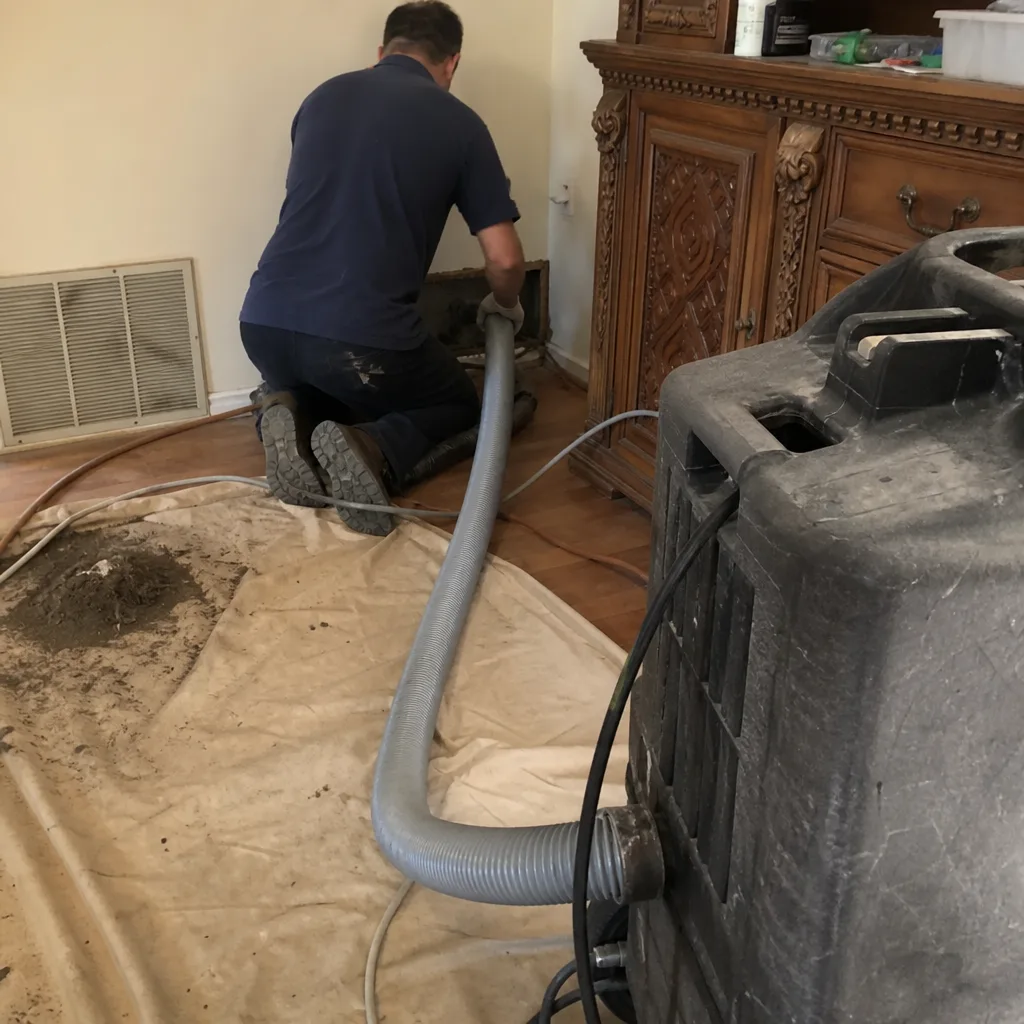
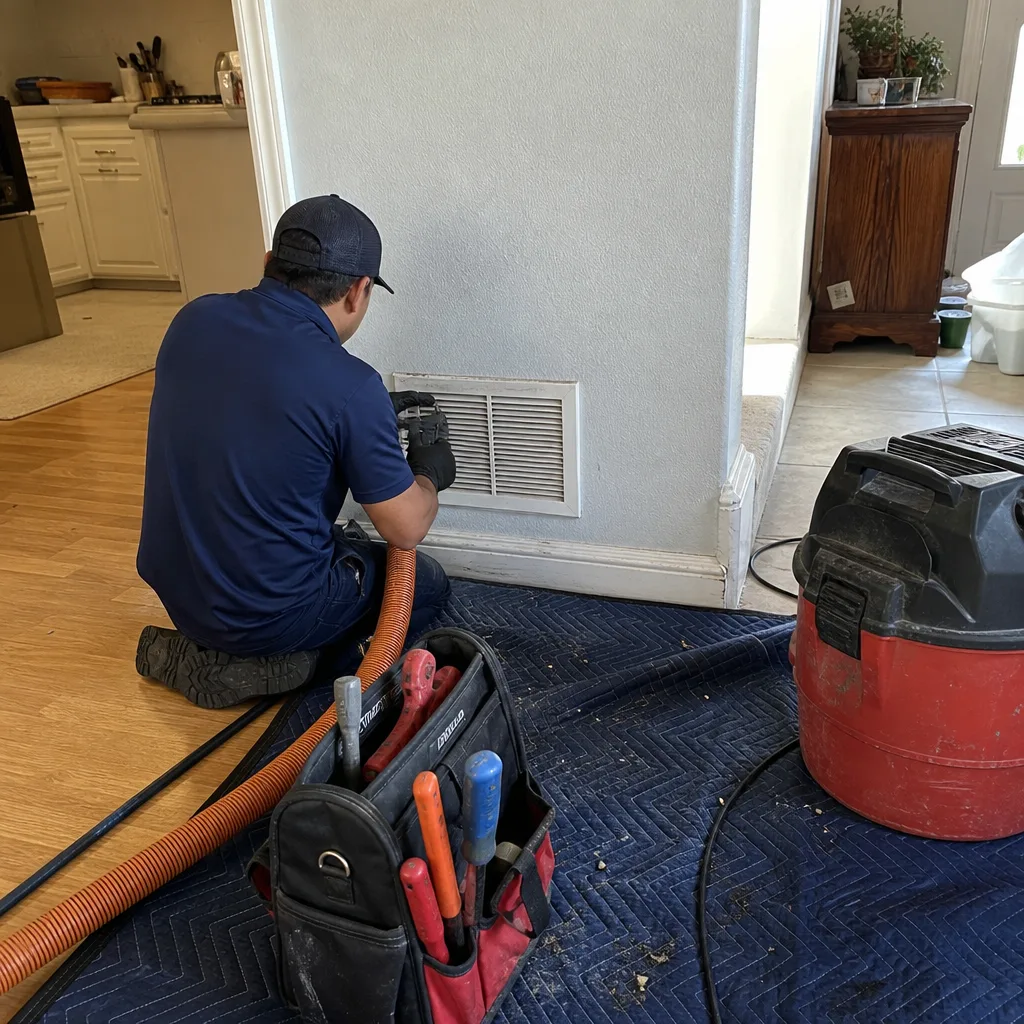
- Watch the setup. A proper job connects a large vacuum unit to the main trunk, not a small hose at the register. You should see the rotary brush entering the duct and you should hear it working. A technician who only runs a vacuum wand from the register is not agitating, and the cleaning will be superficial.
- Ask for a post-cleaning scope. After the job, the camera should go back in. You should see clean metal or clean flex duct on the screen. This is your proof. Compare it to the before footage. If the difference isn’t obvious, ask why.
- Check the register boots. Wait until the technician leaves and remove a register cover in the room farthest from the furnace. Run your finger along the inside of the boot. It should come back clean. A dusty boot after a “cleaning” means the vacuum never reached that end of the run.
- Check your filter. A legitimate negative-pressure cleaning will have moved significant material through the vacuum. The filter on your furnace should look cleaner than it did before, not more loaded.
In our experience cleaning Tustin homes, the customers who ask for before and after scopes are the ones who are happiest with the result. It’s not that the camera proves a job was done well. It proves the company expected to show you the result, which changes how the technician works from the first minute.
Red Flags Specific to the Tustin Market
The Orange County duct cleaning market has a particular shape, and Tustin sits in the middle of it. Door-knocker crews work the neighborhoods between the 5 and the 55, offering $99 specials with no company name on the flyer and no local address. We hear about these regularly from homeowners who call us after the fact. Here are the specific patterns to watch for.
- The $99 door-knocker special: This is the classic Tustin bait. The price covers a “basic cleaning” that amounts to running a vacuum wand through a few supply registers. Once the technician is in the home, the upsell begins: “Your ducts need microbial treatment, that’s $600 more.” The original price was never real.
- Non-HEPA vacuums: If the vacuum unit sits on the truck and exhausts into the air without HEPA filtration, it’s recirculating the dust you paid to remove. In Tustin’s climate, where dust adheres and recirculates more readily than inland, this detail matters more than it would in a drier city.
- No pre-inspection camera scope: A company that won’t show you the inside of your ducts before starting has no intention of showing you the result after. The camera is the accountability tool. Its absence is a choice.
- Fly-by-night branding: Look for a local Tustin address, a named equipment line, and a phone number answered by a person. Companies that operate from a truck with a magnetic sign and a Google Voice number are structured for volume, not results.
- No mention of containment: A legitimate contractor manages dust during the job, not just in the ducts. If the technician doesn’t discuss how they’ll prevent dislodged material from entering your living space, they haven’t planned for it. Abatement Technologies containment equipment is our standard because the alternative is dust settling on your furniture.
Common Mistakes to Avoid
- Hiring based on price alone. The cheapest quote is almost always the most expensive outcome. A superficial cleaning leaves the debris in place, and you pay again in a year to do the job twice.
- Skipping the dryer vent. Your dryer exhaust shares the same risk profile as your ducts but with a fire hazard attached. If you’re scheduling duct cleaning, have Dryer Vent Cleaning in Tustin done at the same appointment. It’s one trip, one service window, and one less source of lint in your laundry room.
- Assuming new construction is clean. Newer Tustin homes near the Legacy carry construction debris: drywall dust, sawdust, drywall screws, even soda cans left inside the duct run. The house being new doesn’t mean the ducts are clean.
- Believing duct cleaning will fix poor filtration. Cleaning removes what’s already there. It doesn’t stop new material from entering. If your system lacks adequate filtration, ask about a media filter or an Aprilaire upgrade. Cleaning without filtration means the problem returns on schedule.
- Ignoring visible leaks. If you see separated duct sections or damaged joints in your attic or crawlspace, cleaning is only half the job. Leaky ducts pull in dust and lose conditioned air. We diagnose and repair those issues as part of the service, which is why we built Air Duct Repair in Tustin as a core capability.
- Not verifying the work. The camera scope takes five minutes. The post-cleaning register check takes one. Skipping these steps means you paid on trust, and the trust was unearned.
When to Call a Professional
Call a professional duct cleaner when you see visible dust accumulation at your registers, when you notice dust returning to surfaces within days of cleaning, when your allergies intensify inside the home but improve outside it, or after any renovation that produced drywall dust or sawdust. If you’ve moved into a new home and don’t know the service history of the HVAC system, schedule a camera inspection. A visual inspection costs nothing and tells you exactly what you’re working with. Duct Cleaning Tustin offers free estimates in Tustin, call (855) 473-2840 to schedule one. We’ll send a technician who names the equipment before the job starts, shows you the inside of your ducts before and after, and gives you one flat price per system before any work begins.
Frequently Asked Questions
Whole-home air duct cleaning in Tustin typically costs $450 to $1,000 for a standard single-family home with one HVAC system, based on market conditions we see across the city. Larger homes, multi-system properties, and heavily contaminated ductwork trend higher. Call (855) 473-2840 for an exact quote on your system, estimates are free.
Cheaper quotes typically reflect a lesser scope of work: a vacuum wand at the registers instead of full rotary brush agitation, no negative-pressure setup, no HEPA filtration, and no before-and-after camera scope. The equipment and labor required to do a thorough job have real costs, and the operators charging $99 are not running that equipment. If a quote seems too low, ask which agitation and vacuum systems they run.
You verify with a before-and-after camera scope that shows the interior of your ducts, plus a simple physical check of the register boots after the technician leaves. Run your finger inside the boot farthest from the furnace, if it comes back dusty, the vacuum never reached that end of the run. A legitimate contractor will show you the after footage before they pack up.
Duct cleaning removes accumulated dust, dander, and biological particulate that recirculates through your HVAC system, which can meaningfully reduce airborne irritants in the home. The effect is most noticeable in Tustin homes where coastal humidity has caused material to compact and adhere to duct walls. However, cleaning alone doesn’t prevent recurrence. Adequate filtration, like a media filter cabinet from Aprilaire, stops new material from entering the system.
Yes, if the company offers duct repair. Leaking ducts pull dust from attics and crawlspaces directly into the airflow, which defeats the purpose of cleaning. At Duct Cleaning Tustin, we diagnose and repair separated joints, damaged flex runs, and failed boots during the cleaning appointment, which is less common in the Tustin market and saves a second contractor visit.
A proper whole-home cleaning in a Tustin home takes roughly 3 to 6 hours depending on system size, access difficulty, and contamination level. Ranch homes and single-story builds with crawlspace access can run toward the shorter end, while two-story homes with attic-run ductwork and multiple systems trend longer. Anyone claiming to have cleaned a whole system in under two hours likely did not clean it.
The Bottom Line
Air duct cleaning is an equipment business. The difference between a job that removes debris and a job that relocates it lives in the machines, not the sales pitch. Tustin homes have specific accumulation patterns driven by coastal humidity and a housing stock that ranges from mid-century ranches to 2000s builds, and a proper cleaning addresses them with mechanical agitation, negative-pressure containment, and HEPA extraction. Ask for camera proof. Ask about the equipment by name. Insist on one flat price before work begins. And if you’re ready to see what a legitimate cleaning looks like inside your Orange County home, call us at (855) 473-2840. For more guides & resources, visit our blog.
Written by the team at Duct Cleaning Tustin, serving Tustin since 2018.
See the difference
 Before
 After
 Before
 After
 Before
 After