
Last updated November 2, 2026
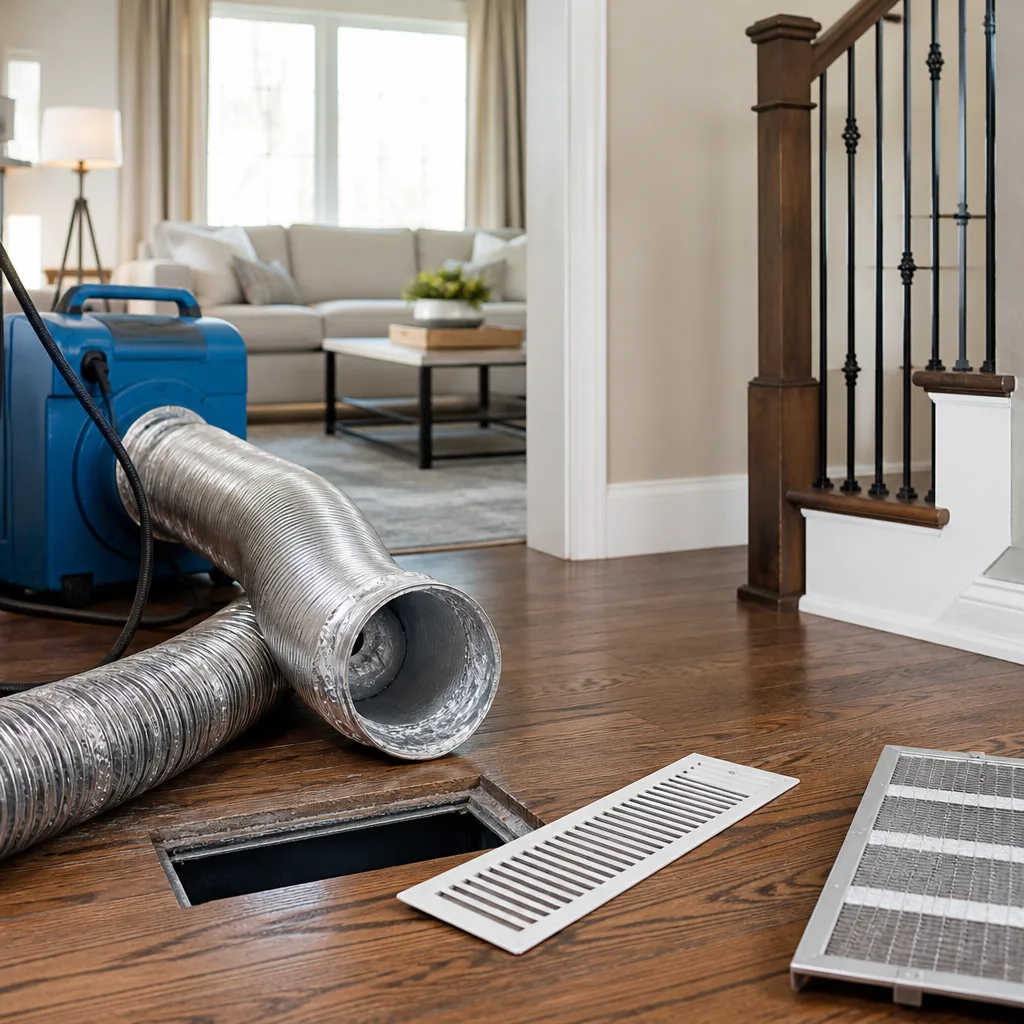 Whole-home duct cleaning
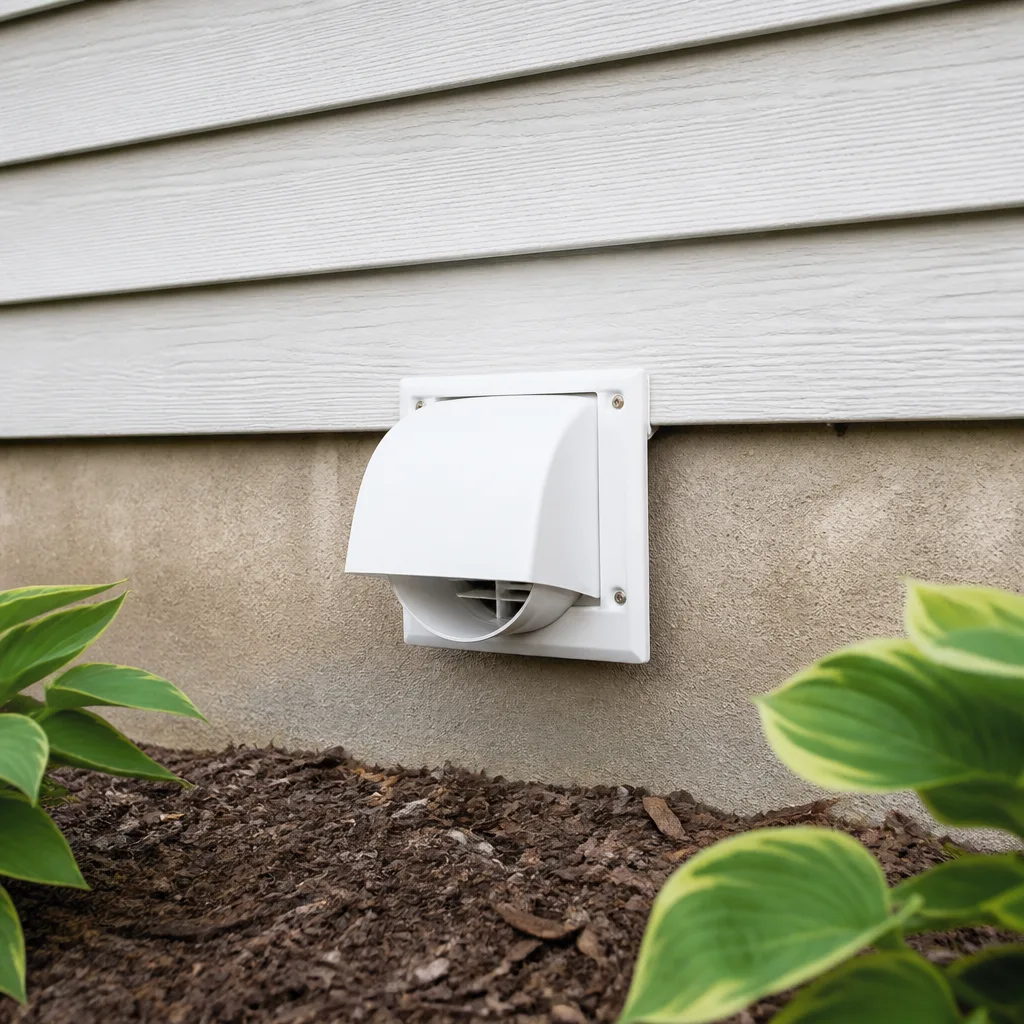 Dryer vent cleaning
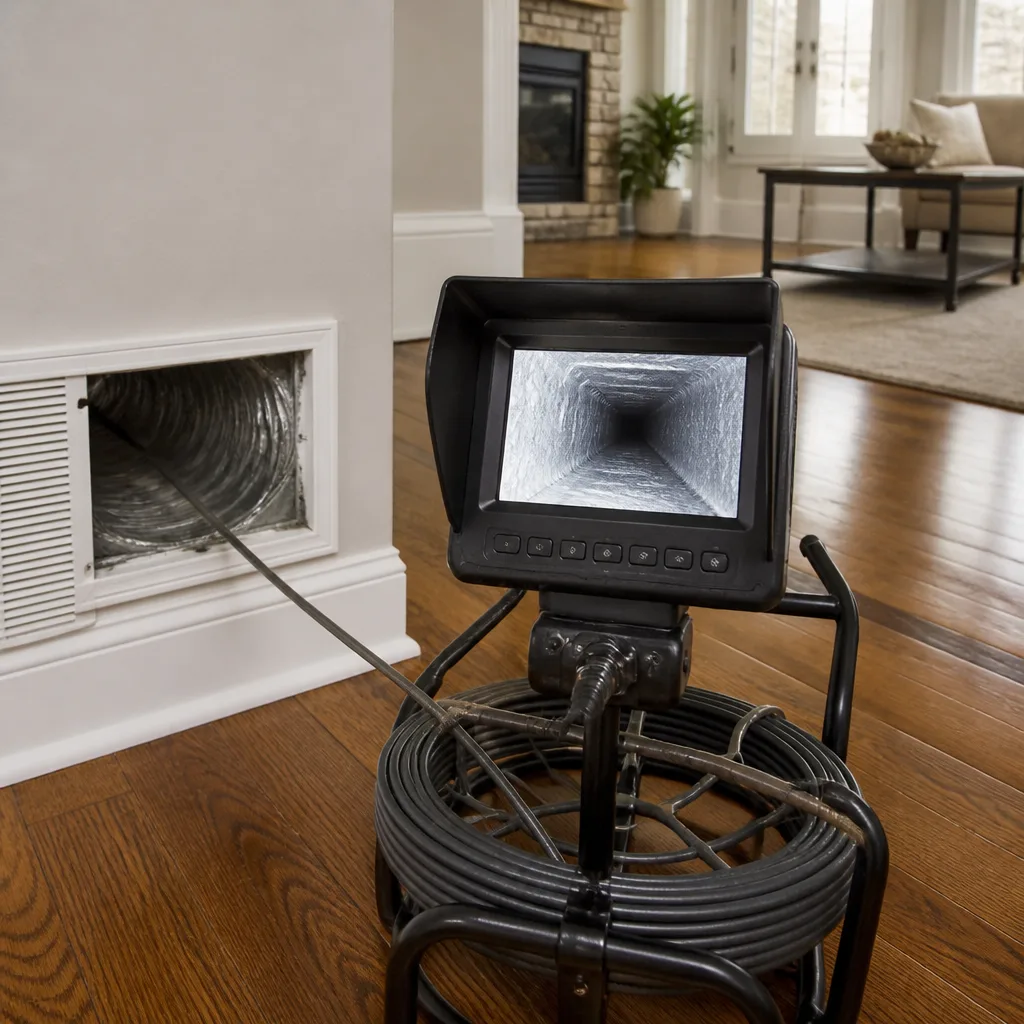 Camera inspection
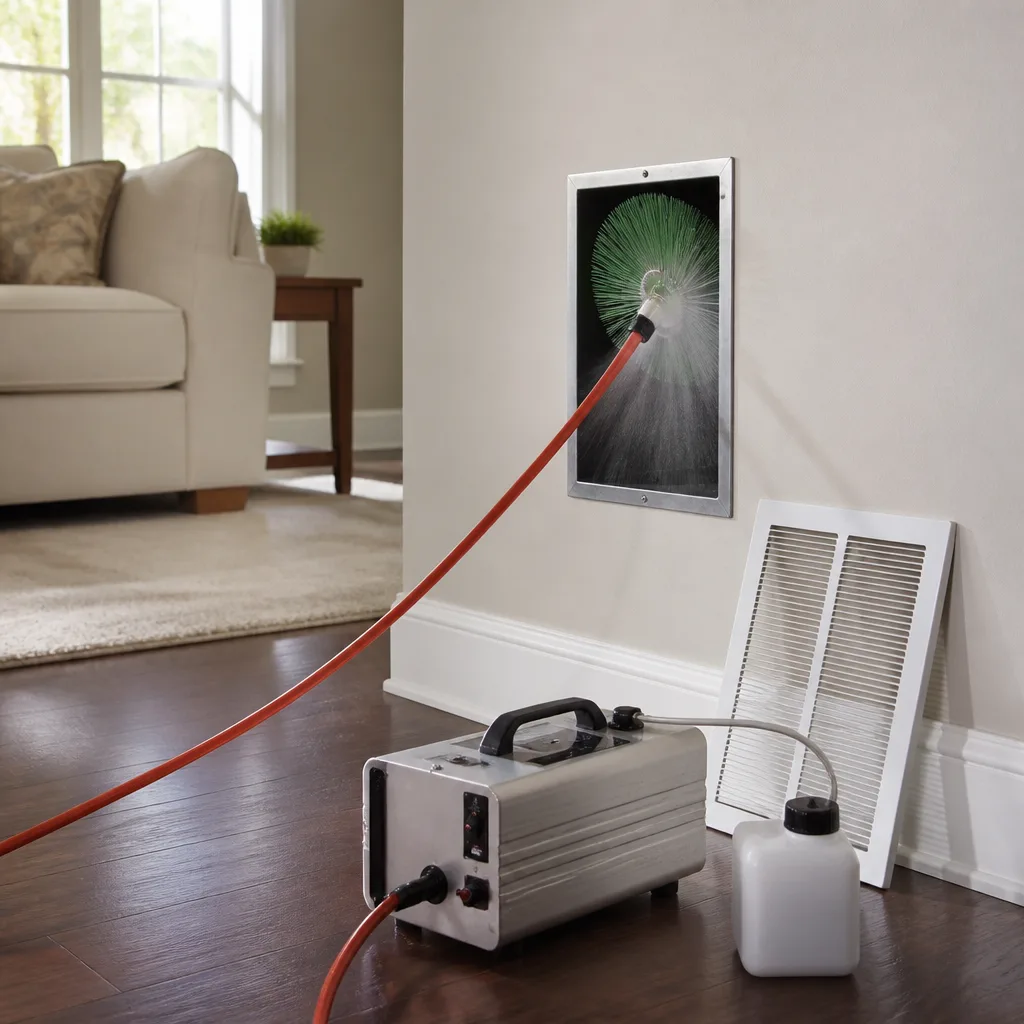 Sanitizing & deodorizing
Whole-system duct and dryer vent check with before-and-after photos - you see exactly what came out of your vents
That "$99 whole-house special" is a bait ad - the real number appears once they are in your hallway, or the "clean" is a shop-vac at the register. We photograph the inside of your ducts before and after instead.
How to Hire an Air Duct Cleaning Contractor in Tustin: A Step-by-Step Guide
Here’s a number that should make every Tustin homeowner pause: the average single-family home circulates roughly 1.5 million cubic feet of air through its ducts every year, and most of that air passes through channels that haven’t been professionally inspected in a decade or more. In Tustin, where warm Santa Ana winds kick up fine particulate dust and older ranch-style homes often hide decades of accumulated debris, the gap between a thorough duct cleaning and a surface-level vacuum job is staggering. This guide will show you exactly how to separate the equipment-serious contractors from the coupon mills, and how to hire with confidence in Tustin’s crowded and uneven duct cleaning market.
Quick Answer
To hire an air duct cleaning contractor in Tustin, you should verify three things before booking: that the company owns professional-grade agitation and HEPA extraction equipment (not rental units or consumer-grade blowers), that it provides before-and-after camera documentation as a standard deliverable, and that it quotes one flat price per system rather than a per-vent or teaser rate. Ask for the equipment brands by name – Rotobrush, Nikro, Guardair – and walk away from anyone who answers vaguely or won’t confirm what machines will show up at your door.
Styles & brands we work with
- Whole-home duct cleaning
- Dryer vent cleaning
- Camera inspection
- Sanitizing & deodorizing
Table of Contents
- Step 1: Understand What Actually Happens During a Real Duct Cleaning
- Step 2: Ask the Equipment Questions That Expose the Phoneys
- Step 3: Decode California Licensing and Why It Matters for Duct Cleaning
- Step 4: Understand the Bait-and-Switch and How to Neutralize It
- Step 5: Verify Proof of Work Before You Pay
- Step 6: Check for Repair Capability and IAQ Knowledge
- Step 7: Get a Flat-Price Quote in Writing
Step 1: Understand What Actually Happens During a Real Duct Cleaning
Most Tustin homeowners have never watched a duct cleaning happen, which is exactly why the market tolerates so much low-quality work. A legitimate cleaning is not a vacuum hose waved into a vent. It’s a systematic process that dislodges debris from the full interior surface of the duct walls, extracts it under negative pressure, and prevents it from re-entering the living space.
Here’s the sequence a professional follows:
- Containment setup. The technician seals the supply and return registers or sets up a negative-air containment system so that dislodged dust doesn’t blow into your living room.
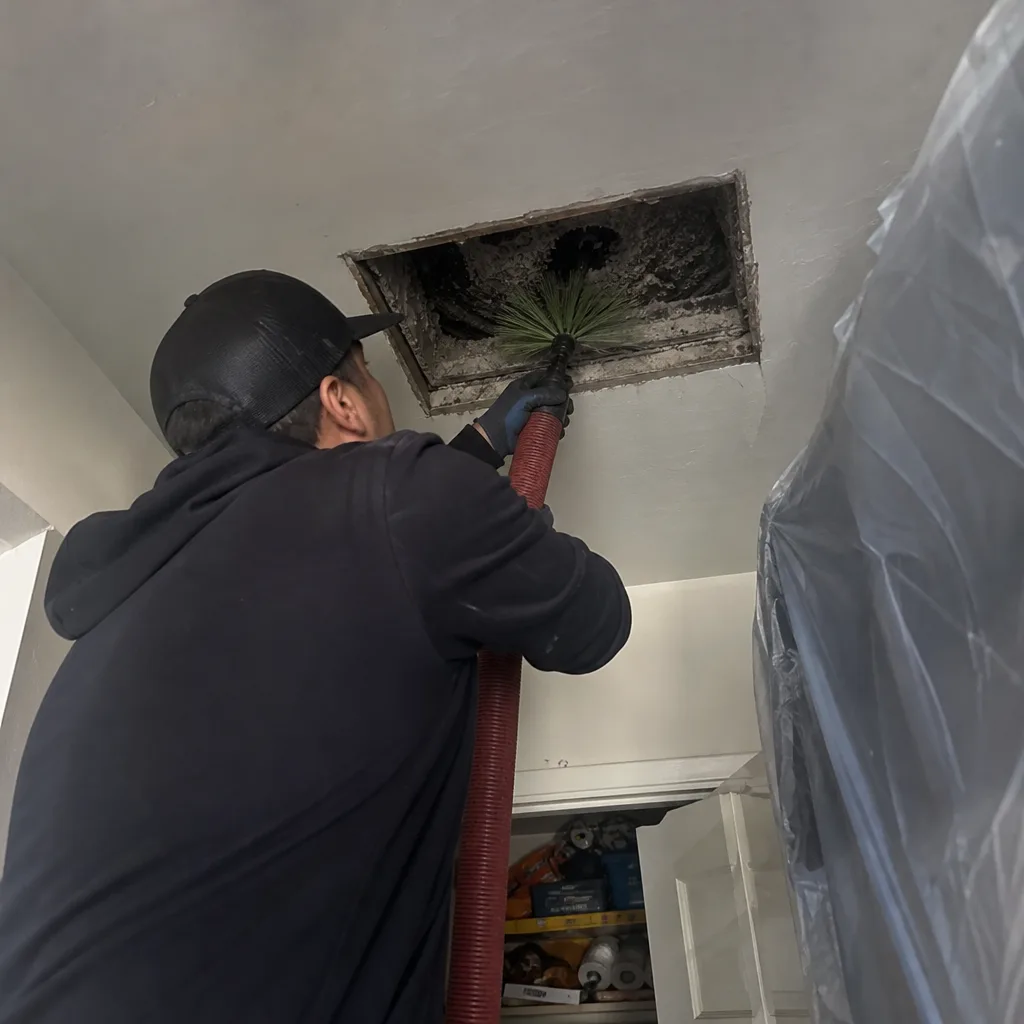
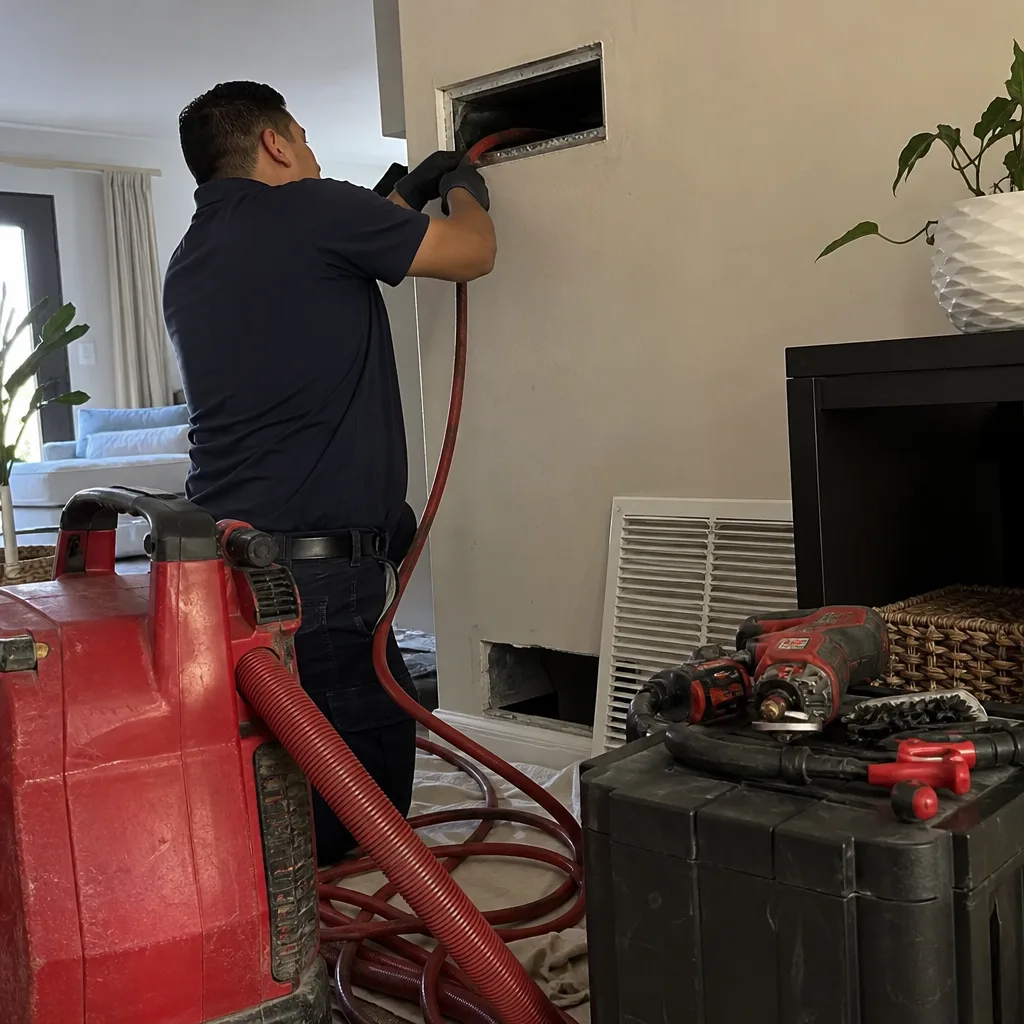
- Agitation. A rotating brush system (like a Rotobrush) or pneumatic whip is inserted into the ducts to physically scrub the walls. Suction alone will not remove debris that’s adhered to duct surfaces, and any contractor who skips this step is doing a surface-level job.
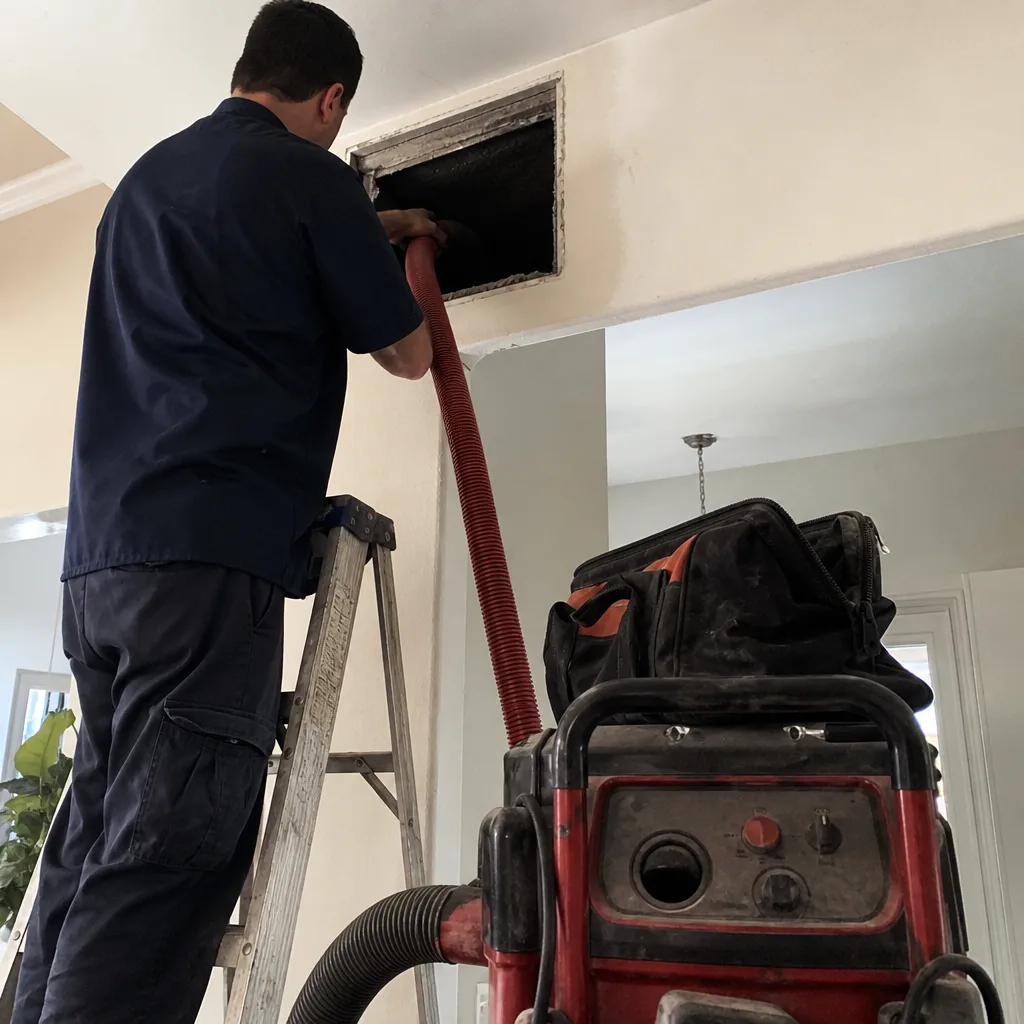
- HEPA extraction. A high-powered vacuum with HEPA filtration pulls the loosened debris out of the system. The key spec here is CFM (cubic feet per minute). Professional extraction units run 2,000 CFM or higher, which is what creates the negative pressure needed to pull debris the full length of a duct run, not just from the first few feet.
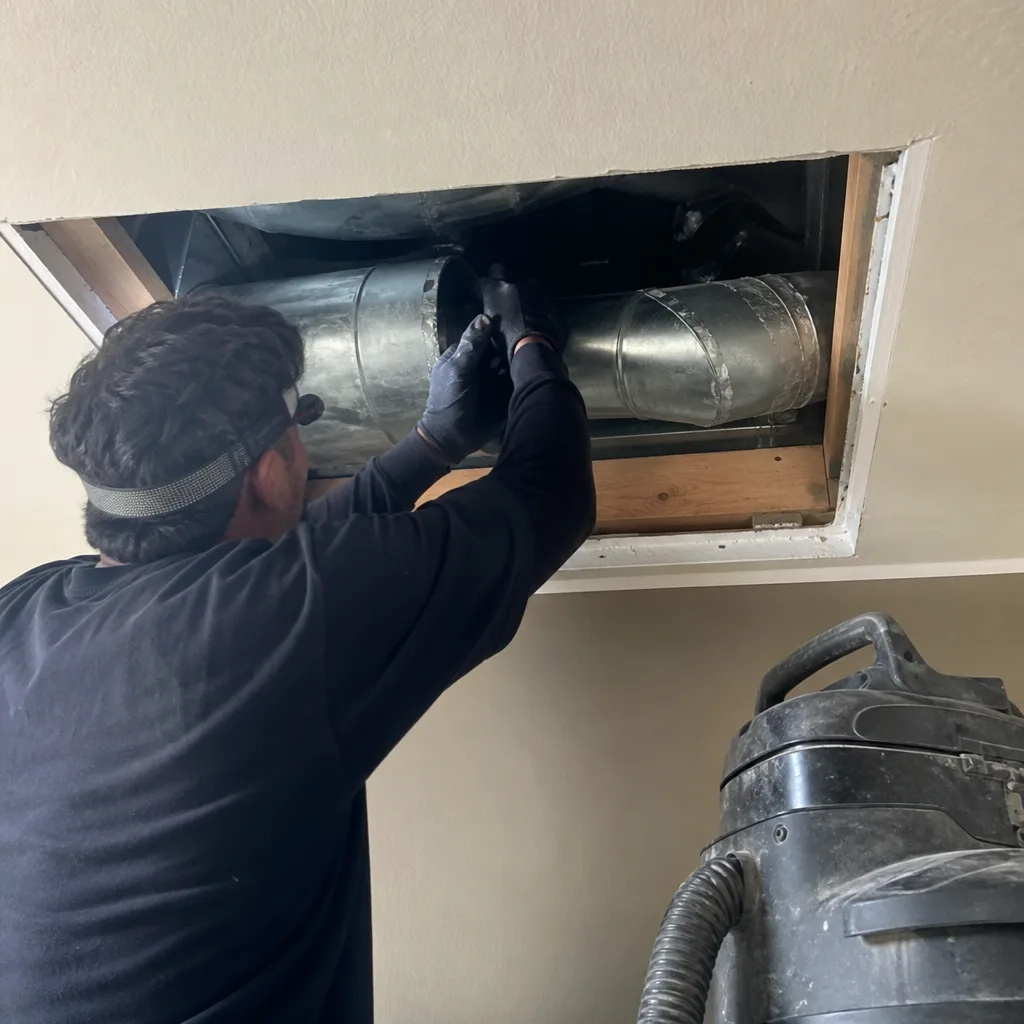
- Component cleaning. The blower fan, coils, and plenum get cleaned if they’re accessible and dirty. A thorough contractor will inspect and tell you what they found.
- Verification. A camera inspection after cleaning shows the results. If a contractor doesn’t offer this, ask why.
In Tustin’s specific housing stock – think late-60s and 70s single-story tracts near Old Town, plus newer two-story builds up in Tustin Ranch – supply ducts often run through attics that hit 130 degrees in August. That heat bakes dust onto duct walls, which is why agitation matters more here than in cooler climates. A suction-only cleaning in Tustin leaves a hardened layer of crud behind.
Step 2: Ask the Equipment Questions That Expose the Phoneys
This is the single most effective vetting step you can take, and almost no one does it. When you call a duct cleaning company in Tustin, ask these questions directly:
- “What equipment do you use, by brand name?” A serious contractor will answer immediately: Rotobrush, Nikro, Abatement Technologies, or similar professional lines. A vague answer – “industrial-strength equipment” or “commercial-grade tools” – is a red flag. It usually means rental gear or a handyman’s shop vac.
- “Do you own your equipment or do you rent it?”Companies that own Rotobrush and Nikro systems have made a five-figure capital investment in their craft. Companies that rent from a local equipment yard are essentially middlemen, and you’re paying for someone else’s machine without knowing its maintenance history.
- “What CFM does your vacuum pull?” Professional HEPA extraction units pull 2,000 to 4,000 CFM. Consumer blowers and rental units often max out below 1,000 CFM, which will not create enough negative pressure to extract debris from the far reaches of a duct run. If the person on the phone doesn’t know the CFM, you’re not talking to the person doing the work.
- “Do you use a rotating brush or a whip system?” Both are legitimate in different situations, but a contractor should be able to explain which they use and why. Rotobrush systems use a rotating brush head that physically scrubs the duct wall, while whip systems use flails. The bigger point: if they can’t answer, they don’t run the equipment.
We’ve had Tustin homeowners tell us they were quoted $79 whole-house cleanings by companies that showed up with a single portable vacuum and a drill-powered brush. That’s not incompetence; it’s a business model built on rapid turnover and low repeat rates. The equipment question filters those operations out before they ever step foot in your house.
Step 3: Decode California Licensing and Why It Matters for Duct Cleaning
California’s contractor licensing system has a specific gap that unscrupulous operators exploit, and understanding it will save you money and frustration.
Here’s the core problem: duct cleaning, as a standalone service, does not require a C-20 HVAC license in California. The C-20 license covers the installation and modification of heating and cooling systems, but cleaning-only services fall into a gray area where a general business license may technically suffice. For homeowners, that means you can’t just check the license number and call it a day.
What to look for instead:
- A C-20 license is a strong signal. It means the company is legitimately trained in HVAC systems and understands ductwork design, airflow, and component function – not just pipe cleaning. A company holding a C-20 also has to carry worker’s compensation insurance and a bond, which protects you if something goes wrong.
- A company that also does duct repair is another strong signal. You can’t clean a duct properly if you don’t understand how it’s supposed to work. Air Duct Repair capability means the technician can spot and fix leaks, disconnected sections, or crushed runs while they’re in there. Flush with the Air Duct Repair in Tustin capability, a contractor can address the full problem in one appointment rather than referring you out.
- Ask about insurance directly. Any company working in your home should carry general liability insurance. If a technician puts a foot through your ceiling while in the attic, you don’t want to discover the company was uninsured.
In Tustin specifically, many homes have duct systems that were installed during construction booms in the 70s and 80s, then modified piecemeal by different owners. Flex ducts get crushed by boxes in attics, joints separate over time, and return-air paths get blocked by poorly placed furniture. A cleaner who understands this local housing stock will spot problems that a licensing inspector never would.
Step 4: Understand the Bait-and-Switch and How to Neutralize It
Tustin receives the same deluge of direct-mail coupons and online specials that every Orange County city gets: “$49 whole-house duct cleaning” or “10 vents for $99.” Here’s the anatomy of how those offers actually play out.
The bait: a price low enough to get a technician’s van to your curb. The switch: once the tech arrives, they “discover” that your ducts are dirtier than expected, or that the cleaning doesn’t include the main trunk line, or that the furnace blower needs a separate cleaning, or that the job requires an antimicrobial fogging treatment. The $49 special becomes a $480 invoice, and the homeowner has already taken the day off work.
The specific contract language that prevents this:
- Confirm the quote covers the entire duct system. Ask: “Does this price include the supply ducts, return ducts, main trunk line, and the plenum?” Get a yes or no, in writing.
- Confirm the quote covers the blower fan and coils. The blower fan is where dust accumulates. If it’s not included, you’re paying for half a cleaning.
- Ask if there is any circumstance under which the price will increase. Legitimate answers: “If you have asbestos duct wrap that requires special handling” or “If the system has never been cleaned and requires significantly more time.” Illegitimate answers: silence, a vague “we’ll see what we find,” or a rush to schedule.
- Refuse any same-day upgrade without a second quote. A contractor who finds a real problem should be able to show you a camera photo and give you 24 hours to decide. Pressure tactics are a red flag.
The fundamental issue is that bait-and-switch pricing is a race to the bottom for the whole industry, and it’s the reason many Tustin homeowners have decided – fairly – that duct cleaning is a scam. The solution is not to avoid cleaning; it’s to hire a company that quotes honestly the first time, with one flat price per system agreed to before the work starts.
Step 5: Verify Proof of Work Before You Pay
Ask yourself this: how would you know if a duct cleaning actually happened? The answer is that you wouldn’t, not by looking at your vents. The ducts are hidden behind walls and above ceilings. A fast, cheap cleaner could show you a before photo of a dirty vent cover and call it done, and you’d be none the wiser.
That’s why before-and-after camera documentation is not an upsell. It’s the verification that separates real cleaning from theater.
Here’s what a legitimate contractor provides:
- Before photos from inside the ducts. A camera probe goes into the duct before any cleaning begins. You should see what the contractor sees: dust accumulation, debris, maybe even rodent droppings or construction debris.
- After photos from the same location. The same camera returns after cleaning, and you can see the actual interior surface of the duct. You should be able to compare the two and see that the duct is clean, not just shifted around.
- Photos of the blower fan and coil before and after. If these components are being cleaned, you should see them. If the contractor won’t show you the fan, ask why.
- A written summary of what was found and cleaned. This gives you a paper trail if you suspect the job wasn’t done, and it’s useful documentation for future home sales.
In our experience, Tustin homeowners are surprised by what a camera inspection reveals. We’ve found everything from construction debris left in brand-new Tustin Ranch homes to decades of fine dust layered in older North Tustin tracts. The camera doesn’t lie, and a contractor who avoids it has a reason to avoid it.
Step 6: Check for Repair Capability and IAQ Knowledge
A company that only cleans is a company that will miss problems. A company that can also repair is a company that understands the duct system as a whole.
Duct cleaning and duct repair belong together for a practical reason: cleaning exposes damage. When a Rotobrush and Nikro extraction system runs through your ducts, it can reveal leaks, disconnected joints, crushed flex runs, and gaps that were previously invisible under a layer of dust. If the technician can’t fix what they find, you’ll need to call a second contractor and pay a second service fee. If the technician can fix it, the repair happens in the same visit.
Beyond repair capability, look for a company that understands the role of the entire indoor air quality system. That includes:
- Filtration upgrades. Honeywell and Aprilaire media filters capture smaller particles than standard one-inch fiberglass filters. If your home has a dog, a cat, or a family member with allergies, the filter matters more than the cleaning itself.
- Humidity control. Aprilaire dehumidifiers and whole-home humidifiers address the root conditions that encourage dust mites and mold. Tustin’s coastal-influenced climate keeps humidity moderate, but inland stretches toward the canyons get dry, staticky air in winter.
- Air purification. Whole-home purifiers work in conjunction with clean ducts to reduce particulates, not just move them around.
None of this means a duct cleaner needs to be an HVAC installer. But if they carry Honeywell and Aprilaire products, it signals they’re in the business of airflow and air quality, not just pipe vacuuming.
Step 7: Get a Flat-Price Quote in Writing
This is the final step, and it’s the one that protects your budget. Here’s what to ask for, specifically:
- One price for the entire duct system. Not per-vent pricing, not per-linear-foot pricing. One number for the complete job, agreed to before the technician starts.
- A written estimate that itemizes what’s included. Supply ducts, return ducts, main trunk, plenum, blower fan, coils, and any component cleaning should be listed. If a line item is missing, ask about it before signing.
- A written statement that the price will not change absent a change to the scope of work. This protects you from surprise “additional fees” discovered after the technician starts.
- A written timeframe. A typical residential cleaning takes 2 to 4 hours depending on system size and accessibility. A company that tries to finish in 45 minutes is not doing the same job.
Duct Cleaning Tustin quotes one flat price per system, in writing, before any work begins. That price is based on the home’s square footage, the number of systems, and accessibility. No per-vent games, no “we’ll see what we find” pricing. If you call (855) 473-2840, you’ll get a straight answer about what the job costs and what it includes.
Common Mistakes to Avoid
- Hiring based on price alone. The $79 special exists to get a van to your house, not to clean your ducts. In Tustin, where housing stock varies from 50-year-old ranch homes to 5-year-old builds, a flat rate assumes every job is the same – which it isn’t.
- Not asking for before-and-after photos. If you can’t see the result, you didn’t get the result. A camera inspection is standard practice for any legitimate contractor, and refusing it is a sign the work won’t hold up to scrutiny.
- Skipping the equipment conversation. A company that can’t name its equipment brand is usually renting, subcontracting, or both. The tools are the job; verify them.
- Confusing a C-20 license with a duct-cleaning qualification. A C-20 is a strong signal, but it’s not a substitute for asking about extraction CFM and agitation method. Do both.
- Allowing same-day upsells. If a technician “discovers” a problem and demands an immediate decision, end the appointment. A real contractor gives you the photo and lets you decide.
- Assuming your dryer vent is included. Dryer vent cleaning is a separate service with separate equipment. Dryer Vent Cleaning in Tustin addresses lint buildup in the exhaust run, which is a fire hazard independent of your HVAC ducts. Ask if it’s included – usually it’s not.
- Not checking for repair capability. If the cleaner finds a leak and can’t fix it, you’ll pay for two visits from two companies. A contractor that handles Air Duct Repair in Tustin saves you a second service call.
See the difference
 Before
 After
 Before
 After
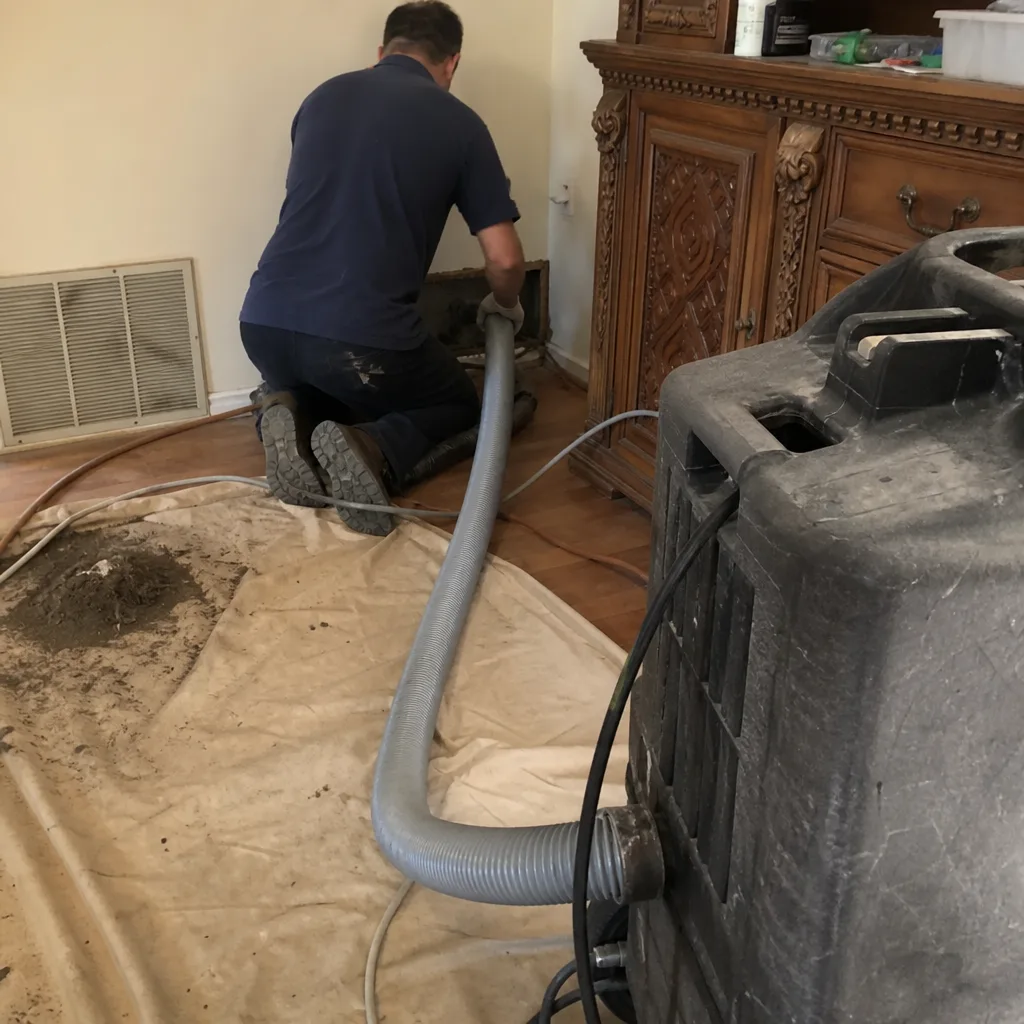 Before
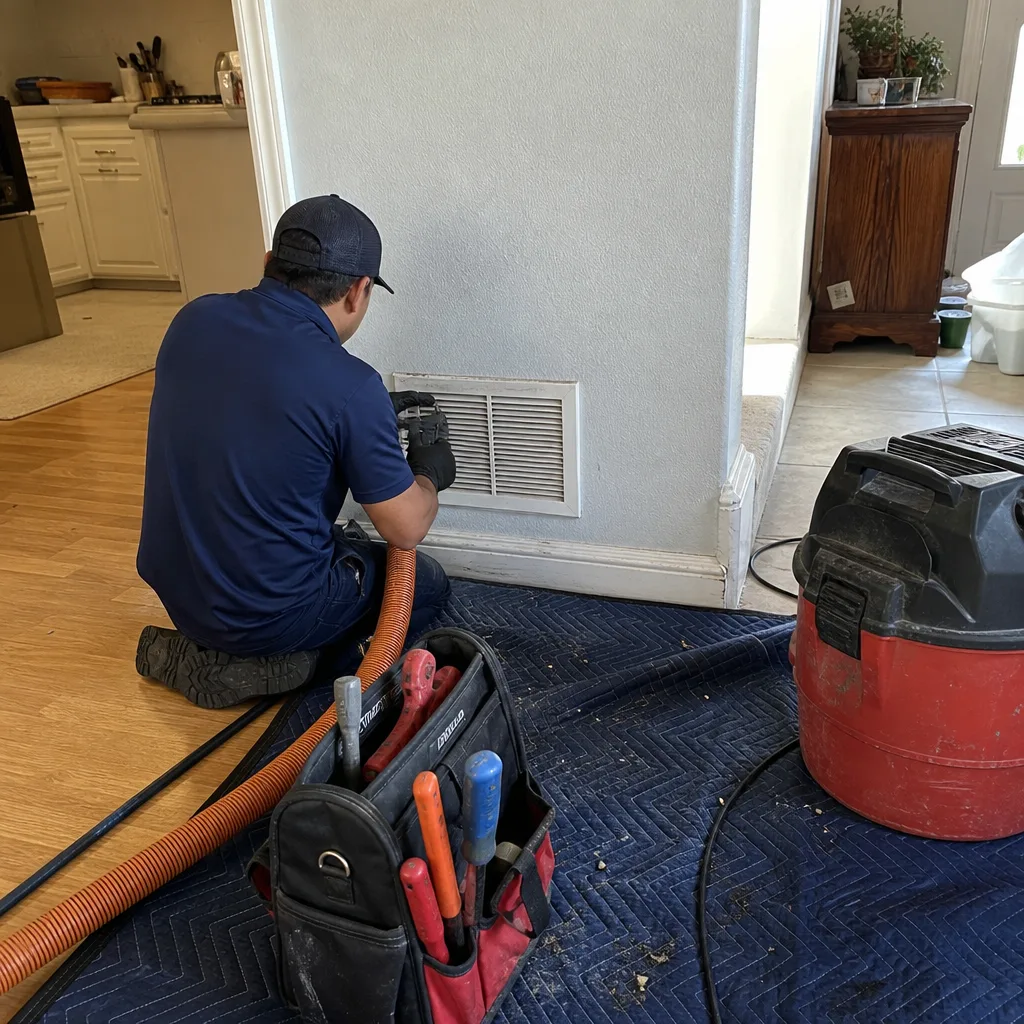 After
When to Call a Professional
Some situations demand professional attention rather than another glance at the vent covers. Call a duct cleaning contractor if you’ve renovated recently and the dust never quite left, if you’re in a Tustin home that’s never been cleaned in 20 or more years, if someone in the house has unexplained allergy or respiratory symptoms, if you’ve had a rodent or pest issue in the attic, or if you’re buying a home with unknown duct history. A camera inspection alone – before any cleaning even happens – can answer most questions about what’s actually in your ducts. Duct Cleaning Tustin offers free estimates in Tustin – call (855) 473-2840 to schedule an inspection.
Frequently Asked Questions
A legitimate whole-system duct cleaning in Tustin typically runs $400 to $800 for a standard single-family home, depending on square footage, number of systems, and accessibility. That price should include the supply and return ducts, main trunk, plenum, blower fan, and coil cleaning, plus before-and-after documentation. Quotes significantly below that range are the bait in a bait-and-switch model. Call (855) 473-2840 for an exact quote on your home – estimates are free.
Cheaper quotes in Tustin usually reflect rental equipment, suction-only cleaning without agitation, or a deliberate loss-leader price that will be increased once the technician arrives. A real Rotobrush and Nikro extraction system costs tens of thousands of dollars, and the operator has to pay for maintenance, insurance, and skilled labor. If the math doesn’t work at $79, the company is either doing a bad job or planning to upsell you.
You should receive before-and-after camera photos from inside the same duct locations, along with photos of the blower fan. Ask for this before you book, not after. A contractor who won’t provide visual proof either isn’t doing a thorough job or doesn’t have the equipment to document it. Both are disqualifying.
No, dryer vent cleaning is a separate service with its own equipment and safety considerations. Your dryer vent is the exhaust run that carries lint from the dryer to the outdoors, and lint buildup is a documented fire risk. If you’re scheduling duct cleaning, ask if Dryer Vent Cleaning in Tustin can be added to the same visit.
Even in a home under 10 years old, ducts can accumulate construction debris, drywall dust, and pet hair. Newer Tustin Ranch builds often have tighter envelopes, which means less natural air exchange and more recirculation of whatever’s in the ducts. A camera inspection is the cheapest way to find out what’s actually in there before deciding whether cleaning makes sense.
Only if they offer duct repair as a service. Many cleaning-only companies will find a leak, shrug, and recommend you call someone else. Air Duct Repair in Tustin is a core service at Duct Cleaning Tustin, which means a technician can diagnose and seal leaks in the same appointment. That’s the difference between a specialist and a pipe cleaner.
The Bottom Line
Hiring a duct cleaner in Tustin comes down to three verifications: the equipment is professional-grade and company-owned, the documentation is photographic and non-negotiable, and the price is flat and written before work begins. Everything else – the licenses, the insurance, the pleasant phone manner – is secondary to those fundamentals. The companies that survive in Tustin long-term are the ones that can answer the equipment questions, show their work, and stand behind a price. The rest are churning through first-time customers, one $79 special at a time.
If you’re ready to get a straight answer about your ducts, call Duct Cleaning Tustin at (855) 473-2840 for a free estimate. We’ll tell you what equipment we’re bringing, what the job will cost, and what you’ll see when we’re done.
Written by the team at Duct Cleaning Tustin, serving Tustin since 2018.