
Last updated November 2, 2026
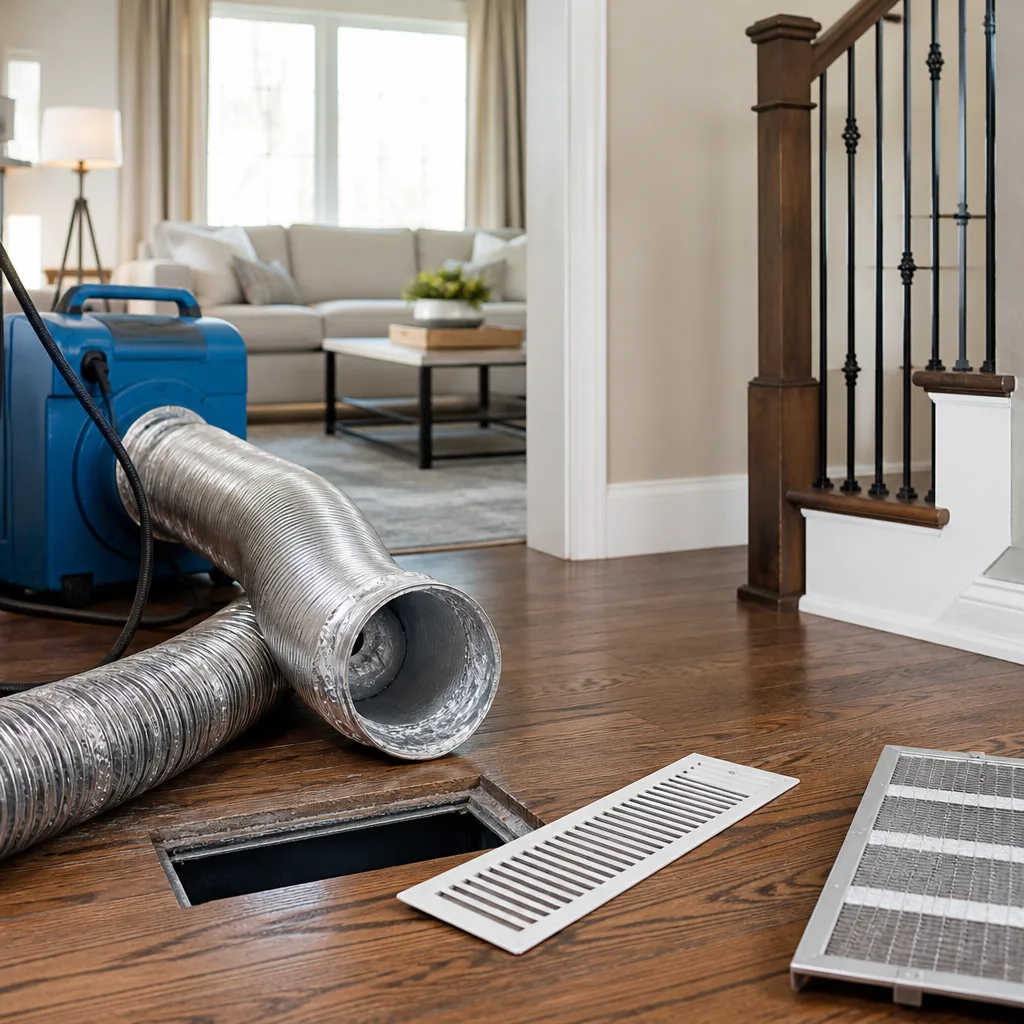 Whole-home duct cleaning
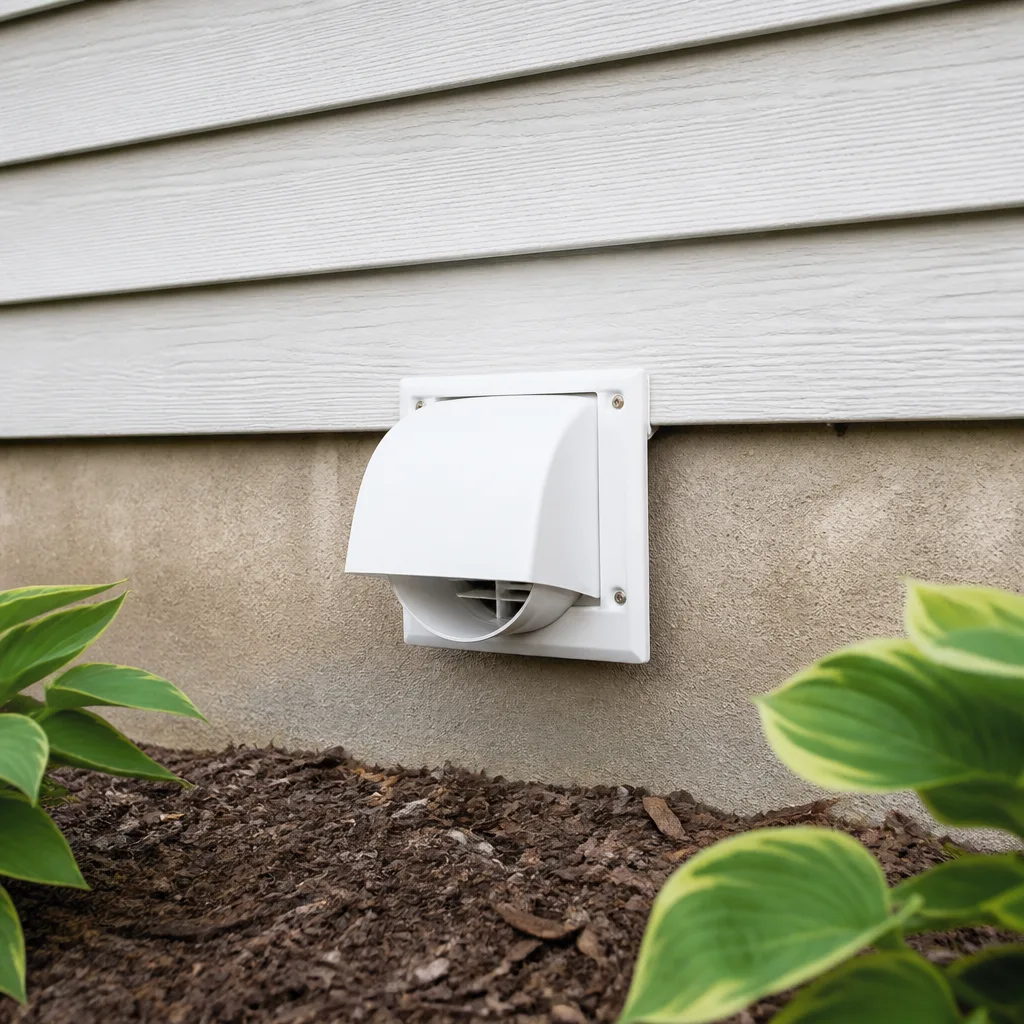 Dryer vent cleaning
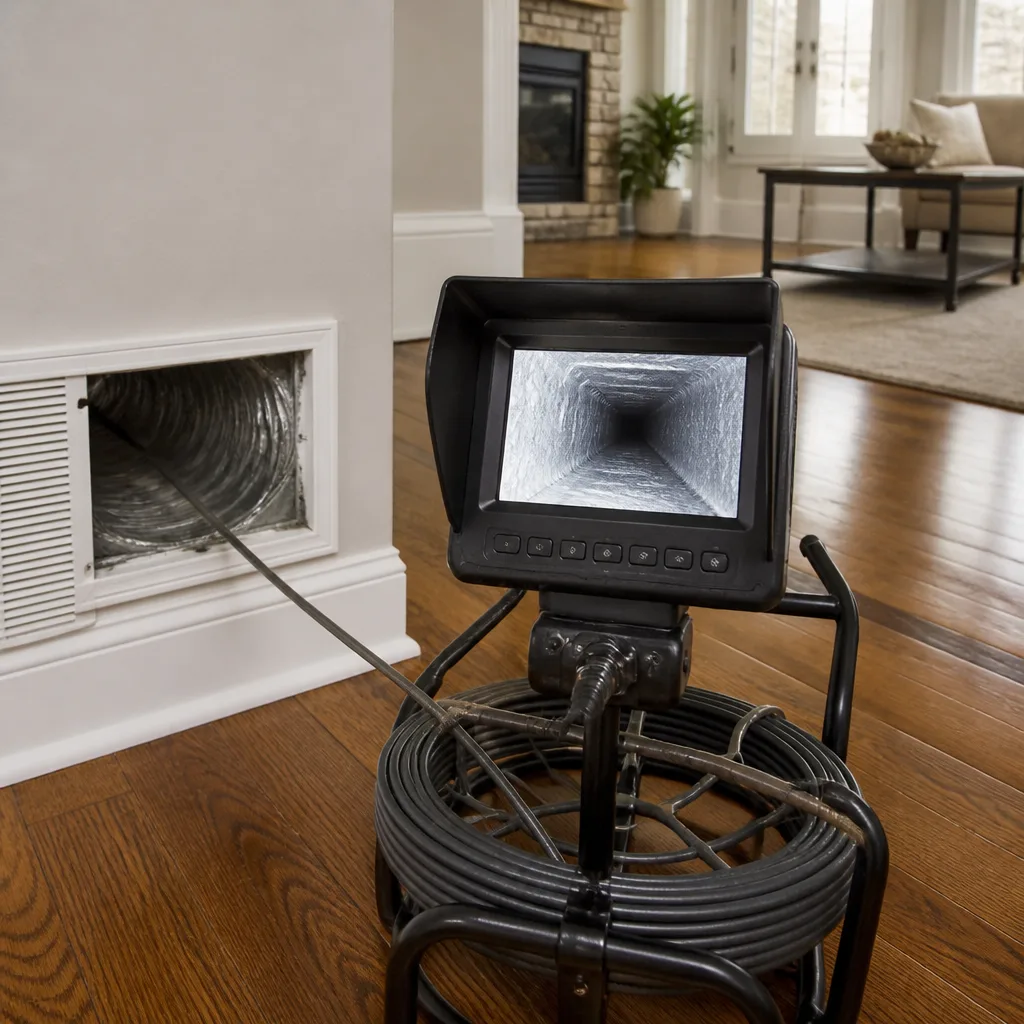 Camera inspection
 Sanitizing & deodorizing
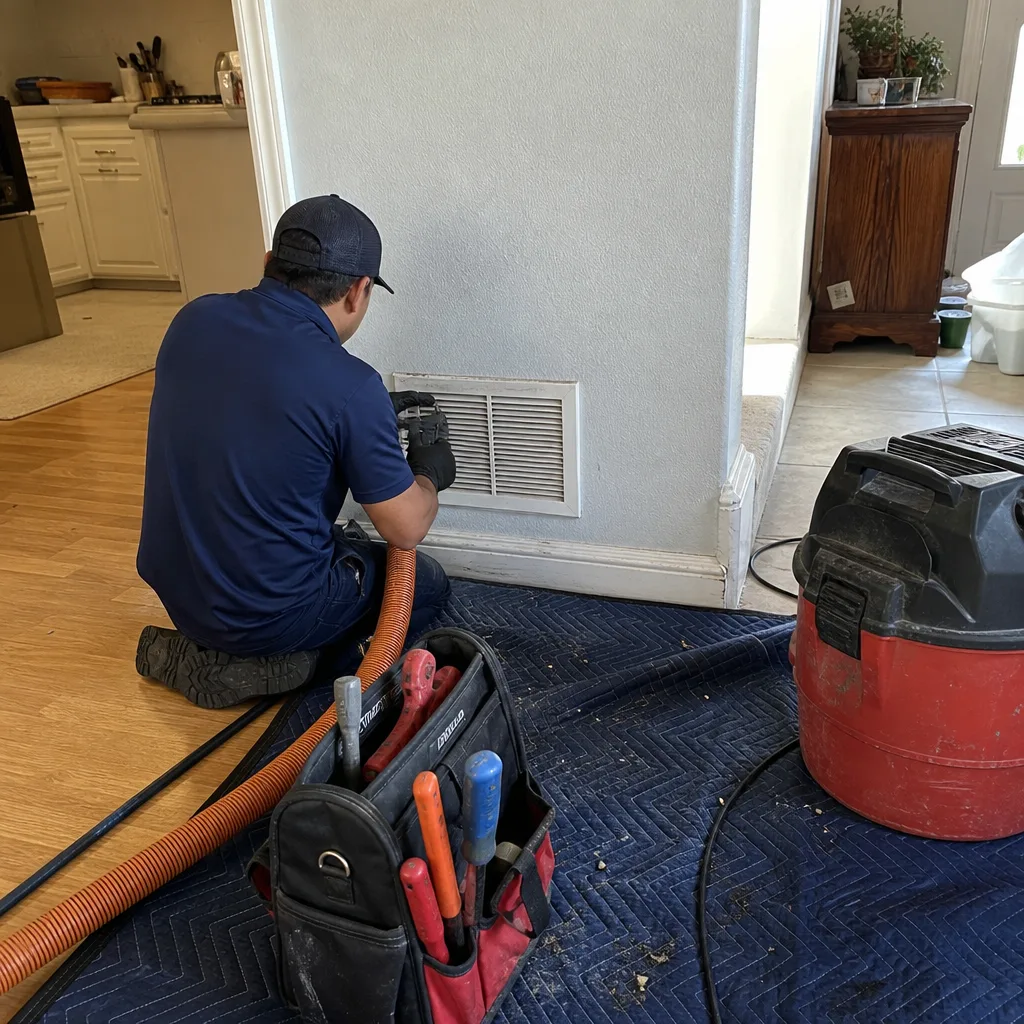
Whole-system duct and dryer vent check with before-and-after photos - you see exactly what came out of your vents
That "$99 whole-house special" is a bait ad - the real number appears once they are in your hallway, or the "clean" is a shop-vac at the register. We photograph the inside of your ducts before and after instead.
Air Duct Cleaning Maintenance Checklist for Tustin Homeowners
Most homeowners in Tustin swap their air filter on a calendar schedule and call it done. But a filter’s lifespan isn’t set by the calendar. It’s set by what’s actually in the air moving through it. And Tustin’s air has a rhythm all its own. During Santa Ana wind events, particulate levels spike hard. A filter rated for 90 days can load up in half that time. That means the rest of your duct system, the trunk lines, the branch runs, the return plenum, is also working harder against a dirtier airstream. This guide is a maintenance checklist built around Tustin’s real air quality calendar, not generic seasonal advice.
You’ll learn exactly when to inspect registers, how to read filter loading against MERV rating, which airflow changes signal duct restriction, and when a visual checklist item turns into a professional cleaning trigger. Written by the equipment-focused team at Duct Cleaning Tustin home, this is the guide we wish every Tustin homeowner had before calling around for quotes.
Quick Answer
Air duct cleaning maintenance in Tustin means checking register airflow, return grille buildup, and filter loading monthly, with deeper inspections tied to four local air events: Santa Ana dust season (October through February), spring pollen bloom (March through May), summer wildfire smoke windows (June through September), and post-renovation dust. A filter that clogs in under 45 days, visible dust streaks at supply registers, or a 20% drop in airflow between rooms are the three clearest signals that Air Duct Cleaning services are due, not just another filter swap.
Styles & brands we work with
- Whole-home duct cleaning
- Dryer vent cleaning
- Camera inspection
- Sanitizing & deodorizing
Table of Contents
- Tustin’s Air Quality Calendar: The Four Events That Drive Duct Loading
- Visual Inspection Checkpoints: What Normal Looks Like at Registers and Returns
- Filter MERV Rating Guidance for Tustin’s Particulate Mix
- How to Log Airflow Changes as an Early Duct Restriction Indicator
- The Month-by-Month Maintenance Checklist
- When a DIY Checklist Item Becomes a Professional Cleaning Trigger
- What Professional-Grade Equipment Actually Does (and Why It Matters)
- Common Mistakes to Avoid
Tustin’s Air Quality Calendar: The Four Events That Drive Duct Loading
Duct systems don’t get dirty on a schedule. They get dirty when the outside air changes. In Tustin, there are four distinct air quality events each year that push particulate into your home and, by extension, into your return-air ductwork. Understanding these events is the foundation of any maintenance plan that actually works. Our service area sits inland from the coast, which means Tustin doesn’t get the daily marine layer scrub that keeps coastal Orange County air cleaner. What we get instead is heat, inland valley dust, and wind-driven particulate that settles in attics and gets pulled into returns.
Event 1: Santa Ana Wind Season (October through February). Santa Ana winds move air from the high desert through the Cajon Pass and into the Inland Empire and Orange County basin. That air carries fine dust, dry plant material, and whatever’s been kicked up from construction and open land along the way. During Santa Ana events, outdoor particulate counts in Tustin can double or triple within hours. Your HVAC system becomes a particulate pump. Every time the blower runs, it pulls whatever’s near the return grille into the ductwork. The return-air side is where loading begins, and during Santa Ana season, it loads fast.
Event 2: Spring Pollen Bloom (March through May). Tustin’s mature tree canopy, particularly in neighborhoods near Old Town and the areas around Tustin Ranch, produces heavy pollen loads in spring. Pollen is sticky. It clings to filter media, but it also clings to the inside of return ducting when filters are undersized or poorly seated. Pollen is also biologically active, which means it decomposes inside ductwork. The residue it leaves behind becomes a substrate for dust mites and other allergens, even after the bloom ends.
Event 3: Summer Wildfire Smoke Windows (June through September). Wildfire smoke travels far. In Tustin, smoke from fires in the San Bernardino National Forest, the Angeles National Forest, and sometimes the Cleveland National Forest can sit over the basin for days at a time. Smoke particles are sub-micron, meaning they pass through standard filters and settle directly into duct walls, cooling coils, and blower housings. Smoke residue is oily and acidic. It bonds to surfaces and ages them. This is the loading event that most homeowners never see because it doesn’t show up as visible dust on a register cover. It shows up as an odor, a film, or gradually declining system performance.
Event 4: Post-Renovation Dust (Any Month, Common in Tustin’s 1970s and 1980s Housing Stock). Tustin has a large inventory of homes built between 1970 and 1990. Those homes have aged duct systems, and many were built before sealed-duct standards existed. Any renovation, whether it’s a kitchen remodel in Tustin Meadows or a bathroom update near Columbus Tustin Park, produces fine gypsum and wood dust that doesn’t stay in the work zone. It gets pulled into the return-air stream, travels through the blower, and deposits along the entire duct path. This is the fastest duct-loading event of all, and it’s entirely preventable with proper containment, which we’ll cover later.
The takeaway is this: your maintenance calendar should not be built on “every three months because that sounds right.” It should be built on these four events and the mechanical realities of your specific home’s HVAC system.
Visual Inspection Checkpoints: What Normal Looks Like at Registers and Returns
You don’t need specialized tools to perform a meaningful duct inspection. You need to know what to look at, what normal looks like, and what abnormal looks like. Here are the five checkpoints we walk Tustin homeowners through when they call us about air duct concerns. These are the same checks we perform during an Air Duct Cleaning in Tustin visit, so learning them helps you understand what you’re paying a professional to do in greater depth.
Checkpoint 1: Return Grille Surface. Remove the grille cover (most lift off or have two simple screws). Normal: a light, even coating of dust on the grille fins. Abnormal: clumps, matted dust, pet hair woven into the metal, or a gray film that looks like dryer lint. If you can’t see through the fin gaps when holding the grille up to light, the return side is starving for air. That’s a real restriction problem, not just a cosmetic one. The return is where your system draws air from your home. Restricted returns put measurable strain on blower motors and reduce system capacity.
Checkpoint 2: Supply Register Ceiling Streaks. Look at the ceiling or wall surrounding each supply register. Normal: no visible discoloration, or a faint shadow that hasn’t changed in years. Abnormal: dark streaks radiating outward from the register, especially in a fan pattern. This is called deposition streaking. It means fine particulate is being blown out of the register and is sticking to the surface around it. It’s one of the clearest signals that air is bypassing filtration or that duct interiors are heavily loaded and shedding. In our experience, Tustin homes with older fiberglass ductboard systems are more prone to this because the ductboard surface breaks down over time and releases fibers into the airstream.
Checkpoint 3: Filter Slot and Housing. Pull the filter. Look at the filter slot itself. Normal: a thin line of dust on the housing walls. Abnormal: a thick pad of dust built up around the slot edges, which indicates the filter doesn’t seat properly and air bypasses around it. A filter that bows in the middle during blower operation is a filter that’s too restrictive for the system. Bowed filters leak around the edges. Homes in Tustin with marginal filter slots, especially those with 1-inch filter slots and high-MERV filters jammed in, see this constantly.
Checkpoint 4: Inside the Return Boot. Use a flashlight and your phone camera. Shine the light into the return cavity and photograph what’s there. Normal: some dust on the floor of the return pan, which is acceptable in any system. Abnormal: visible dust drifts, clumps of debris, construction material, or standing dust piles. Duct cleaning gets a bad name from bait-and-switch pricing, but the visual inspection is the antidote to that. A legitimate contractor can show you before-and-after photos of your own duct interiors. If you photograph the return area and it’s visibly loaded, you have documentation for why a cleaning is justified.
Checkpoint 5: Blower Motor Area (If Accessible). If your air handler has a removable access panel and you’re comfortable looking but not touching, examine the blower wheel. Normal: smooth metal fins with a light dust film. Abnormal: the blower wheel looks like it’s been coated in gray felt. Blower wheels are designed with a specific aerodynamic profile. Dust accumulation changes that profile, reduces airflow, and increases power draw. A heavily-loaded blower wheel can be 15% less efficient at moving air. It’s the single most overlooked component in duct maintenance, and it is where the majority of system performance loss actually occurs.
These five checkpoints take about 20 minutes for a typical Tustin home. Do them during daylight, with the system off, and photograph everything with your phone. Build a baseline. That baseline is what lets you detect change over time.
Filter MERV Rating Guidance for Tustin’s Particulate Mix
MERV stands for Minimum Efficiency Reporting Value. It’s a rating of how well a filter captures particles at specific size ranges. But the number alone doesn’t tell you what filter is right for your Tustin home. The right filter is a balance between capture efficiency and airflow restriction, and that balance shifts depending on what the outdoor air is doing.
MERV 8: This is the minimum we recommend for any Tustin home. It captures pollen, dust mites, and larger mold spores. It does not capture wildfire smoke effectively. MERV 8 filters are appropriate for systems with marginal blower capacity, which includes many older Tustin homes where duct systems were designed for low-efficiency filters and don’t have the static pressure budget for anything more restrictive.
MERV 11: This is the sweet spot for most Tustin homes during Santa Ana season and spring pollen. It captures fine dust, pet dander, and a meaningful percentage of smoke particulate. MERV 11 adds airflow resistance compared to MERV 8, so the filter slot and blower condition matter. If your blower wheel is already loaded with dust, a MERV 11 filter will compound restrictions. Filter upgrades should follow, not precede, a professional cleaning.
MERV 13: This is the level that provides real wildfire smoke protection. MERV 13 filters capture most smoke particles and are the minimum recommended for homes with asthma, COPD, or other respiratory conditions during smoke season. But MERV 13 in a standard 1-inch filter slot creates significant pressure drop. Many Tustin HVAC systems, especially older ones, can’t handle it without starving the blower. We tell homeowners this directly: a MERV 13 filter in a system not designed for it is a restriction disguised as protection. If you need MERV 13 performance, the right answer is often a 4-inch media cabinet or a high-MERV option paired with the airflow capacity to support it.
What about washable filters? We advise against them. Washable filters load unevenly, never clean completely, and their capture efficiency is inconsistent. They don’t save money over time when you factor in the duct loading they permit.
Filter replacement schedule for Tustin, specifically: Change at minimum every 90 days. During Santa Ana season and wildfire smoke windows, inspect at 30 days. If the filter media looks discolored through the pleats, change it early. If filters are consistently loading in under 45 days, that’s not a filter problem. That’s a signal that your duct system is pulling in excessive particulate from somewhere, possibly a return leak in the attic pulling in insulation fibers and outside dust, or a building envelope issue. Track it. Report it when you call for service.
How to Log Airflow Changes as an Early Duct Restriction Indicator
Duct restriction builds gradually. You won’t notice a 5% airflow loss from one month to the next. But a 20% loss over 18 months means your system works 20% harder to deliver the same comfort, and your energy bill reflects that in ways that most Tustin homeowners attribute to “rate increases” instead of duct loading. Here’s how to track airflow objectively without spending money on instruments. All you need is your hand, a consistent observation routine, and a notepad or phone note.
- Establish a baseline in a normal condition. On a day when the filter is fresh and the system is running, walk to each supply register and hold the back of your hand 6 inches from the register face. Note the sensation. At a properly flowing register, you should feel distinct air movement. At a weak register, you barely feel anything. Write down a 1-10 rating for each room.
- Repeat the same check monthly, at the same time of day, with the same system setting. Airflow varies with outdoor temperature and system mode. If you check at noon in July with the AC full-on, your comparison point should be another noon check in July with the AC full-on, not a morning check in October.
- Pay attention to room-to-room differences. In a balanced system, rooms of similar size should feel similar. If one bedroom consistently feels 30% weaker than another, that’s not normal. It usually indicates a branch-duct issue: a kink, a disconnected section, or a localized restriction in that specific run.
- Listen for change. A system that develops a restriction often changes sound. A higher-pitched whistle at a partially closed damper, a thump when the blower cycles off as the ductwork flexes, or a rattling register diffuser. Sound changes precede obvious comfort changes.
- Check the utility bill for drift. Compare cooling-season energy use year-over-year for the same months. A system losing efficiency due to duct restriction or blower loading will consume more electricity to deliver the same cooling. Tustin summers are long and hot; a permanent 10% increase in cooling energy use is meaningful money.
The airflow log doesn’t need to be complex. A simple phone note with a 1-10 rating per register, checked monthly, is enough to catch a restriction trend before it becomes a comfort problem. And when the trend is downward, that’s when a professional evaluation is warranted, not a year later when a bedroom won’t cool at all.
The Month-by-Month Maintenance Checklist
Here is the full maintenance calendar, built around Tustin’s specific seasonal conditions. Use it as a standing reference. This isn’t about doing everything every month. It’s about doing the right thing at the right time.
January and February: Santa Ana Peak and System Recovery
- Inspect all return grilles for dust matting. Santa Ana dust is fine and gray. Clean grilles with a microfiber cloth, not a vacuum brush that can push dust deeper.
- Replace filter after Santa Ana events if discoloration is visible. During active Santa Ana patterns, 30- to 45-day filter changes are normal.
- Log room-by-room airflow. This is your winter baseline for comparing against summer performance later in the year.
- Check ceiling streaks at supply registers. Winter heating use makes streaks more visible because the temperature differential between supply air and ceiling surface is larger.
March through May: Pollen Bloom and Pre-Cooling Preparation
- Replace filter with a fresh MERV 11 if your system supports it. Pollen is active now, and it will load a filter faster than winter dust.
- Inspect the outdoor condenser unit. Tustin pollen and spring plant debris accumulate on condenser coils faster than most homeowners expect. A restricted condenser reduces system capacity and can mask duct problems. Clear away vegetation within 2 feet of the unit.
- Photograph the return boot interior. Compare against your winter photos. If dust accumulation is visibly worse, schedule a professional evaluation before cooling season starts.
- Check for any renovation dust if you did spring remodeling. Gypsum dust is fine and travels everywhere.
June through September: Wildfire Smoke and Peak Cooling Load
- Inspect filters every 30 days during active smoke events. Smoke residue loads filters quickly and also coats duct interiors. If smoke has been present for more than 48 hours, plan for a filter change once it clears.
- Log airflow at the hottest part of the day. Compare against your January baseline. If a room that was a 7 in January is a 4 in July, that’s a restriction signal, not a seasonal variation. Airflow at a given register should be consistent across seasons when the system runs properly.
- Check for musty odors when the system first cycles on after being off. Summer condensation in ductwork creates conditions for biological growth if dust is present. An odor that clears after a minute may be normal. An odor that persists through the cycle warrants professional attention.
- If you have a whole-home filtration product from Aprilaire or Honeywell, follow its specific seasonal maintenance schedule. These systems do real work in smoke season, but only if their media is fresh.
October through December: Post-Smoke Cleanup and Pre-Santa Ana Check
- Schedule professional duct inspection or cleaning after wildfire smoke season ends, especially if smoke was present in Tustin for more than a few cumulative days. Smoke residue is corrosive and attracts dust. It doesn’t blow away on its own.
- Inspect all supply registers and return grilles for dust streaking after the first Santa Ana event of the season. This is when existing duct loading becomes visible.
- Check dryer vent exterior termination. Lint buildup plus dry fall air equals elevated fire risk. A quick check of the exterior flap and lint screen performance is a good habit this time of year, and a reminder that Dryer Vent Cleaning in Tustin is a service we run as its own scheduled job, not an afterthought.
- If you plan to run the heater for the first time in months, run the blower for 10 minutes before lighting the burner and note any burning-dust smell. That smell is dust that settled on the heat exchanger over summer. If it persists beyond an hour, the system needs cleaning.
When a DIY Checklist Item Becomes a Professional Cleaning Trigger
Most “duct cleaning” marketing fails because it tells homeowners to act on vibes. “If your ducts seem dirty.” What does that even mean? Here are the specific thresholds we use. If you observe any of these, it’s time to call a professional, not to add another filter change to the calendar.
Threshold 1: Filter loading in under 45 days, twice in a row. One fast-loading filter during a Santa Ana event is normal. Two fast-loading filters back to back means the system is pulling particulate from somewhere it shouldn’t: an attic return leak, unsealed duct joints, or a heavily loaded return plenum that’s recontaminating the airstream. This is a duct system problem, not a filter problem.
Threshold 2: A 20% airflow drop at any register, measured against your own baseline. Your hand-rating method is subjective, but if a register that was consistently a 7 for months now reads as a 4 for consecutive checks, that’s a restriction signal. You’re feeling the effect of debris building up somewhere in that branch line or at the plenum connection.
Threshold 3: Visible dust streaking at two or more supply registers. One streaked register might indicate a localized issue. Two or more streaked registers in different rooms means duct interiors are loaded and shedding into the airstream. You’re seeing the system literally blowing its own accumulation back into your living space.
Threshold 4: Dust accumulation visible in the return boot that is worse than baseline. If your March photo shows a light dust film and your October photo shows visible dust piles, the system has accumulated more in seven months than it should in two years. That’s a loading event, and it needs to be addressed.
When any of these thresholds is met, the appropriate next step is a professional inspection. A legitimate contractor will confirm the condition with before-photos and give you a flat price per system before work begins. The industry’s bait-and-switch reputation exists because vague thresholds invite vague upselling. Specific thresholds, objectively evaluated, eliminate that. That’s how we run our team, and it’s what Tustin homeowners should expect from anyone they hire for their ductwork.
What Professional-Grade Equipment Actually Does (and Why It Matters)
Here’s the part of the guide where we’re going to be direct about a subject most duct cleaning companies don’t want to discuss. The equipment matters. It matters for what gets removed, what stays behind, and what happens to the dust during the process. When you call around comparing duct cleaning quotes in Tustin, you should ask what equipment the crew actually runs. If they can’t name it, that’s an answer.
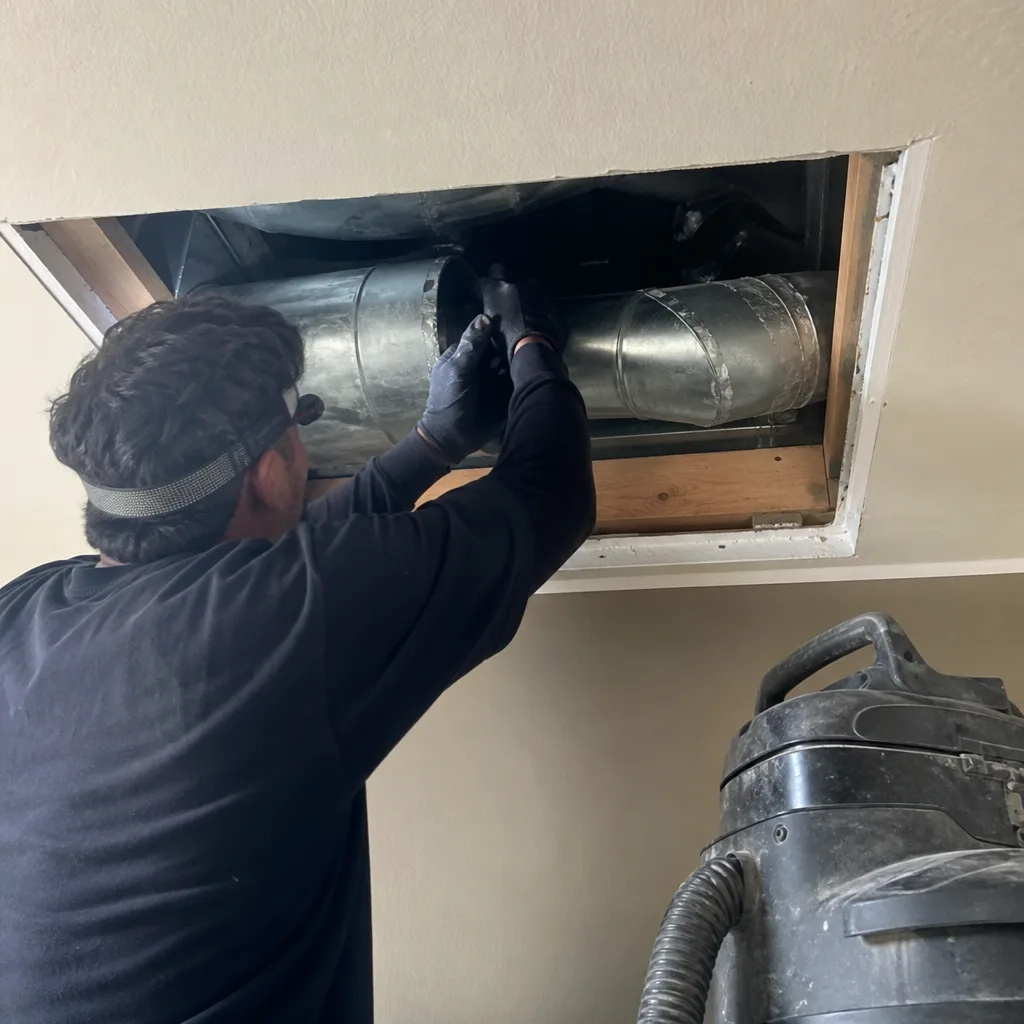
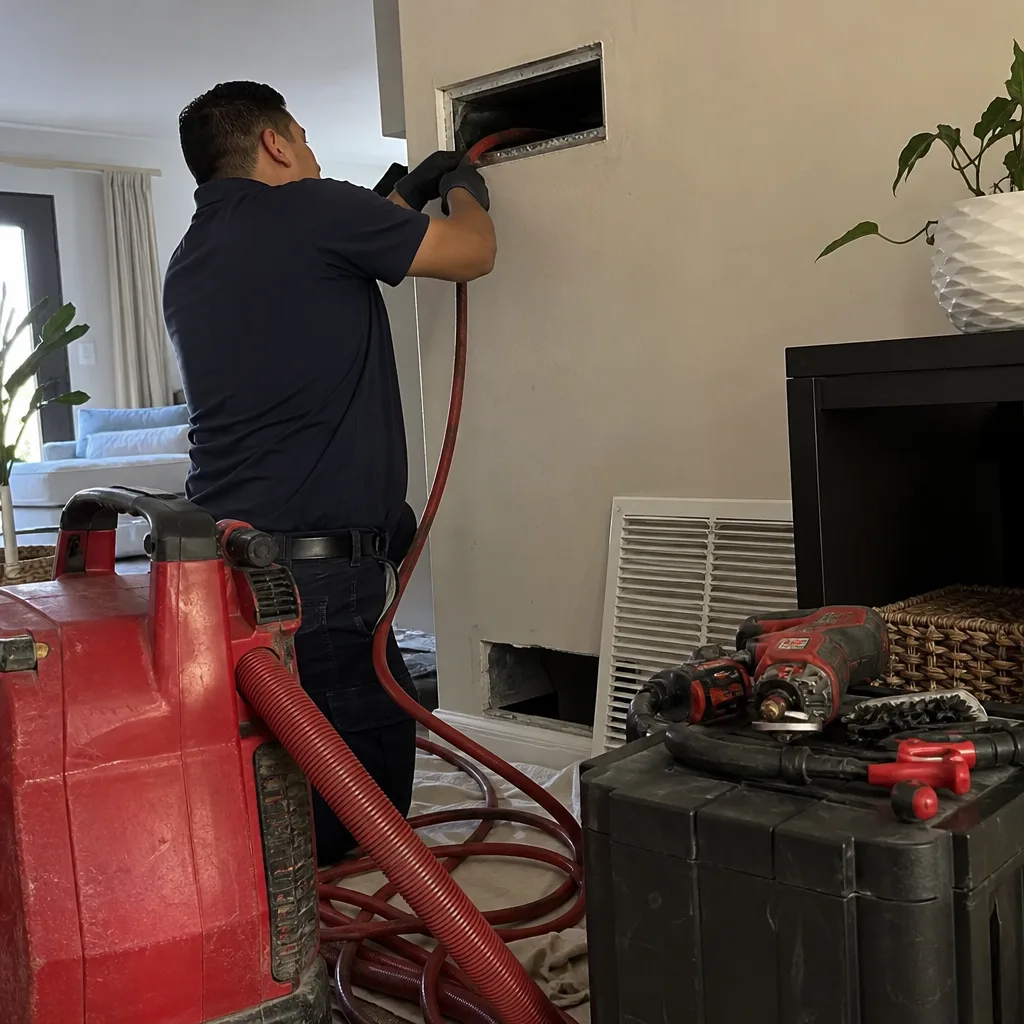
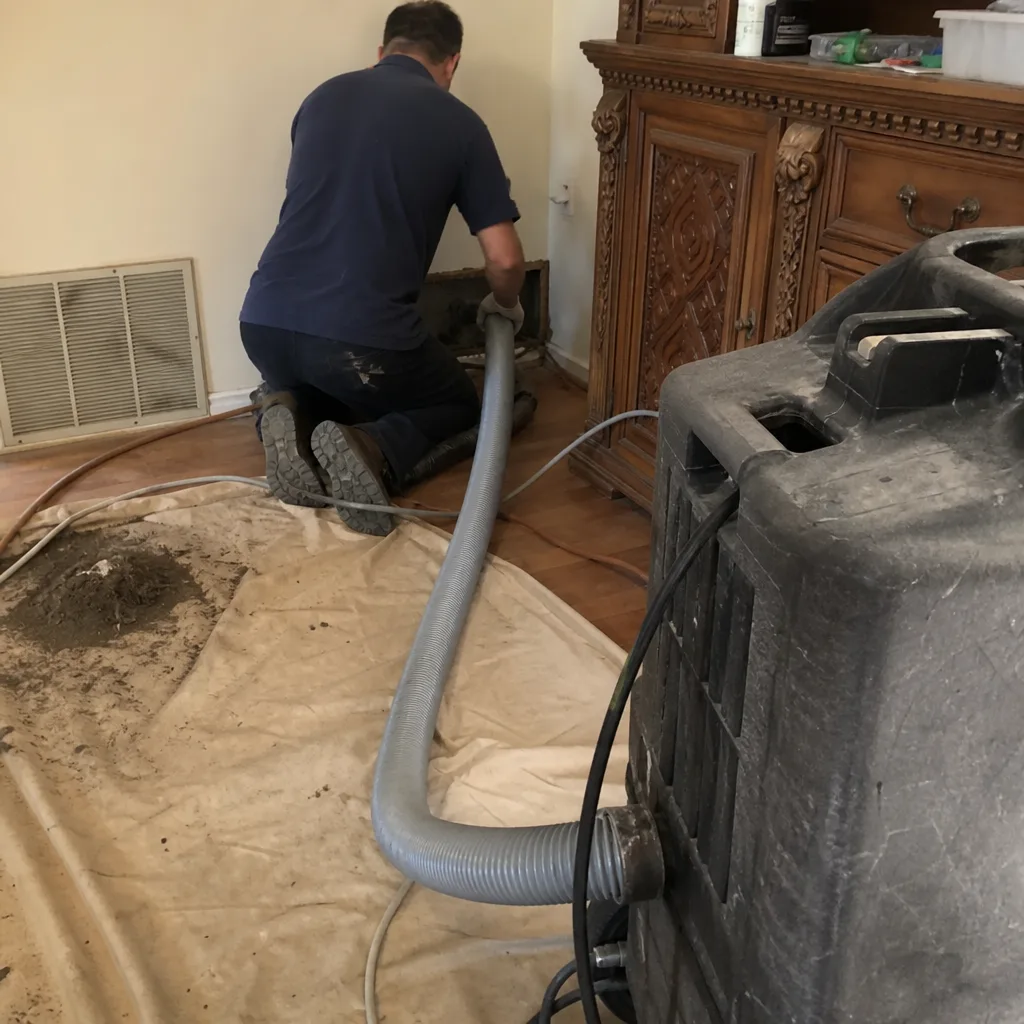
Agitation systems matter. Dust that’s been coating duct walls for ten years doesn’t come off with suction alone. It has to be mechanically dislodged. That’s what a Rotobrush system does. It uses a rotating brush to break the bond between debris and the duct surface, while a vacuum pulls the loosened material out of the system. Suction-only cleaning, which is what most bargain services run, leaves behind exactly the material that was most firmly stuck, which is often the most allergenic. We run Rotobrush because it does the job the way the equipment was designed to do the job.
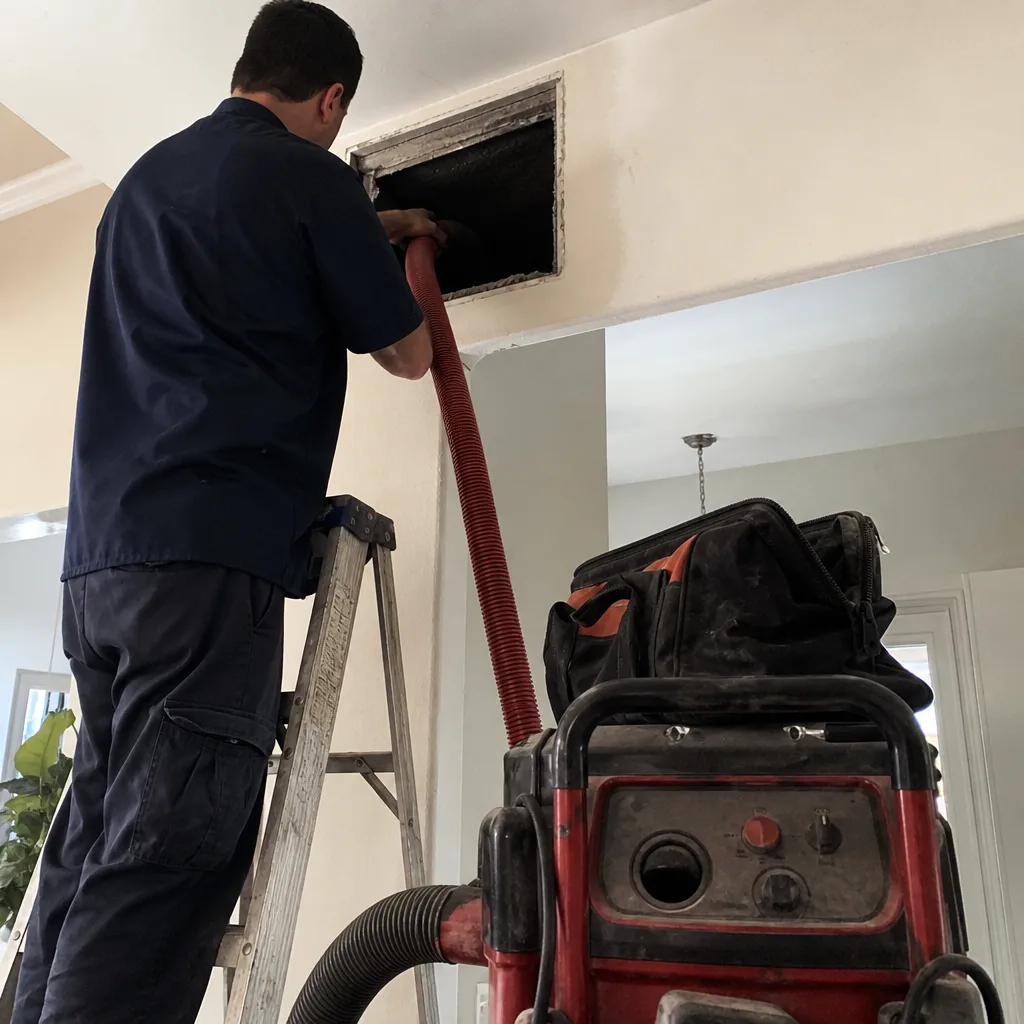
HEPA filtration matters. During cleaning, dust gets airborne. That’s unavoidable. What happens to that airborne dust is the difference between a cleaning that actually improves your indoor air and one that just relocates dirt from your ducts to your sofa. Nikro equipment with HEPA-rated filtration captures particulate at the point of agitation. The alternative, a truck-mounted vacuum with no HEPA filtration or a portable unit that vents inside the home, does the opposite of what you’re paying for. We use HEPA-rated Nikro units because clean air after the job is the entire point of the job.
Containment matters. Professional remediation work uses containment and negative-air protocols to prevent dust from migrating during disturbance. That principle applies to duct cleaning too. Abatement Technologies makes air filtration devices that are the standard in professional remediation settings. Running that class of equipment during a duct cleaning keeps the dust you’re removing out of the rest of your home. It’s the difference between a contained job and a whole-house dust event. For Tustin homeowners with allergies, this is not a luxury. It’s the reason to hire a specialist instead of a generalist.
One more thing worth understanding. Duct cleaning and duct repair go hand in hand. If a cleaning reveals a disconnected return, a leaky plenum, or a crushed branch line, you don’t want to wait for a second contractor to come fix it. We offer Air Duct Repair in Tustin as a listed service because we’re already looking at the problem when we find it. From cleaning to repair in one visit. That’s the convenience of hiring a specialist who does both, and it’s uncommon enough that it’s worth asking about up front.
Common Mistakes to Avoid
- Filter roulette: installing a MERV 13 filter in a system that can’t breathe through it. High-efficiency filters create real pressure drop. In many older Tustin homes, a MERV 13 in a 1-inch slot starves the blower and reduces system airflow more than the dirty ducts you’re trying to protect. Match the filter to the system, not to the marketing.
- Ignoring the return side entirely. Most homeowners focus on supply registers because that’s where they feel the air. But the return is where the system pulls from, and return-side duct leaks in attics can pull in insulation fibers, outside dust, and unconditioned air. Return maintenance is invisible to comfort until it isn’t.
- Vacuuming register covers with a household vacuum. A household vacuum’s exhaust can reintroduce fine particulate into the air. Use a damp microfiber cloth for register and grille cleaning. It captures instead of redistributing.
- Waiting for musty odor to call a professional. By the time you smell it, biological growth has been active for weeks or months. Odor is a late-stage signal. Airflow logs and visual inspections are early-stage signals. Use the early ones.
- Treating duct cleaning as a once-a-decade event regardless of conditions. A Tustin home that sits through multiple heavy Santa Ana seasons and a couple of wildfire smoke events may need professional attention far more often than a home in a coastal microclimate. Base the decision on measured conditions in your system, not on a generic interval.
- Hiring based on price alone and not asking about equipment. The duct cleaning industry has a documented reputation for low-quote bait pricing. If a quote is dramatically lower than others, ask what equipment they run, what their process includes, and whether the price is per system or per vent. Legitimate operators give flat per-system pricing before work starts. We do.
- Skipping the documentation. If you never photograph your return boot or log your airflow, you have no way to know if the system is stable or degrading. A 20-minute baseline inspection today is the reference point for everything that happens in the system next year. It’s the cheapest diagnostic tool you own.
See the difference
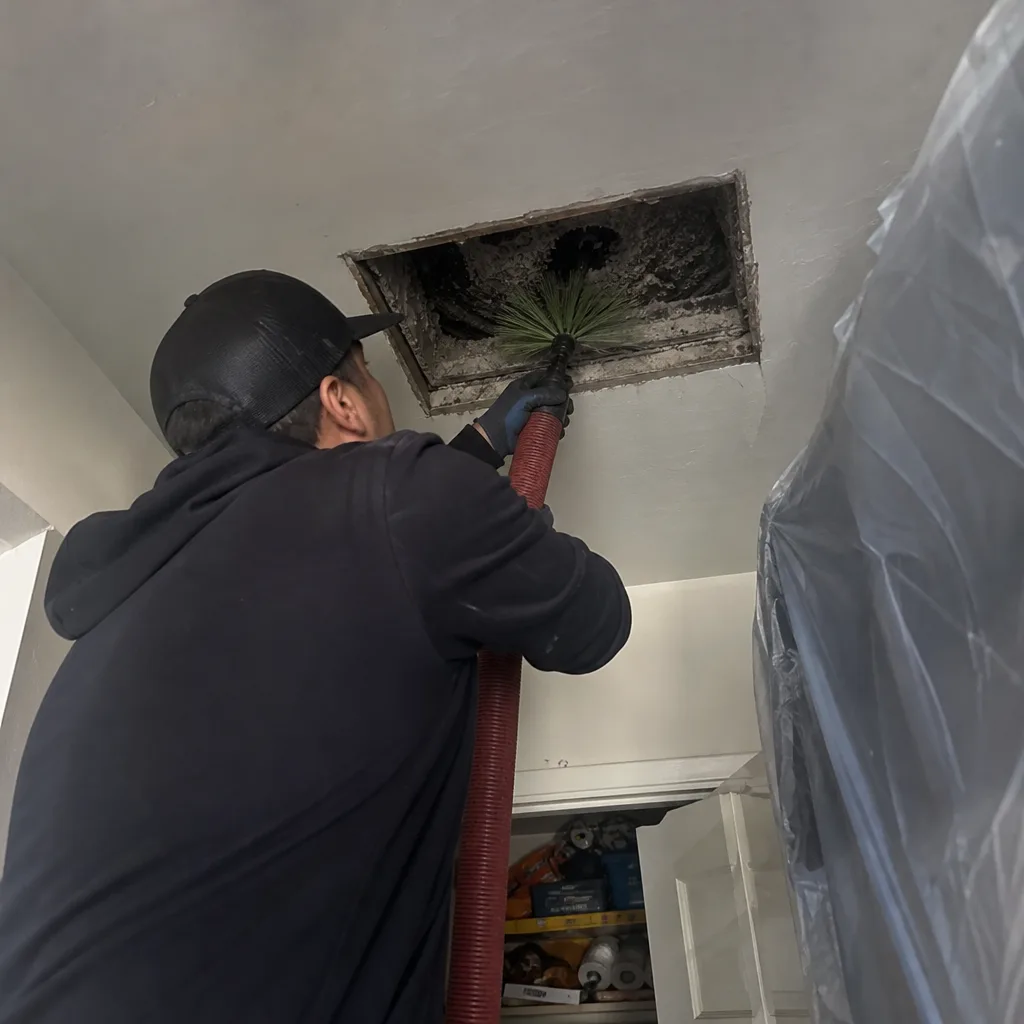 Before
 After
 Before
 After
 Before
 After
When to Call a Professional
This checklist is designed to help you identify problems early, not to replace professional evaluation. Call a professional when you observe sustained airflow loss at any register, persistent dust streaking at multiple supplies, filter loading in under 45 days twice in a row, visible dust accumulation inside the return boot beyond your baseline, or an odor that doesn’t clear after the system runs. Duct Cleaning Tustin offers free estimates in Tustin. Call (855) 473-2840 and we’ll inspect your system honestly, show you photos, and give you a flat price before any work begins. Professional-grade equipment, not bargain-bin blowers.
Frequently Asked Questions
Air duct cleaning in Tustin typically ranges between $350 and $700 for a complete single-system home, depending on system size, number of returns and supplies, and accessibility. The cost should always be quoted as one flat price per system before work starts, never as a per-vent price that grows after the tech arrives. If a quote seems dramatically lower than this range, ask what equipment they run and whether the price is truly all-in. Call (855) 473-2840 for an exact quote, estimates are free.
Cheap duct cleaning quotes are usually built on suction-only equipment, no mechanical agitation, no HEPA filtration, and per-vent pricing that balloons after the crew starts working. The equipment you’re actually paying for is the difference. A Rotobrush agitation system with Nikro HEPA capture costs real money to operate, and the price reflects that. Tustin homeowners who’ve been burned by a cheap quote that grew into a large invoice are exactly why flat per-system pricing matters. Get the number in writing before work begins.
You verify by documentation. A legitimate contractor photographs the inside of your return boot, trunk line, and branch runs before and after the cleaning. You should see a visible difference in those photos. If a company can’t or won’t show you before-and-after documentation of your own ducts, that’s a red flag. Ask for photos before you pay. A professional crew takes them anyway as standard practice.
There’s no universal interval that fits every home, but in our experience, Tustin homes in older housing stock that sit through heavy Santa Ana seasons and wildfire smoke events typically need professional cleaning more often than a home in a mild coastal city. The real answer comes from your own documentation: airflow logs, return boot photos, and filter loading times. If those signals are stable, your system is probably clean. If they’re degrading, the interval has arrived. Call (855) 473-2840 for a professional evaluation.
No. A shop vac doesn’t have the reach, the filtration, or the agitation capability to clean duct interiors. It can’t dislodge bonded dust from duct walls, and without HEPA filtration, it vents fine particulate right back into the living space. Duct cleaning is not a DIY job for the same reason you don’t service your own heat exchanger: the tools, the training, and the safety protocols matter. Hire a professional with professional equipment.
Yes, and here’s why. A cleaned duct system with a leaky return or a disconnected branch run will re-contaminate quickly. The leak pulls in attic dust, insulation fibers, and unconditioned air, and within months your newly cleaned system looks like it was never touched. Repair and cleaning are not separate services. They’re two halves of the same job. That’s why we offer Air Duct Repair in Tustin as a listed service alongside cleaning. We fix what we find so the cleaning actually lasts.
The Bottom Line
A real air duct maintenance checklist for Tustin isn’t about changing filters every three months and hoping for the best. It’s about understanding the four air quality events that load your ducts, performing visual inspections at the five checkpoints that matter, matching your filter to your system and your particulate mix, and logging airflow changes so you can catch restriction before it becomes a comfort failure. When the checkpoints trigger, act. Hire someone who runs professional-grade equipment and gives you documentation. Your duct system moves the air you breathe every day. Cleaner air starts with the right machine, and that’s a standard worth demanding. Explore more guides & resources to keep your system running at its best.
Written by the team at Duct Cleaning Tustin, serving Tustin since 2018.