
Last updated November 2, 2026
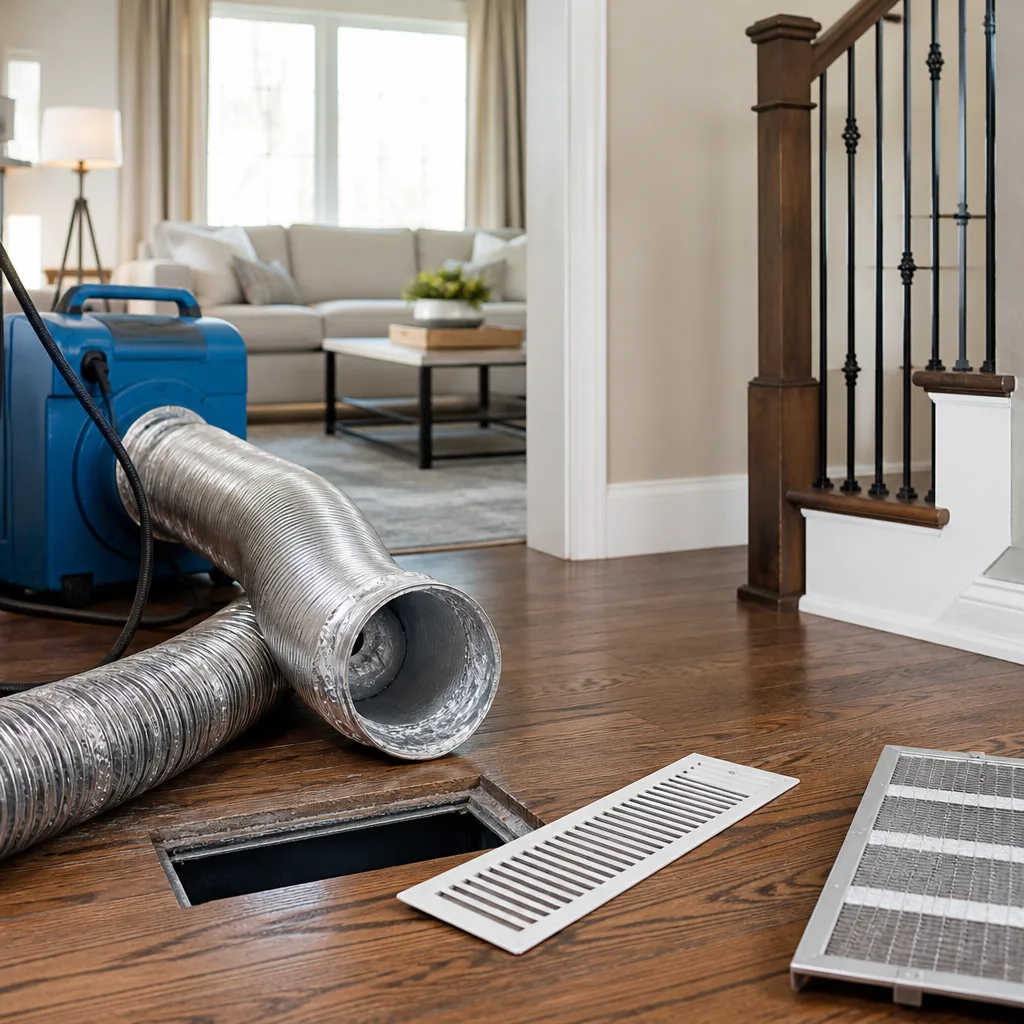 Whole-home duct cleaning
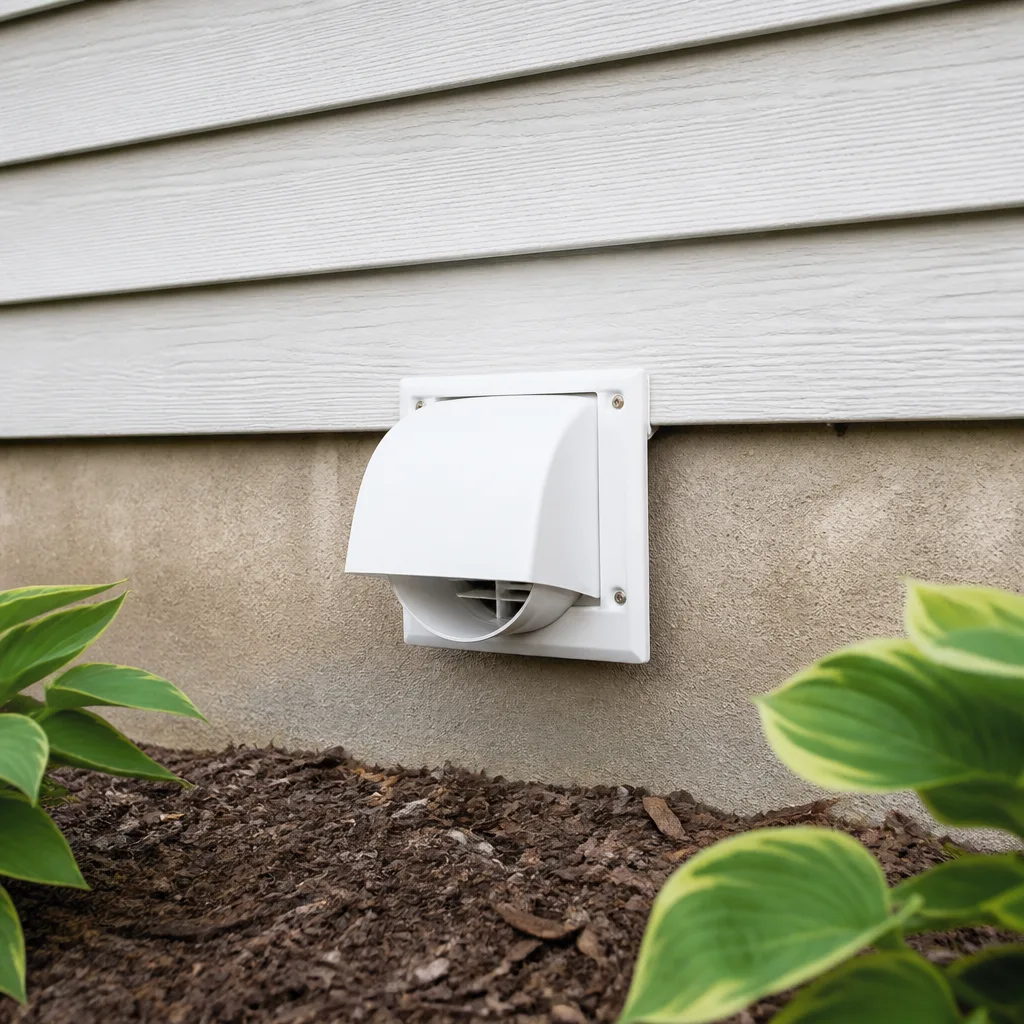 Dryer vent cleaning
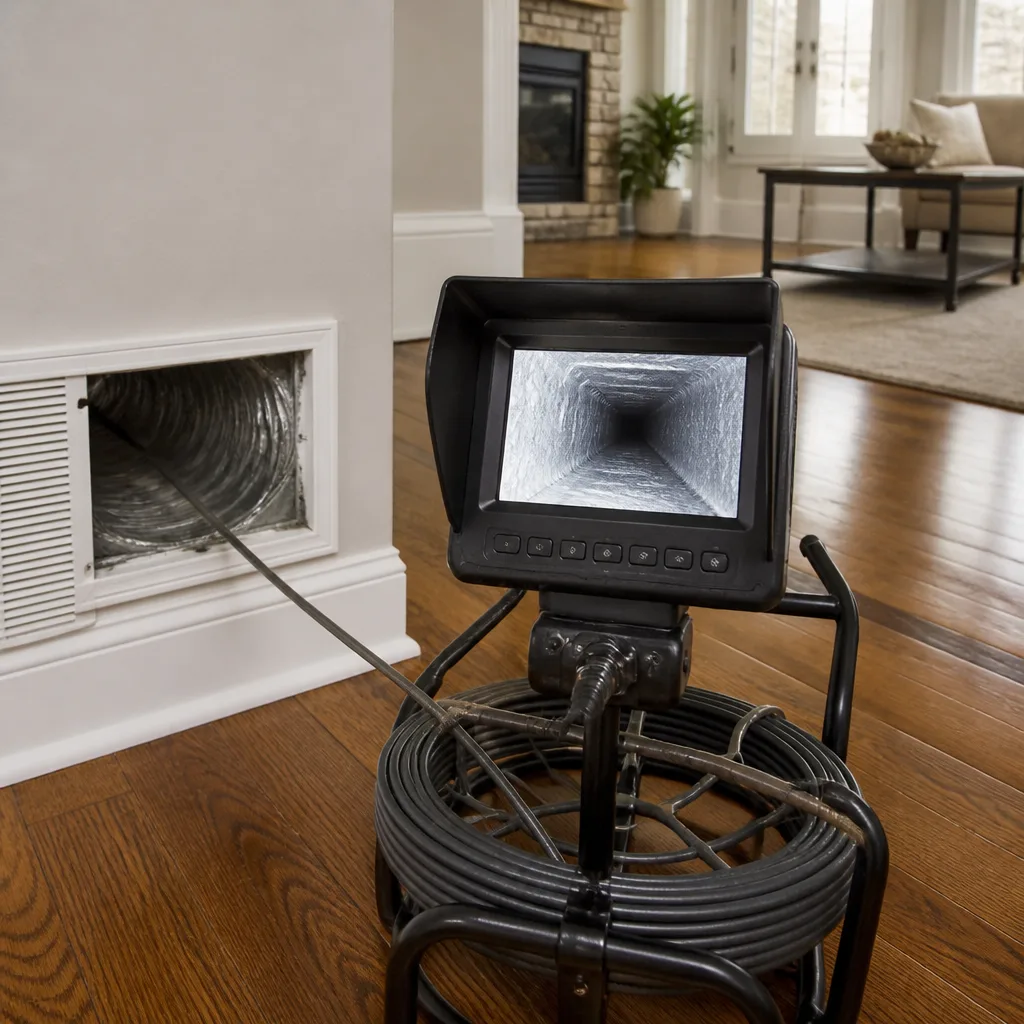 Camera inspection
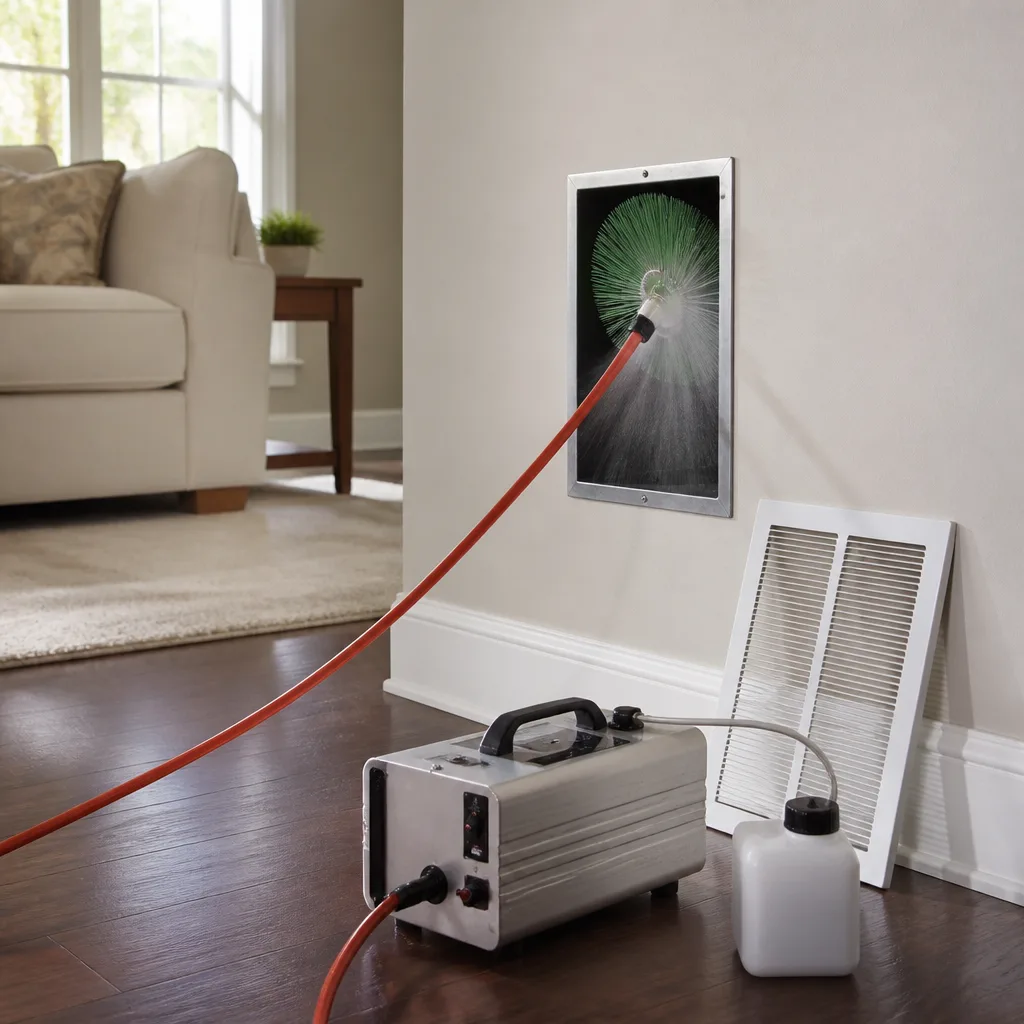 Sanitizing & deodorizing
Whole-system duct and dryer vent check with before-and-after photos - you see exactly what came out of your vents
That "$99 whole-house special" is a bait ad - the real number appears once they are in your hallway, or the "clean" is a shop-vac at the register. We photograph the inside of your ducts before and after instead.
Air Duct Cleaning Emergency Preparedness Guide for Tustin Homes
When the Santa Ana winds kick up in October and the 261 corridor gets that familiar haze, most Tustin homeowners check their window seals and maybe swap out a furnace filter. What they don’t realize is that their air ducts are actively pulling that contaminated air into the house, mixing it with whatever’s been sitting in the ductwork for years, and serving it up in every bedroom within minutes. This guide walks through the emergency scenarios Tustin actually faces: wildfire smoke intrusion, post-flood moisture contact, and post-renovation debris. You’ll learn what happens inside your duct system during an emergency, what to do in the first hour, and when to call for professional-grade remediation rather than a routine cleaning.
Quick Answer
Air duct cleaning becomes an emergency in Tustin when wildfire smoke, floodwater, or pest debris has entered the duct system, because contaminated ducts distribute particles to every room within minutes rather than hours. In these scenarios, standard duct cleaning is insufficient: you need emergency remediation with HEPA-rated containment equipment, and the work must be documented properly for any insurance claim.
Styles & brands we work with
- Whole-home duct cleaning
- Dryer vent cleaning
- Camera inspection
- Sanitizing & deodorizing
Table of Contents
- When Wildfire Smoke Gets Into Your Ductwork
- Three Emergency Scenarios That Require Remediation, Not Routine Cleaning
- What To Do in the First Hour After a Smoke or Flood Event
- Why Containment Equipment Matters More Than the Vacuum
- How to Assess Whether Duct Material Is Compromised vs. Internally Contaminated
- Insurance Documentation for Emergency Duct Remediation
- Tustin-Specific Risk Factors: Climate, Terrain, and Housing Stock
- Building a Duct Emergency Preparedness Kit
When Wildfire Smoke Gets Into Your Ductwork
Wildfire smoke from the Cleveland National Forest can push Tustin’s AQI past 200 on the worst Santa Ana days, and here’s the counterintuitive part: your HVAC system is not protecting you from it. It’s actively circulating it. A standard return air duct pulls air from inside the home, but if there are leaky duct connections (and in Tustin’s older housing stock, there usually are), the negative pressure created by the blower can draw in smoke-laden air from the attic, crawlspace, or garage. Within 20 minutes of system startup, fine particulate that started outside is being distributed through every supply register in the house.
The particles that make up wildfire smoke are particularly insidious for duct systems. Smoke penetrates the duct liner, settles into the acoustic insulation inside the duct, and clings to the film of dust and oils that builds up on duct walls over years of normal operation. Even after outdoor air quality recovers, your ducts can continue releasing smoke odor and particulate into the living space for weeks or months. This is the mechanism that turns a routine air quality concern into a duct remediation job. In our experience, homeowners who wait a month after a bad smoke season to schedule a routine Air Duct Cleaning in Tustin often find that the odor has returned within days, because surface cleaning alone doesn’t reach the contaminants that settled into the liner during the smoke event.
Three Emergency Scenarios That Require Remediation, Not Routine Cleaning
There’s a difference between “dirty ducts” and “contaminated ducts,” and that difference dictates entirely different approaches. A standard cleaning addresses the normal accumulation of dust, pet dander, and debris that builds up over years. Emergency remediation addresses a contamination event that has introduced materials into the duct system that pose an immediate health or safety concern. Here are the three scenarios Tustin homeowners face most often.
1. Wildfire Smoke Intrusion
When smoke enters the duct system during a fire event, the contaminant is not just dust; it’s fine particulate that includes partially combusted organic matter, volatile organic compounds, and in some cases, residues from burning structures or vehicles. This material adheres to duct surfaces and continues off-gassing long after the fire is contained. A standard duct cleaning with a consumer-grade vacuum will not remove this residue from the porous surfaces inside the ductwork, especially the fiberglass duct liner that many Tustin homes have.
2. Flood or Sewage Moisture Contact
Most Tustin homes sit on slab foundations, which means the main trunk ducts often run through the attic or through soffits. When a water heater fails, a washing machine supply line ruptures, or the rare but real floor flood occurs, water can travel along the ceiling cavity and into supply ducts before you notice it. If the moisture source is greywater or sewage, the duct interior is now a biologically active environment. This is not a cleaning job; this is a containment and removal job. The duct lining must be evaluated for saturation, and in many cases, the affected section of ducting must be replaced, not cleaned. This is where Air Duct Repair in Tustin capability becomes operationally critical: the same team that identifies a moisture-compromised duct section can replace it in the same visit, rather than sending you to another contractor.
3. Pest Infestation Debris
Rodents, rats, squirrels, and even nesting birds can access duct systems through disconnected joints, gable vents, or damaged register boxes. Tustin’s mature tree canopy means roof rat activity is a persistent reality across the city, particularly in older neighborhoods with larger lots and established landscaping. When an animal dies in a duct system, the contamination is not just particulate; it includes biological material that breaks down over time and can be circulated through the home as very fine organic particles. Pest-related duct contamination also requires more than a standard cleaning because the duct interior has been biologically contaminated, and in many cases, the entry point that let the animal in must be identified and sealed before any cleaning happens. Otherwise, you’ll have the same problem again within weeks.
What To Do in the First Hour After a Smoke or Flood Event
The first hour after a contamination event determines how extensive the duct remediation will need to be. Here is the step-by-step protocol we recommend to Tustin homeowners, and it applies whether the event is a bad smoke day, a sewer backup, or a discovery of pest activity in the system.
- Shut the system down immediately. Turn off the HVAC at the thermostat and, if you can access it, at the breaker or service disconnect. The blower motor is what distributes contamination. Every minute the system runs, contaminated air is being pushed into rooms that were not previously affected.
- Close all supply registers and return grilles. This creates a physical barrier (however imperfect) between the contaminated duct interior and the living space. It reduces passive air exchange between the duct system and the rooms you’re breathing in.
- Do not run the system fan in “ON” mode, even if the thermostat is off. Many thermostats allow the fan to run independently of heating or cooling. Confirm the fan is set to “AUTO” or fully off.
- Document everything. Photograph the exterior conditions (smoke density outside, water damage, visible debris at registers). Write down the date, time, and a description of what you observed. If this is related to an insurance claim, these photos are your evidence of the triggering event.
- Do not attempt to clean the ducts yourself with a shop vac or household vacuum. Household vacuums are not sealed to HEPA standards, and using one inside a register can actually aerosolize the contaminants you’re trying to remove, distributing them more thoroughly through the home.
- Call for a professional assessment. A trained technician can inspect the duct interior with a camera and determine whether the contamination is surface-level or has penetrated the duct material itself. That assessment is the difference between a remediation job and a replacement job.
One point worth making clear: if the event is a flood or sewage backup, do not wait. Duct liner that has been in contact with contaminated moisture begins supporting microbial growth quickly, and the longer it sits, the more likely the duct section will need to be replaced rather than cleaned. It is far cheaper to assess and remediate in the first 24-48 hours than to wait until the problem is visible or odorous enough that the entire run needs replacement.
Why Containment Equipment Matters More Than the Vacuum
Standard duct cleaning equipment is designed to remove the normal dust and debris that accumulates in a duct system over years of residential use. Emergency remediation requires something more: the ability to keep the contaminants you’re removing from re-entering the living space during the work itself. This is where the distinction between consumer-grade equipment and professional remediation gear becomes acute.
In our work at Duct Cleaning Tustin home, we use Abatement Technologies air filtration devices during emergency remediation jobs. This is the same equipment found on professional mold and remediation sites, and its function is straightforward: it creates negative pressure isolation around the work area. The device pulls air from the space through a HEPA filter and exhausts it outside, which means anything that gets dislodged during the cleaning process is captured and removed, rather than resettling on your furniture, carpets, and bedding. There is a meaningful difference between cleaning a duct system with a brush that loosens debris, then vacuuming it with a Nikro HEPA-rated vacuum, versus working in a fully contained environment where the air itself is being scrubbed.
Nikro equipment matters here for a specific reason: HEPA filtration captures 99.97% of particles at 0.3 microns, the size range that includes smoke particulate, mold spores, and fine pest debris. A shop vacuum, even a high-quality one, is not built for that level of capture. If the vacuum you’re using is releasing microscopic particles back into the room while you’re removing them from the duct, you’re making the problem worse, not better. The equipment is not the entire job, but it’s the difference between a remediation that actually resolves the contamination and one that just moves it around.
In emergency scenarios specifically, containment matters even more. If the contamination is severe enough that we’re removing biologically active material (post-flood duct liner, pest debris), working without containment risks cross-contaminating other areas of the home through the HVAC return air path. The Abatement Technologies equipment prevents this by isolating the duct system during the work. This is the professional standard for a reason, and it’s why we don’t recommend that homeowners attempt emergency duct cleaning with rental equipment.
How to Assess Whether Duct Material Is Compromised vs. Internally Contaminated
One of the most important determinations in any emergency duct situation is whether the problem is on the interior surface of the duct (cleanable) or has penetrated the duct material itself (not cleanable, requires repair or replacement). Here’s how a professional assessment distinguishes between the two, and what you can look for as a homeowner.
Internal surface contamination is what most emergency smoke events produce. The contaminants settle on the interior surface of the duct, including the walls, the turning vanes, and the exposed edges of any insulation. This can typically be remediated with professional-grade agitation and HEPA vacuuming. The Rotobrush system is effective here because it physically agitates the duct walls while vacuuming simultaneously, dislodging particles that have adhered to the surface rather than simply suctioning the loose dust on top.
Material compromise is a different problem. When floodwater or sewage saturates fiberglass duct liner, or when rodent activity has shredded insulation and left biological material embedded in the duct structure, or when smoke residue has been baked into the liner by repeated heating cycles, the contamination is no longer on the surface. It’s in the material. No amount of surface cleaning will address this, because the contaminant source is now the duct construction itself. In these cases, the affected section must be removed and replaced. This is why Air Duct Repair in Tustin matters as a capability: the same appointment that identifies the contaminated section can address it, rather than sending the homeowner to find a separate contractor to replace a duct run.
Here’s the practical homeowner test. If the contamination event was smoke that occurred over a period of hours or days, and the ducts were not exposed to moisture, you’re likely dealing with internal surface contamination that is cleanable. If the event was water contact of any kind, or if pest activity is confirmed inside the duct, the probability of material compromise goes up significantly, and a camera inspection is necessary to determine the scope. Acting early in both cases is the single biggest cost-control measure available.
Insurance Documentation for Emergency Duct Remediation
Here’s a hard truth about insurance claims for duct remediation: most homeowners’ claims are denied or underpaid not because the damage isn’t real, but because the documentation doesn’t establish a clear cause-and-effect chain between the triggering event and the duct contamination. Here’s how to build a claim that holds.
First, document the triggering event as it happens. If smoke from the Cleveland National Forest reaches Tustin at high AQI, screenshot the air quality readings with the date and time visible. If you have a flood, photograph the water source, the extent of the water, and any visible intrusion into registers or duct runs. If you find a dead animal in the system, photograph it before anyone touches it. These photos establish the “when” and “what” that any adjuster will need.
Second, get the duct system inspected and documented by a professional before any remediation work begins. A camera inspection that shows visible contamination inside the duct interior, with a written description of what was observed, is materially stronger evidence than a homeowner’s assertion that “the ducts smell bad.” If the technician identifies moisture saturation or pest intrusion, that goes into the written report as well.
Third, document the remediation process and the after-condition. This means photos of the equipment being used (especially HEPA-rated equipment like Nikro vacuums or Abatement Technologies containment devices, which demonstrate that the remediation met an industry standard, not a handyman’s improvised approach), photos of the duct interior after the work, and a written report detailing what was removed and what was done.
One thing to be aware of: standard duct cleaning is not typically covered by homeowners insurance because it’s considered maintenance. Emergency duct remediation following a covered peril (fire, smoke damage, water damage from a sudden event, pest damage in some policies) is treated differently, because it’s considered mitigation of covered damage. The specific language in your policy will determine whether your claim is accepted, but the documentation rule is universal: the better your evidence trail, the stronger your claim. Call (855) 473-2840 for a professional assessment, and we can walk you through what your specific situation requires for documentation.
Tustin-Specific Risk Factors: Climate, Terrain, and Housing Stock
Tustin is not like other Orange County cities when it comes to duct contamination risk. Three local factors combine to make emergency duct scenarios more common here than most homeowners realize.
Santa Ana wind exposure. Tustin sits in a position where Santa Ana wind events, typically October through December, push air from the inland deserts through the canyons and toward the coast. When there’s an active fire in the Cleveland National Forest or the surrounding mountains, the smoke plume comes directly through this corridor. The particulate load in the air during these events is not the kind of thing that stays outside. Your HVAC system pulls it in through the return air path, and any leaky duct connections multiply the intake.
Aging housing stock. Much of Tustin’s original housing was built in the 1960s and 1970s, and while the homes have been maintained, the duct systems in many of these properties are original or near-original. Duct tape (which was never actually recommended for ducts) dries out and fails. Flex duct connectors sag. Metal duct sections separate at the joints. Each of these failure points is an entry point for outside air, smoke, dust, and pests. The result is a duct system that’s already compromised before any emergency event occurs, which means the contamination burden from a single smoke event is higher than it would be in a newer home with tighter duct connections.
Mature landscaping and pest pressure. Tustin’s tree canopy, particularly in the older neighborhoods, provides habitat for the roof rats and squirrels that end up in attic spaces. Once an animal is in the attic, it’s a short trip to a disconnected duct joint or a damaged register box. We’ve seen this pattern too many times to count: a homeowner hears scratching in the ceiling, writes it off as the wind, and then a month later notices an odor coming from a supply vent that won’t go away.
These three factors mean that Tustin homeowners have a higher baseline risk of needing emergency duct remediation than homeowners in, say, newer Irvine developments with tighter ductwork and less mature landscaping. The risk is not extreme, but it’s real, and it’s concentrated in the older housing stock that makes up such a large portion of Tustin’s residential fabric.
Building a Duct Emergency Preparedness Kit
You can’t prevent every emergency, but you can make the response faster and cheaper. Here’s what we recommend Tustin homeowners keep on hand, and why each item matters.
- High-MERV furnace filters (MERV 11-13). When wildfire smoke is in the Tustin air, a high-MERV filter in your HVAC system captures more of the fine particulate before it reaches the ductwork. This doesn’t solve the problem, but it reduces the load. Honeywell and Aprilaire both make good filters in this range, and replacing a standard filter with a higher-MERV option during smoke season is a simple, meaningful step.
- Basic register sealing supplies. Painter’s tape and plastic sheeting, stored with your other emergency supplies. If smoke or floodwater is a risk, sealing the registers and return grilles physically blocks the pathway between the duct system and the living space.
- Photos and documentation of your current duct condition. If you’ve had your ducts inspected, keep the photos. If you haven’t, consider a one-time camera inspection. Having a baseline of your duct condition makes it dramatically easier to prove that contamination entered after a specific event.
- The phone number of a duct remediation professional. During a citywide emergency, scheduling fills up fast. If you’ve already identified who you’re going to call, you call them in the first hour rather than researching during the event. (855) 473-2840 is the direct line for Duct Cleaning Tustin.
- Understanding of your system’s fan settings. Knowing how to set your thermostat fan to “AUTO” (or completely off) is a small thing, but during a smoke event, it’s the single most impactful action you can take in the first 30 seconds.
- A basic understanding of where your ducts run. If your home is slab-on-grade, your ducts are likely in the attic or soffits. If you have a raised foundation, you may have crawlspace ducts. Knowing where they are helps you identify moisture entry points and register location vulnerabilities.
None of this is expensive or complicated. The point is to make the first hour of response automatic, because the first hour is when the scope of contamination is determined. A duct that’s been circulating smoke-laden air for 20 minutes is a different problem than one that’s been circulating it for 8 hours while the homeowners were at work.
Regular Maintenance as Emergency Prevention
There’s a direct relationship between the condition of your duct system before an emergency and the severity of the damage it suffers during one. A duct system that’s well-maintained resists contamination better, because there’s less existing debris for new contaminants to adhere to. There’s also a practical reality: if your ducts are already clean, an emergency contamination event is more visible and easier to remediate, because the new contaminant stands out against the clean surface.
Regular Air Duct Cleaning in Tustin also includes an inspection for exactly the kinds of vulnerabilities that emergencies exploit: disconnected joints, damaged flex connectors, deteriorating tape, loose register boxes. Finding and fixing these before a smoke event or a flood means the emergency path of contamination is narrower. A duct system with sealed connections and no openings is much less vulnerable to smoke intrusion through negative pressure, pest entry, or moisture infiltration.
And here’s a connection many homeowners don’t make: Dryer Vent Cleaning in Tustin is part of the same fire-risk reduction picture. A clogged dryer vent is one of the leading residential fire causes in Southern California, and during high-wind events (which Tustin gets with the Santa Anas), a clogged vent can also let smoke and debris backflow into the laundry area. Keeping the dryer vent clear is a small preventive step that removes one of the most common household fire risks.
In our work across Tustin, the homes that handle emergencies most easily are the ones where the duct system was not already compromised before the event. Maintenance is not a guarantee against emergency damage, but it’s the single most effective thing a homeowner can do to reduce the scope and cost of any future remediation.
See the difference
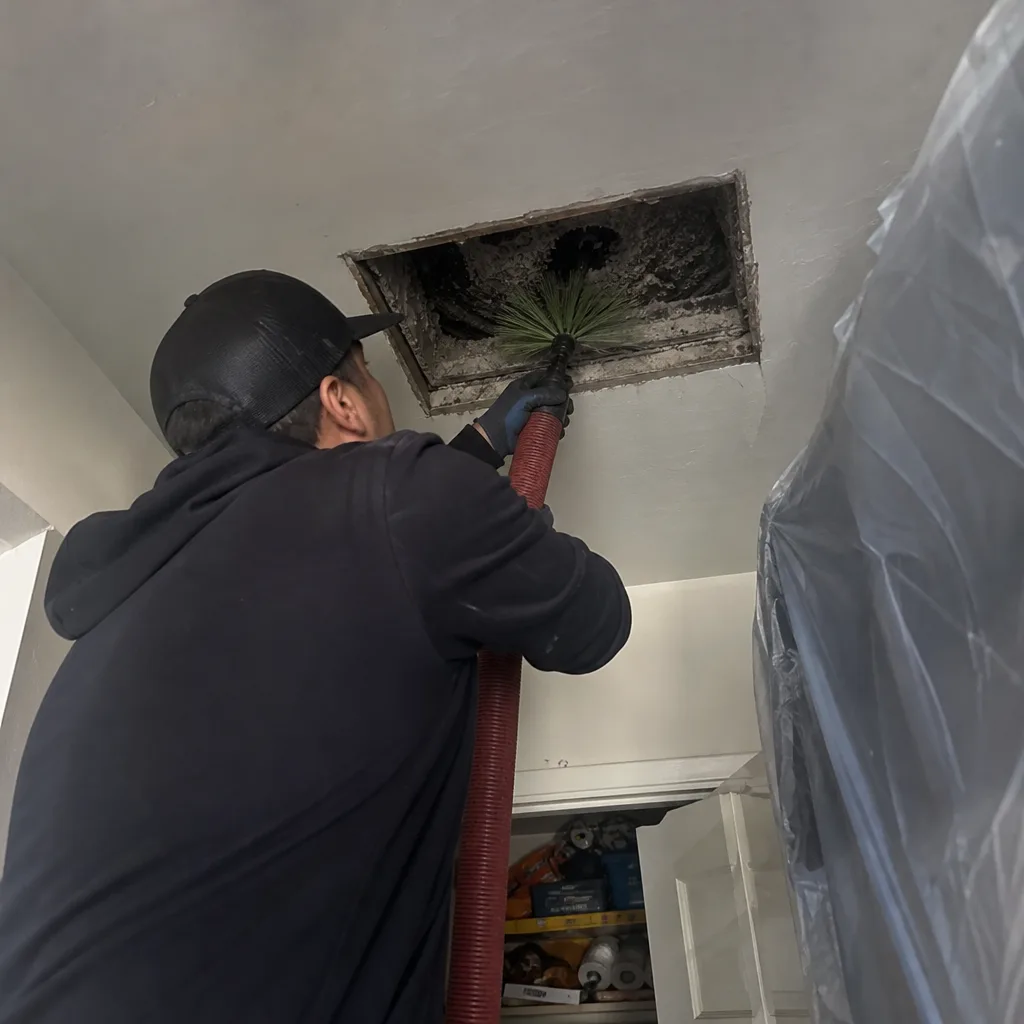 Before
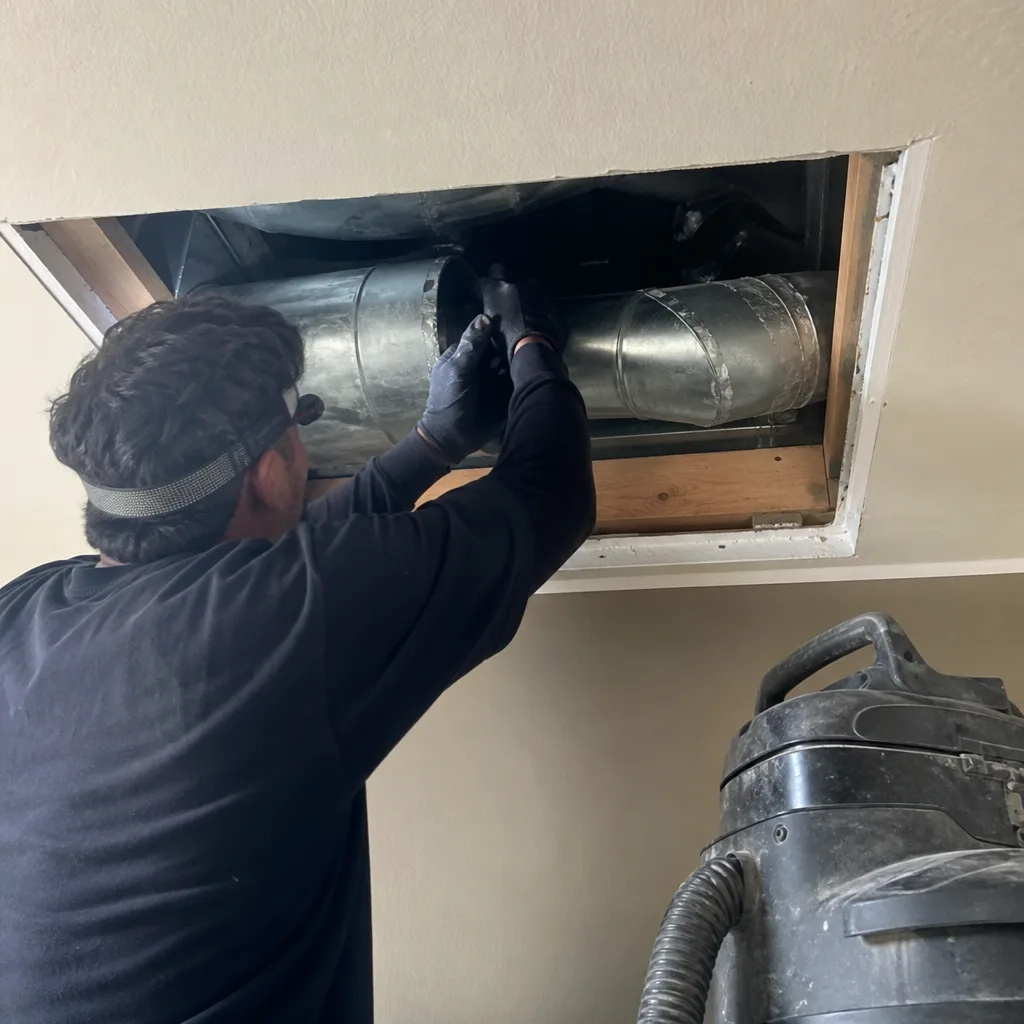 After
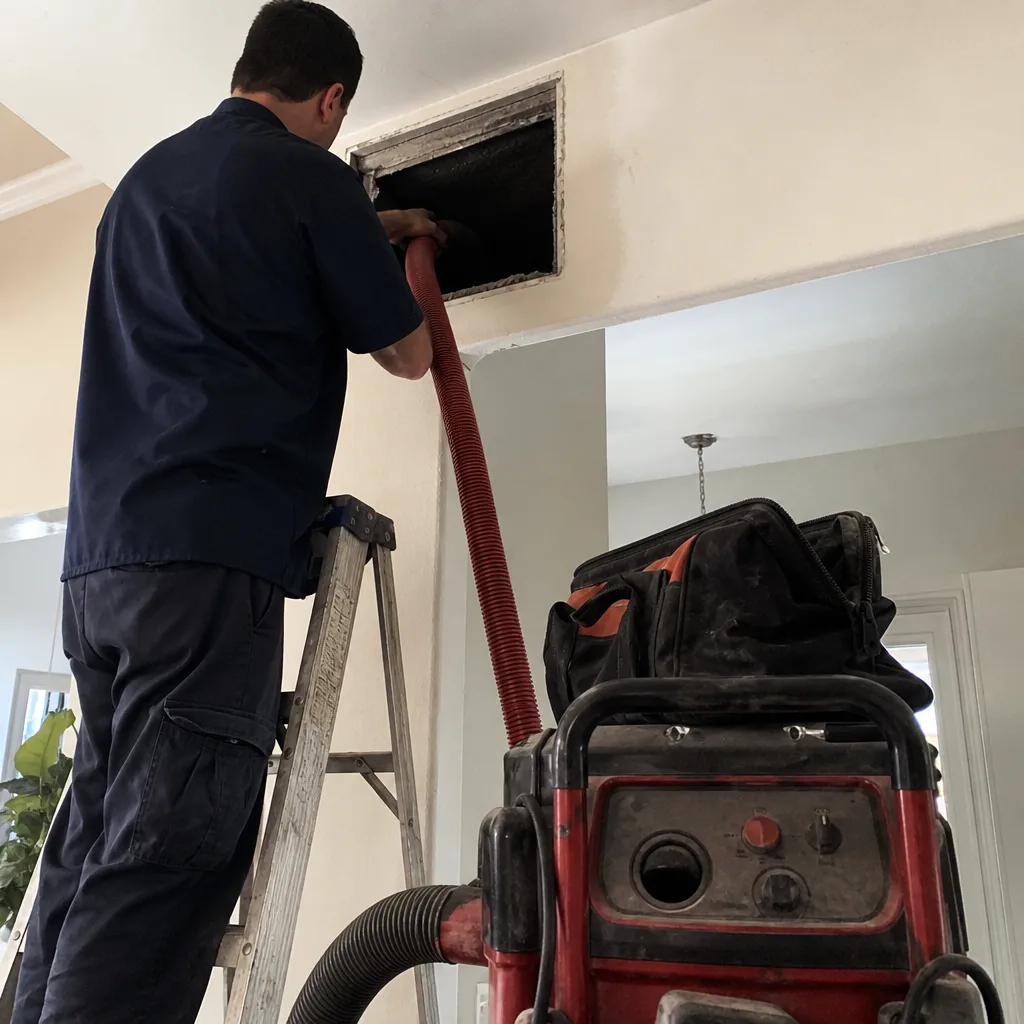 Before
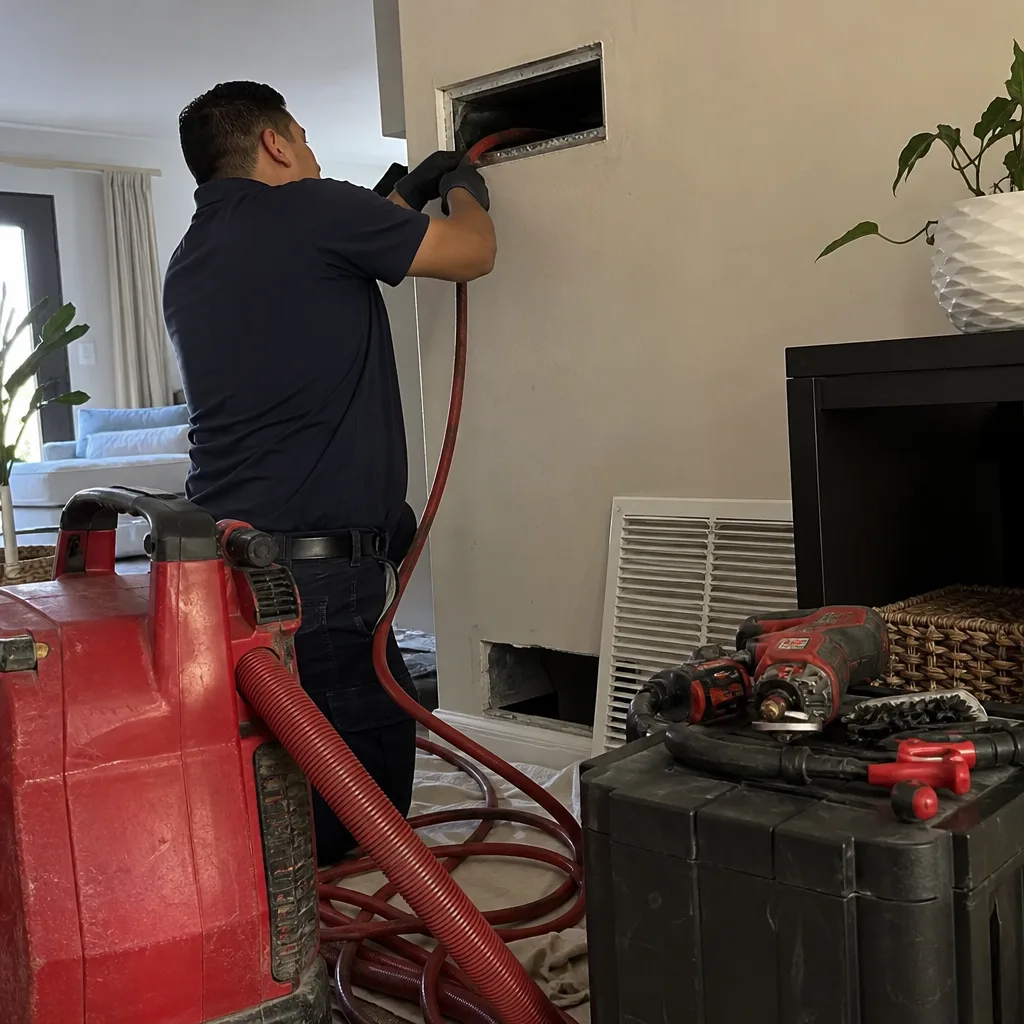 After
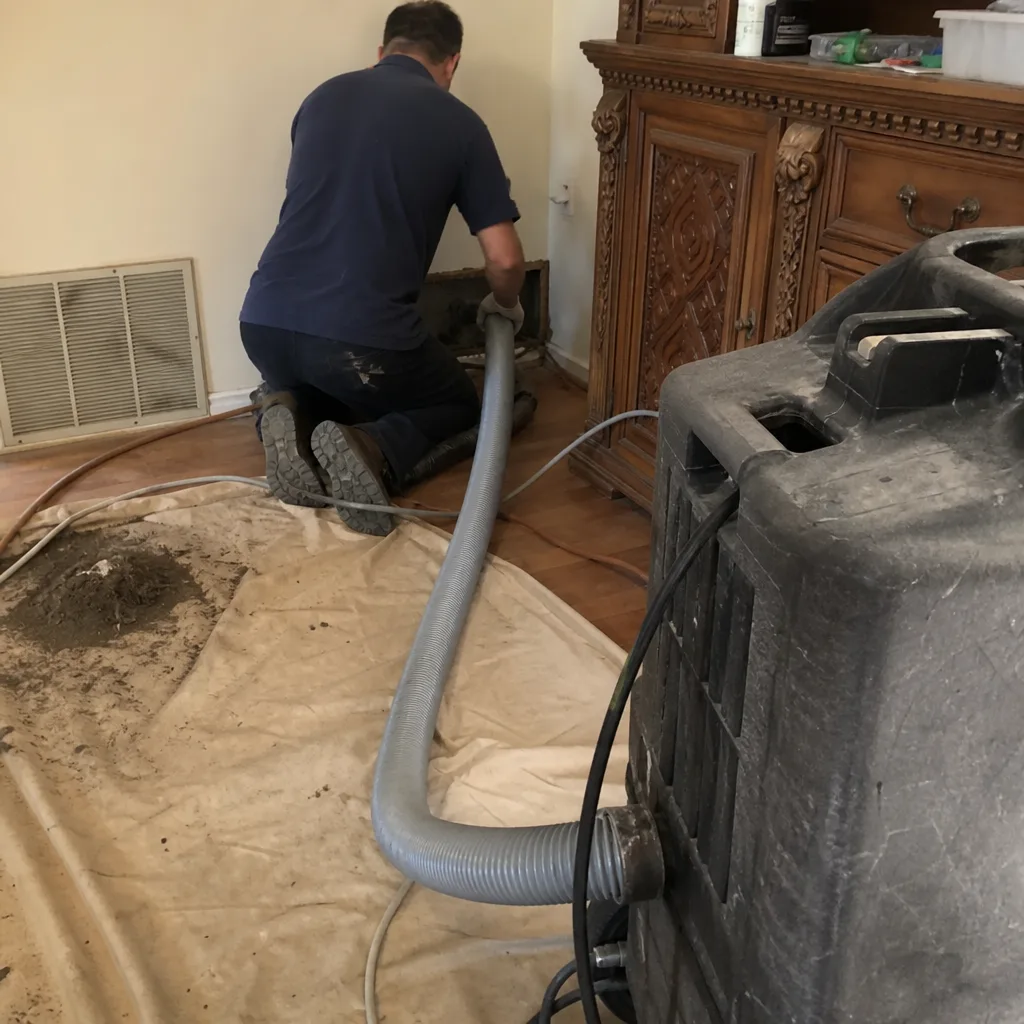 Before
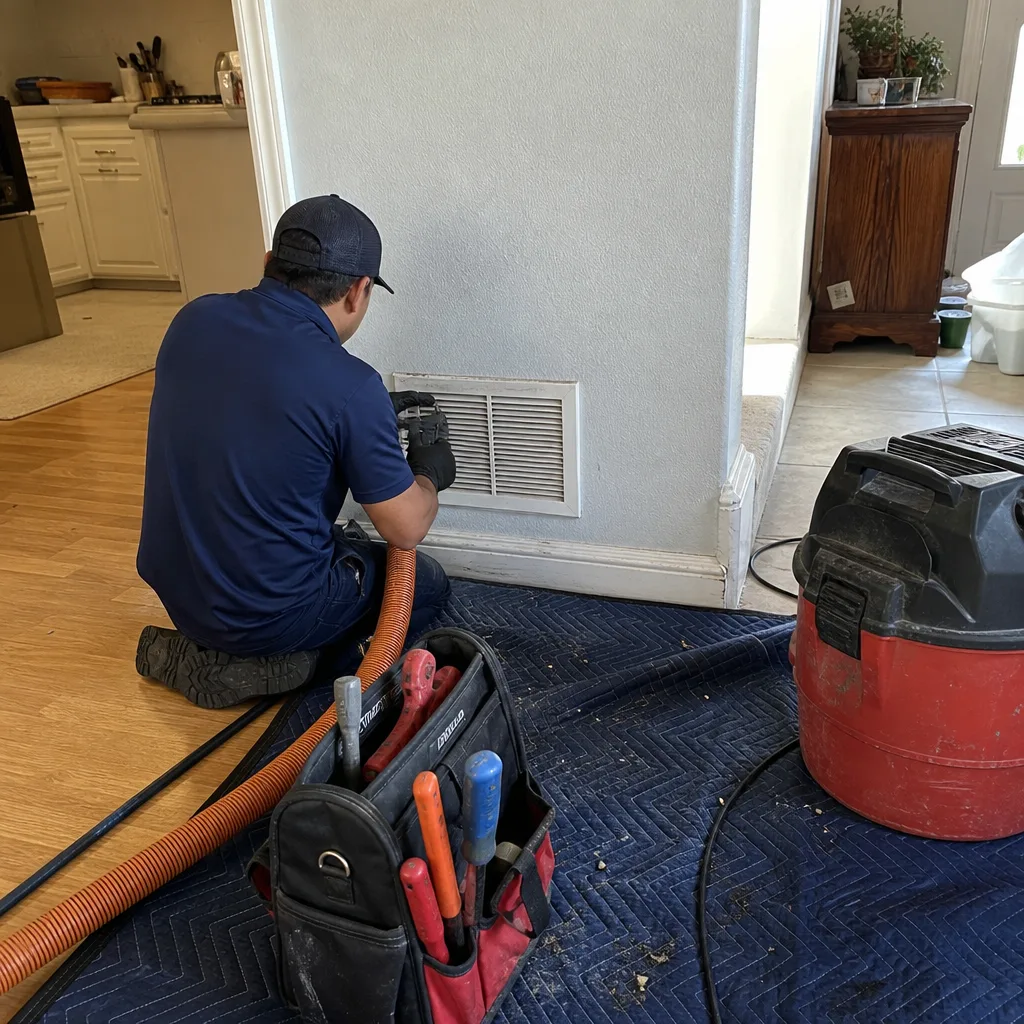 After
Common Mistakes to Avoid
- Running the HVAC during a smoke event to “filter the air.” This is the most common mistake we see, and it’s counterproductive. Unless your system is equipped with a dedicated high-MERV filtration system that you know is working correctly, running the blower during a smoke event pulls contaminated air into the ductwork through every leak point and distributes it throughout the house. Turn the system off, not on.
- Waiting for the odor to go away on its own. Smoke odor from duct contamination does not dissipate. It settles into the duct liner and the system housing, and it will continue to be released every time the system runs. The longer you wait, the more the odor bakes into the materials.
- Using a household vacuum on the registers. Household vacuums lack the sealed HEPA filtration required for this kind of work. Using one inside a register can aerosolize fine particulate and spread it through the living space more thoroughly. This makes the problem bigger, not smaller.
- Ignoring pest noise in the attic or ceiling. Scratching sounds above the ceiling, especially in older Tustin homes, often indicate rodent activity in or near the duct system. A dead animal in a duct is a contamination event that requires remediation, not just a cleaning. Addressing the pest entry point early prevents the duct problem entirely.
- Assuming the insurance company will investigate on their own. Insurance adjusters have case loads. The homeowner who presents a clear documentation trail (photos of the triggering event, pre-remediation inspection report, remediation process documentation) gets a much faster and more favorable outcome. The burden of proof is on the homeowner, and most people aren’t ready for that.
- Calling a generalist for emergency duct work. A handyman with a shop vac is not equipped for emergency duct remediation, and the result is usually an incomplete job that leaves contamination in place. Emergency scenarios require the right equipment: Rotobrush agitation systems, Nikro HEPA-rated vacuums, and Abatement Technologies containment. The tool matters, and “bargain bin” equipment produces bargain bin results.
When to Call a Professional
Call a professional immediately if you’ve had a smoke intrusion event with AQI over 150 at your Tustin location, any water contact with your duct system (even if it seems minor), confirmed or suspected pest entry into the ductwork, or a persistent odor from the registers that doesn’t resolve with a standard filter change. These scenarios represent contamination that a routine duct cleaning will not fully address. Duct Cleaning Tustin offers free estimates in Tustin – call (855) 473-2840 and we’ll assess your system with a camera inspection, identify the scope of contamination, and recommend either emergency remediation or standard cleaning based on what we actually see. No upsell, no pressure, just an honest assessment of whether you have a cleaning job or a remediation job.
Frequently Asked Questions
In a Tustin home with typical duct leaks, contaminated air can enter the duct system and be distributed to every room within about 20 minutes of system startup during a wildfire smoke event. The fine particulate in smoke adheres to the duct interior quickly, especially when the duct surfaces already hold a layer of normal household dust.
Yes, if the contamination is on the interior surface of the duct and has not penetrated the duct material. Smoke particulate on the duct walls can be remediated with professional agitation and HEPA vacuuming. However, if floodwater or sewage has saturated the duct liner, or if pest debris is embedded in the insulation, the affected section typically must be replaced, not cleaned.
Emergency duct remediation in Tustin typically costs more than standard cleaning because it requires containment equipment and more thorough material removal, but the exact cost depends on the size of the duct system, the extent of contamination, and whether any duct sections need replacement. A camera inspection is the only way to get an accurate quote. Call (855) 473-2840 for a free assessment.
Homeowners insurance typically covers emergency duct remediation when it’s related to a covered peril such as wildfire smoke damage, water damage from a sudden event, or pest damage (depending on the policy), but it does not cover routine duct cleaning. The key to a successful claim is documentation showing the cause-and-effect chain between the covered event and the duct contamination.
A regular duct cleaning removes normal dust and debris accumulation using professional equipment like a Rotobrush system with vacuum collection. Emergency remediation is a more involved process that requires containment equipment (like Abatement Technologies negative air devices) to prevent cross-contamination during the work, HEPA-rated filtration to capture fine particulate, and often involves removing contaminated material that a standard cleaning would leave in place.
No. Even with a high-MERV filter like those from Honeywell or Aprilaire installed, running the HVAC blower during heavy smoke creates negative pressure that pulls smoke-laden air into the duct system through leaky connections. Turn the system off, close the registers, and wait for outdoor air quality to recover before restarting. Then have the ducts inspected for contamination.
The Bottom Line
Emergency duct contamination in Tustin is a real risk that comes from three main sources: wildfire smoke carried by Santa Ana winds, water intrusion from plumbing failures or floods, and pest activity in aging duct systems. The common thread in all three scenarios is the same: the duct system becomes a contamination vector, distributing the problem to every room in the house through your own HVAC blower. The first hour of response matters enormously, because whether you’re dealing with cleanable surface contamination or material compromise that requires replacement depends on how quickly the system is shut down and how thoroughly the contamination is contained. Document everything, use professional-grade equipment, and get an assessment before the scope expands. For a free assessment of any duct contamination concern in Tustin, call (855) 473-2840.
Written by the team at Duct Cleaning Tustin, serving Tustin since 2018.