
Last updated November 2, 2026
 Whole-home duct cleaning
 Dryer vent cleaning
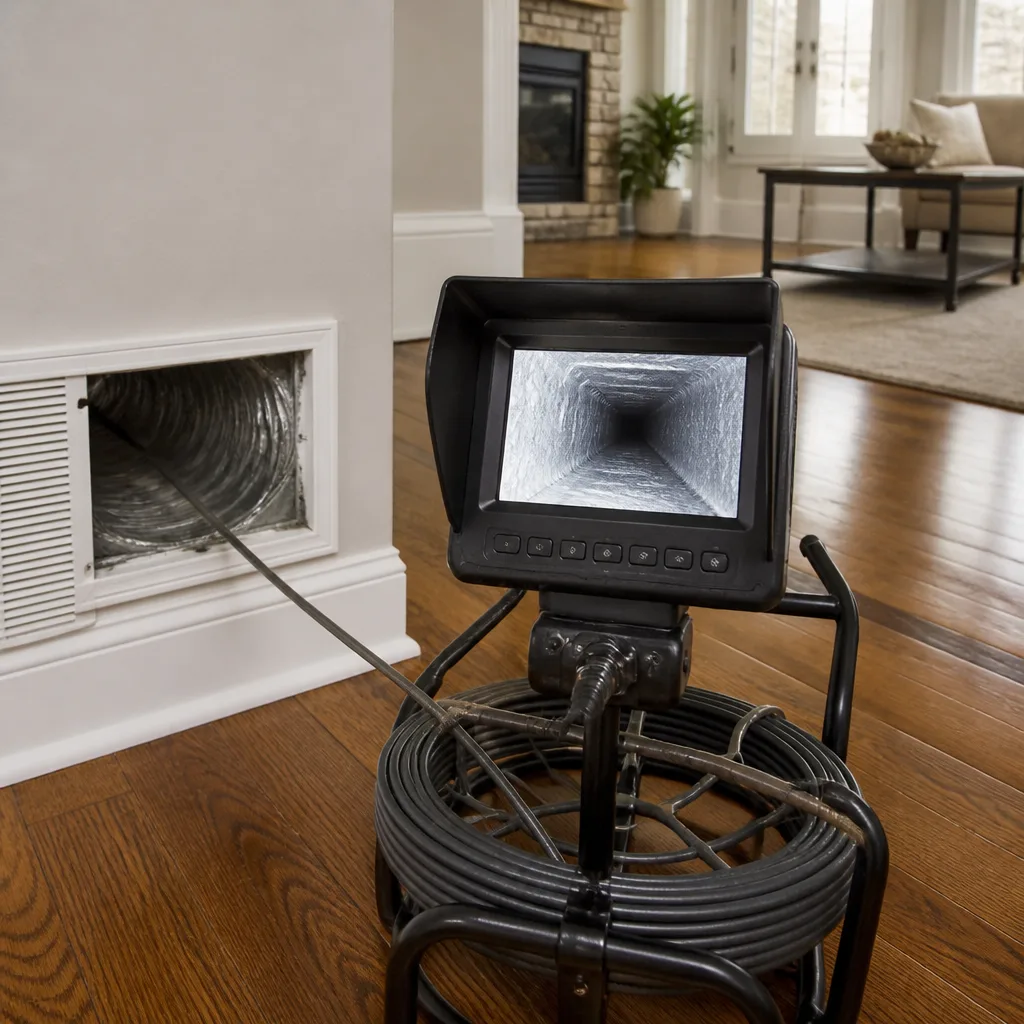 Camera inspection
 Sanitizing & deodorizing
Whole-system duct and dryer vent check with before-and-after photos - you see exactly what came out of your vents
That "$99 whole-house special" is a bait ad - the real number appears once they are in your hallway, or the "clean" is a shop-vac at the register. We photograph the inside of your ducts before and after instead.
Seasonal Air Duct Cleaning Care for Tustin: Year-Round Homeowner’s Guide
Scheduling duct cleaning in January because “it’s the new year” is the single most common way Tustin homeowners miss the actual contamination windows their system just went through. By January, the Santa Ana winds have already blasted fine particulate through every exterior vent, your HVAC has cycled through months of accumulated debris, and the system has been quietly recirculating whatever October through December deposited inside. This guide breaks Tustin’s year into four distinct air-quality cycles, explains what each one does to your ductwork, and shows you exactly when inspection and cleaning actually make sense in this climate.
Styles & brands we work with
- Whole-home duct cleaning
- Dryer vent cleaning
- Camera inspection
- Sanitizing & deodorizing
Quick Answer
The best time for air duct cleaning in Tustin is November through December, immediately after Santa Ana wind season ends, because that’s when wind-driven dust, ash, and particulate have finished accumulating and before winter heating cycles start recirculating them. A second inspection window opens in May, before summer cooling load peaks, to catch pollen, construction dust, and any moisture issues in flex duct systems. Dryer vent cleaning deserves its own schedule, timed before summer heat raises fire-risk conditions.
Table of Contents
- The Four Air Cycles of Tustin: What Actually Gets Into Your Ducts
- Why Post-Santa Ana Cleaning (November – December) Beats Spring Scheduling
- Summer Cooling Load and Flex Duct Moisture Risk: What to Inspect Before June
- Dryer Vent Cleaning Timing: Tustin’s Summer Fire-Risk Connection
- Tustin’s Seasonal Duct Care Calendar: Inspection vs. Full Cleaning
- What Professional Equipment Should Actually Be Used on Tustin Duct Systems
- Common Mistakes to Avoid
- When to Call a Professional
- Frequently Asked Questions
- The Bottom Line
The Four Air Cycles of Tustin: What Actually Gets Into Your Ducts
Tustin doesn’t have four seasons in the New England sense. What it has is four distinct air-quality and HVAC-load cycles, each depositing a different kind of contamination into residential duct systems. Understanding what each cycle puts into your ducts is the foundation of smart scheduling.
Cycle 1: Santa Ana Wind Season (October – December). Santa Ana winds push dry, particulate-laden air from the high desert through the Santa Ana Mountains and into the Tustin plain. This isn’t just dust. It’s fine silicates, ash from wildfire season, and whatever the wind picks up across the Inland Empire before it reaches Orange County. Homes in the Tustin Meadows and Columbus Square areas with older single-pane windows and exterior wall vents see measurable dust accumulation inside supply and return ducts during these months. The fine particulate settles into duct walls, and because Santa Ana air is exceptionally dry, it doesn’t clump; it stays loose and gets stirred every time the blower cycles.
Cycle 2: Winter Inversion and Smog Trapping (January – February). Tustin sits in a topographic bowl relative to the Santa Ana Mountains to the east and the coastal plain to the west. During winter inversions, cooler air gets trapped at ground level, holding vehicle emissions and regional smog in place for days. Your HVAC system becomes the primary filter for indoor air during these stretches, pulling in what’s outside. What deposits in ducts here is finer than Santa Ana dust: combustion particulates, brake dust, and aerosolized oils from road surfaces. The problem is that heating cycles don’t run as intensely in Tustin winters as they do in colder climates, so particulate accumulates without the sustained airflow that might otherwise flush some of it through the filter.
Cycle 3: Spring Pollen and Construction Dust (March – May). Tustin’s landscaping is dense with eucalyptus, oak, and countless ornamental plantings that shed heavily in spring. Add to this that Tustin Ranch and the Legacy area see ongoing renovation and new construction activity, which introduces gypsum dust, concrete fines, and fiberglass insulation particles into the outdoor air. Spring is when return ducts pull in the most diverse mix of organic and inorganic debris. Pollen grains are large enough to get caught in duct lining and at register boxes, while construction dust is fine enough to pass through standard HVAC filters and settle deeper into branch ducts.
Cycle 4: Summer Cooling-Load Peak (June – September). Summer is when your system works hardest. High cooling demand means constant airflow through ducts, which re-suspends everything deposited during the previous three cycles. It’s also when the temperature differential between supply air and attic spaces creates condensation risk in flex duct systems. The deposits that matter here are the ones already in the ducts: they get stirred, redistributed, and some get pushed through registers into living spaces. The amount of stuff already inside the duct system directly determines indoor air quality during summer, because that’s when it’s most actively circulating.
If you’re noticing dust accumulating on surfaces quickly in Tustin even with regular filter changes, the issue is rarely the filter itself. It’s usually what’s already settled inside branch ducts from these four cycles, waiting for summer airflow to move it into the rooms. Our Air Duct Cleaning in Tustin service addresses exactly this buildup pattern.
Why Post-Santa Ana Cleaning (November – December) Beats Spring Scheduling
National duct cleaning guides tell homeowners to schedule cleaning in spring. Those guides are written for climates where winter means closed windows, forced heating, and months of indoor air recirculation. Tustin doesn’t work that way. The highest-contamination period in Tustin is October through December, when Santa Ana winds actively inject particulate into duct systems while the HVAC is still cycling from warm afternoons and cool nights.
Think about what happens if you clean in March instead. You’d remove everything deposited through the spring of the previous year, summer, and early fall. But then Santa Ana season hits, and by January, your newly cleaned ducts have already accumulated the worst contamination load of the entire year. You’ve spent money on cleaning, then waited nine months before the system actually got dirty. Cleaning in November or December flips that equation: you remove the Santa Ana load at its peak, the system stays clean through the low-contamination winter inversion period, and spring pollen hits a system that’s only four to five months past cleaning rather than twelve.
We see this pattern repeatedly in Tustin homes. A system cleaned in November shows significantly less visible accumulation when inspected the following May than one cleaned the previous March. The difference isn’t the quality of cleaning; it’s timing. Matching the service to the contamination source produces measurably better outcomes than arbitrary annual scheduling.
There’s also a comfort factor. Post-Santa Ana cleaning means the air your family breathes during winter holidays, when windows are closed and indoor air quality matters most for gatherings, is moving through clean ducts. For Tustin homeowners who host extended family around Thanksgiving and Christmas, the timing aligns with real indoor air quality needs.
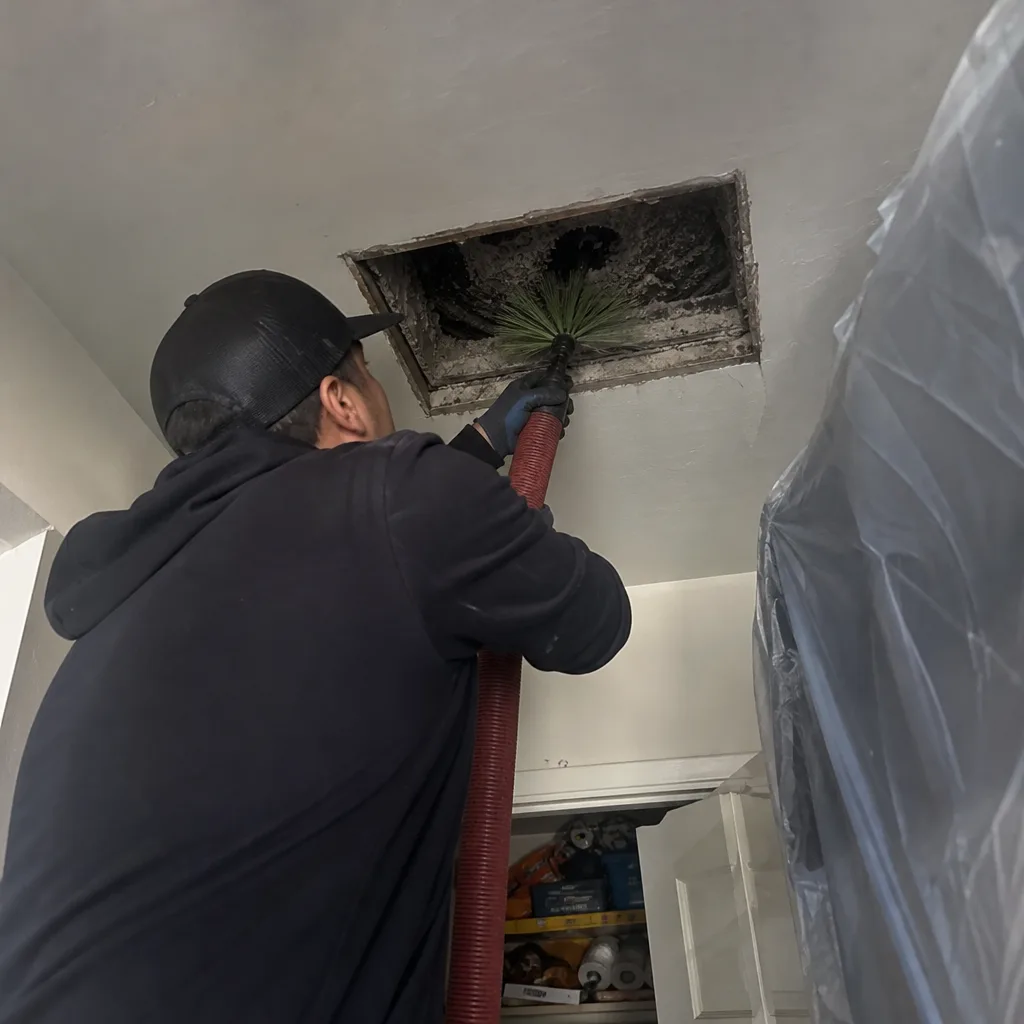
Post-Santa Ana cleaning aligns with the right equipment too. The fine silicates and ash from Santa Ana winds don’t respond well to suction-only cleaning methods. Dislodging them from duct walls requires mechanical agitation from a brush system like Rotobrush, coupled with containment-rated extraction. If you’re investing in cleaning, doing it when the contamination type requires professional-grade equipment rather than DIY approaches makes the service genuinely worth the cost. Our Duct Cleaning Tustin home approach is built around matching the right equipment to what’s actually in your ducts, not a one-size-fits-all process.
Summer Cooling Load and Flex Duct Moisture Risk: What to Inspect Before June
Flex duct systems are common in Tustin residential construction, particularly in homes built during the 1980s through early 2000s across neighborhoods like Tustin Meadows, Tustin Ranch, and the areas surrounding Peters Canyon. Flex duct has specific vulnerabilities that show up most clearly during summer cooling load, and they’re worth inspecting before the season starts in earnest.
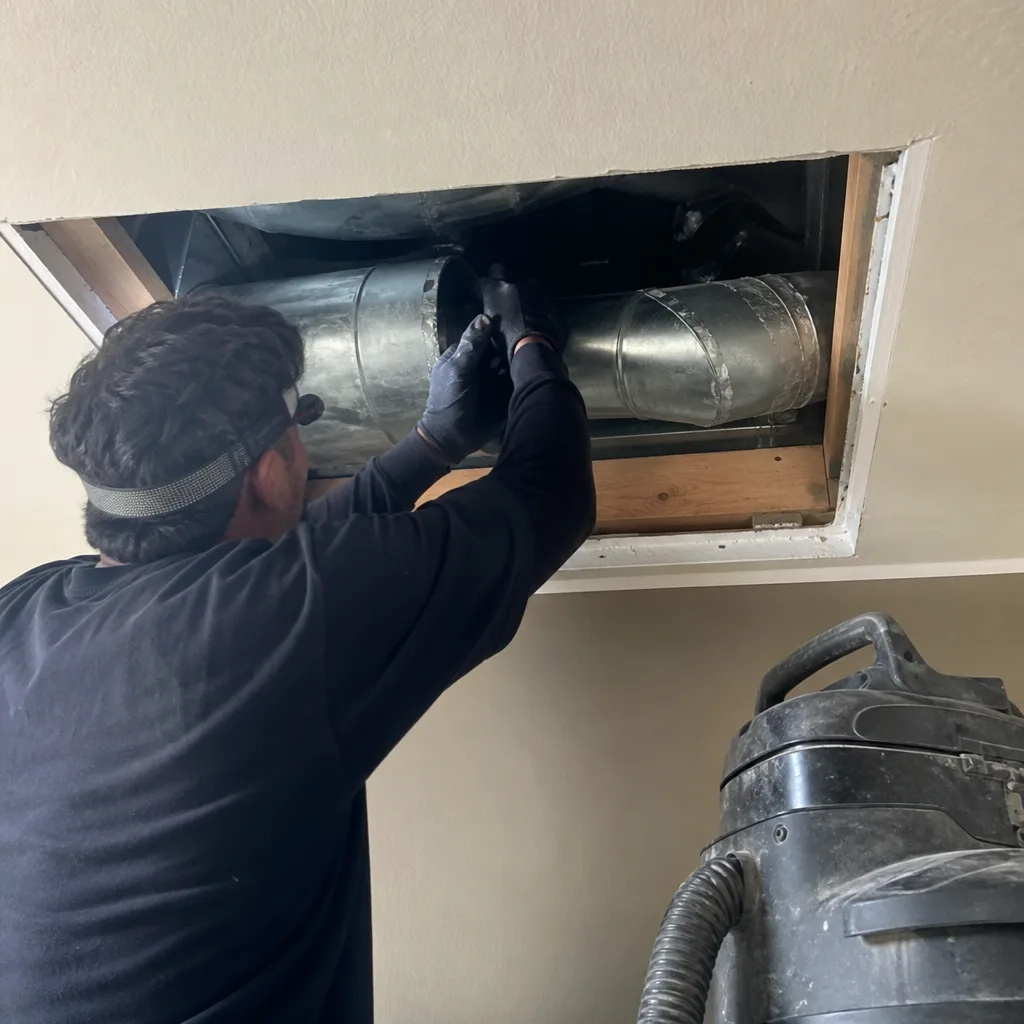
The issue is condensation. When cooled air moves through flex duct installed in hot Tustin attics, the temperature differential between the conditioned air inside and the attic air outside can drop the duct surface below the dew point. Moisture forms on the exterior of the duct. In well-sealed, properly insulated flex duct, this condensation stays outside. But if the flex duct has minor tears, disconnected joints, or compressed insulation from poor installation or age, that moisture can migrate into the duct interior, where it combines with accumulated dust to create a substrate where mold and mildew thrive.
Summer peak cooling in Tustin runs from June through September, with the highest sustained attic temperatures in July and August. The time to inspect for these conditions is May, before the cooling load begins. Here’s what a pre-season inspection should cover:
- Visual check of accessible flex duct runs in the attic for sagging, kinking, or visible damage to the outer vapor barrier. Sagging flex duct reduces airflow and creates low points where condensation can pool.
- Connection inspection at register boxes and plenums. Disconnected or partially disconnected flex duct at these points is the most common source of conditioned air loss and moisture intrusion.
- Insulation assessment around duct runs. Compressed or missing duct insulation on flex duct in unconditioned attic space dramatically increases condensation risk.
- Filter and coil condition check. A dirty evaporator coil adds resistance and creates cold spots that worsen condensation problems. A dirty filter restricts airflow, which reduces duct pressure and makes condensation more likely.
- Diffuser and register inspection for visible moisture staining or dust streaks, which signal condensation inside the duct run.
If inspection reveals torn flex duct or disconnected sections, the fix isn’t just cleaning; it’s repair. Duct Cleaning Tustin performs Air Duct Repair in Tustin specifically so homeowners can address these issues in the same appointment as a cleaning, rather than calling a second contractor and waiting through the hottest part of summer. Flex duct repair requires proper mastic sealing and mechanical fastening to National Comfort Institute standards; it’s not a tape-and-hope job. In our experience, roughly a third of Tustin homes we inspect before summer show at least one flex duct connection that’s leaking or partially separated, and most homeowners have no idea because the duct is in attic space they never access.
Dryer Vent Cleaning Timing: Tustin’s Summer Fire-Risk Connection
Dryer vent fires in Orange County follow a predictable seasonal pattern. The highest incidence occurs during summer and early fall, when dry air, elevated ambient temperatures, and accumulated lint in exhaust ductwork combine to create ideal ignition conditions. Tustin’s summer relative humidity often drops below 20% during Santa Ana periods and sustained heat waves, which turns lint buildup from a slow-drying nuisance into kindling.
Dryer vent cleaning is often treated as an afterthought, something you do when the dryer starts taking two cycles to dry a load. But by the time the symptom shows up, the restriction is already significant. The better approach is preventive timing: clean the dryer vent in late spring, before the summer fire-risk window opens. This removes the lint that accumulated through winter laundry loads (heavier fabrics, more layers, more dryer cycles) before the dry season turns that lint into a hazard.
Tustin homes have specific dryer vent characteristics worth knowing:
- Short exterior vent runs are common in single-story homes in Tustin Meadows and older neighborhoods north of the 5. These still accumulate lint at the termination point, particularly behind exterior vent covers that restrict airflow.
- Long interior vent runs are common in newer two-story construction in Tustin Ranch and Columbus Grove, where laundry rooms are located on upper floors or central hallways. Runs exceeding 15 feet with multiple elbows are lint traps even with regular cleaning of the lint screen.
- Flexible foil or plastic transition ducts behind dryers in older Tustin homes are a specific code concern. Current California Mechanical Code requires rigid metal ductwork for dryer exhaust. If your home still has flexible foil or plastic transition duct behind the dryer, it’s a priority replacement item regardless of cleaning schedule.
Duct Cleaning Tustin provides dedicated Dryer Vent Cleaning in Tustin as a specific service, not as an upsell tacked onto an HVAC visit. Our team uses professional-grade vent cleaning equipment and follows National Air Duct Cleaners Association standards for dryer vent service. The timing recommendation stands: schedule it before June, and if you haven’t had it done in more than two years, schedule it now regardless of the calendar. Tustin’s climate doesn’t forgive deferred dryer vent maintenance.
Tustin’s Seasonal Duct Care Calendar: Inspection vs. Full Cleaning
Here’s a practical month-by-month framework for Tustin homeowners. The key distinction is between inspection (checking condition, identifying issues) and full cleaning (mechanical agitation plus containment extraction). They’re not the same thing, and doing both at the right intervals beats doing either on an arbitrary annual schedule.
October – December: Santa Ana Season
- What’s happening: Wind-driven dust and ash accumulate in ducts. System runs on shoulder-season loads.
- Recommended action: Schedule full duct cleaning in November or early December, after the worst wind events have passed. If you clean every year, this is the window. If you’re on a two-year cycle, prioritize this window over spring.
- Why this window: Removes peak Santa Ana contamination before winter inversion period. System stays clean through holidays when indoor air quality matters most.
January – February: Winter Inversion
- What’s happening: Smog and fine particulate settle during inversion events. HVAC cycles intermittently. Air quality is often visibly poor outside.
- Recommended action: Inspect registers and replace filters monthly. Watch for dust streaks around supply registers, which signal duct leakage or bypass. If you skipped post-Santa Ana cleaning, this is the second-best window before spring pollen adds to the load.
- Why this window: Lower demand period, easier scheduling. But it’s reactive rather than proactive if you missed the primary window.
March – May: Spring Pollen and Construction Dust
- What’s happening: Pollen from Tustin’s mature tree canopy, construction dust from ongoing development, and transitional HVAC cycling.
- Recommended action: Schedule full inspection of flex duct condition before summer cooling starts. Clean only if inspection reveals accumulated Santa Ana debris plus spring pollen. Replace filters, check all supply registers, and verify dryer vent termination is clear.
- Why this window: This is the pre-season inspection window, not the primary cleaning window. Address flex duct moisture risk and dryer vent accumulation before summer heat arrives.
June – September: Summer Cooling Load Peak
- What’s happening: Maximum airflow through ducts, re-suspension of anything inside the system, high attic temperatures, condensation risk in flex duct.
- Recommended action: If you notice persistent dust settling on surfaces, musty smells from registers when AC cycles, or rooms that never quite cool, this is when symptoms appear. Schedule an inspection immediately, not after summer ends. Full cleaning during summer is fine; the system just works harder during the service window.
- Why this window: Symptoms are most visible during peak load. If your ducts are dirty, you’ll see it in airborne dust and cooling performance. Don’t wait for fall.
For most Tustin homeowners, the optimal schedule is: full cleaning every 24 to 36 months, timed for November or December; inspection every May before cooling season; dryer vent cleaning annually, in May or June. Homes with pets, significant renovation history, or occupants with respiratory conditions should compress the cleaning interval to 12 to 24 months.
What Professional Equipment Should Actually Be Used on Tustin Duct Systems
The difference between duct cleaning that changes indoor air quality and duct cleaning that mostly moves dust around comes down to equipment. Tustin’s contamination profile, dominated by fine particulate from Santa Ana winds and construction activity rather than heavy debris, demands equipment that can dislodge what’s stuck to duct walls and capture it rather than recirculating it.
Here’s what we use and why it matters for Tustin homes specifically:
Rotobrush Agitation Systems
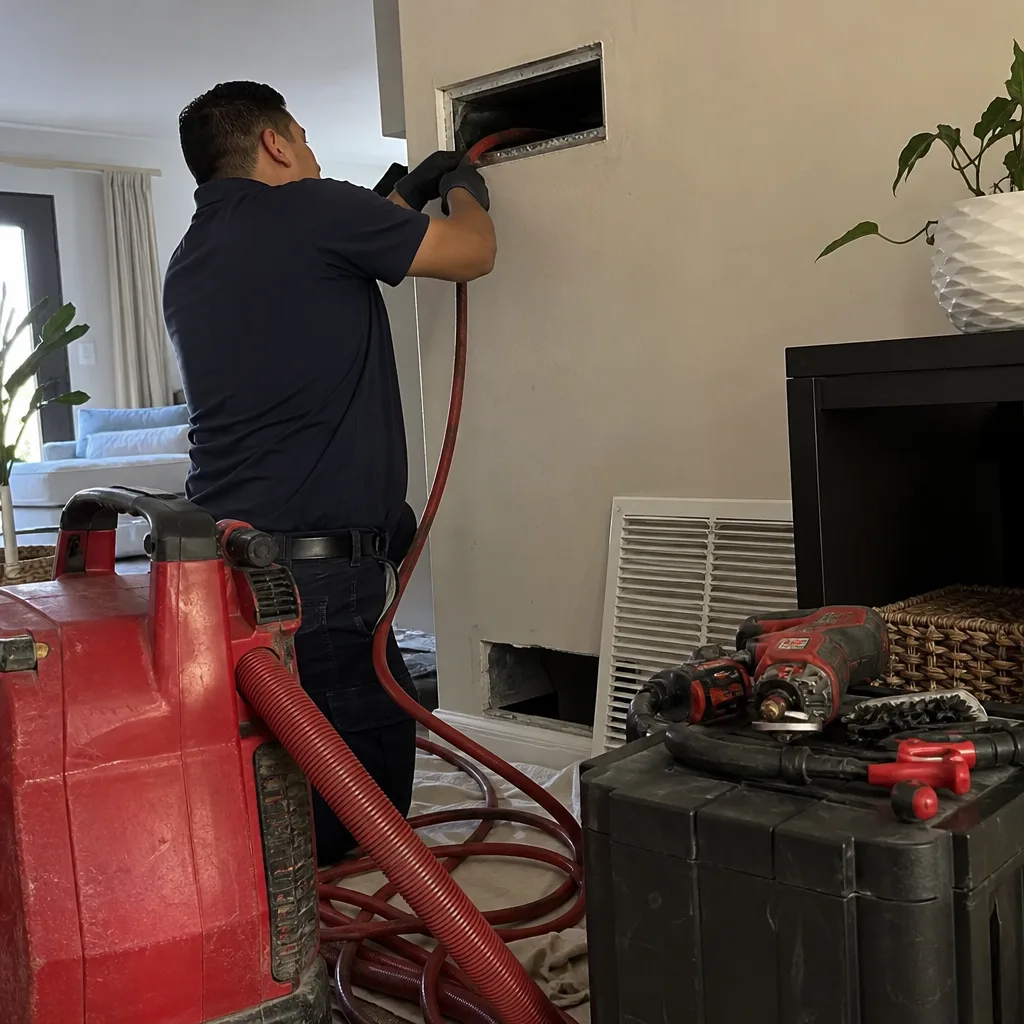
Rotobrush systems combine mechanical brush agitation with simultaneous vacuum extraction. The brush action is what removes the fine silicates and ash particles that Santa Ana winds deposit on duct walls. Suction alone doesn’t do this; those particles adhere through electrostatic charge and microscopic surface texture. The brush breaks that adhesion, and the vacuum extracts the dislodged material immediately. Without mechanical agitation, you’re paying for air movement, not cleaning. This is the distinction we draw when we say professional-grade equipment, not bargain-bin blowers.
Nikro HEPA-Rated Filtration
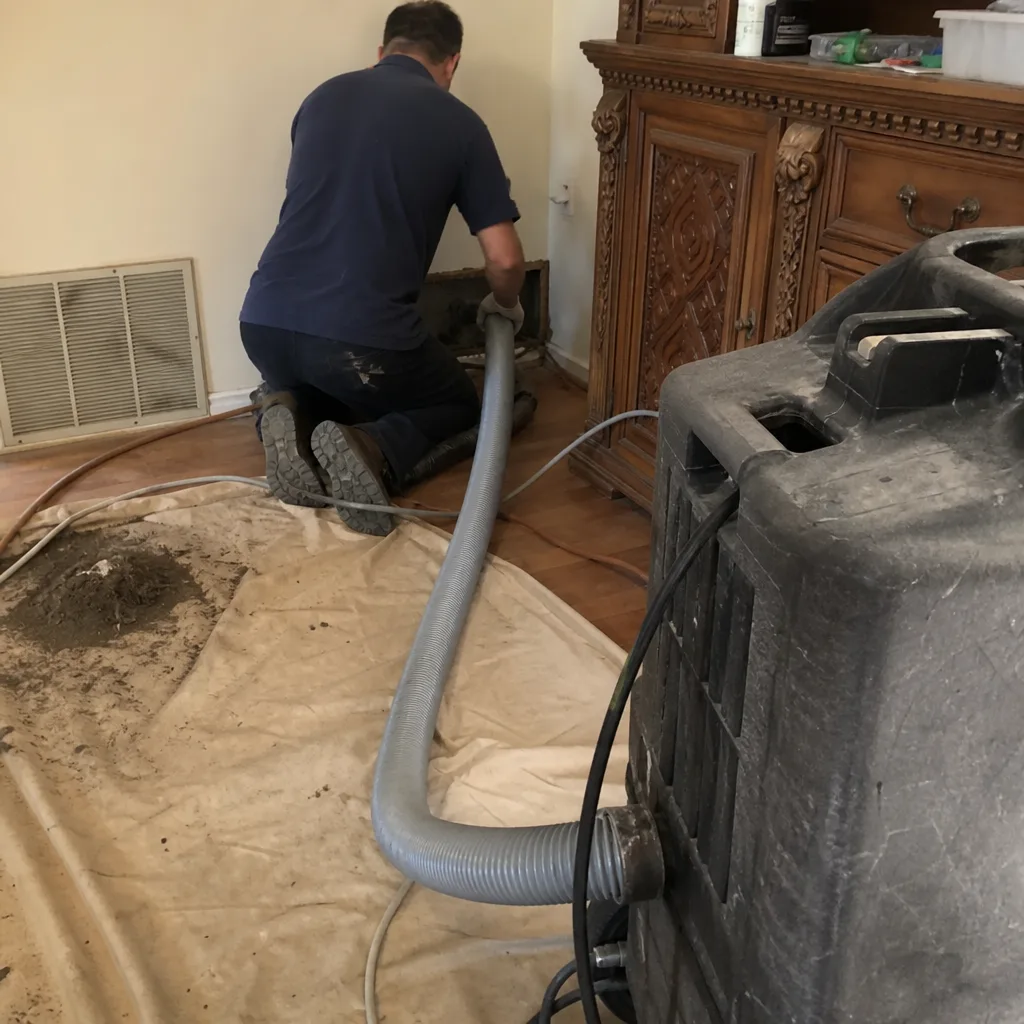
Nikro equipment with HEPA-rated filtration captures particulates at the point of extraction. This matters because the alternative, standard filtration or no filtration at all, simply redistributes the dust you’re trying to remove. In a Tustin home with closed windows and AC running, recirculated cleaning debris is worse than the original problem. HEPA filtration on the extraction side means what comes out of the duct stays out of the duct. The containment approach here follows the same logic that Abatement Technologies equipment brings to professional remediation projects: you control where the particulate goes during the entire process.
Containment During Service
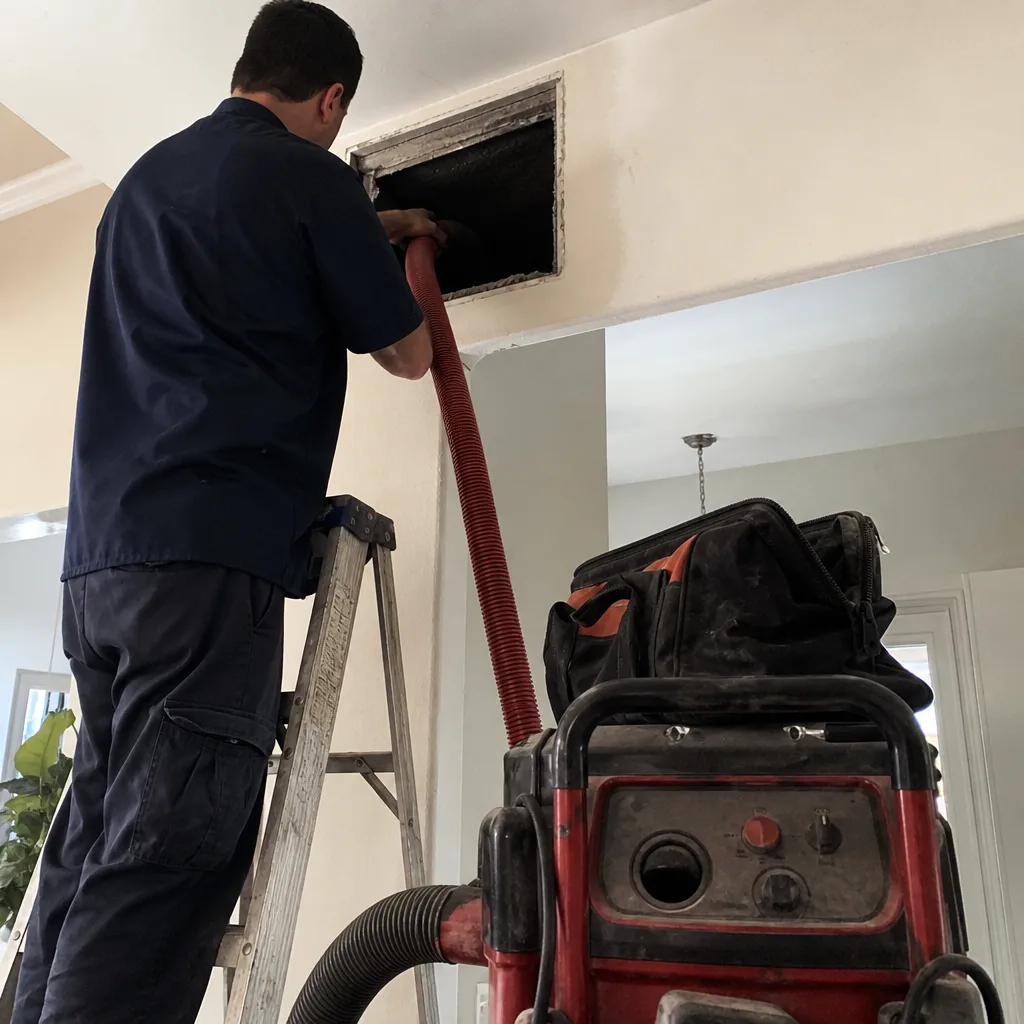
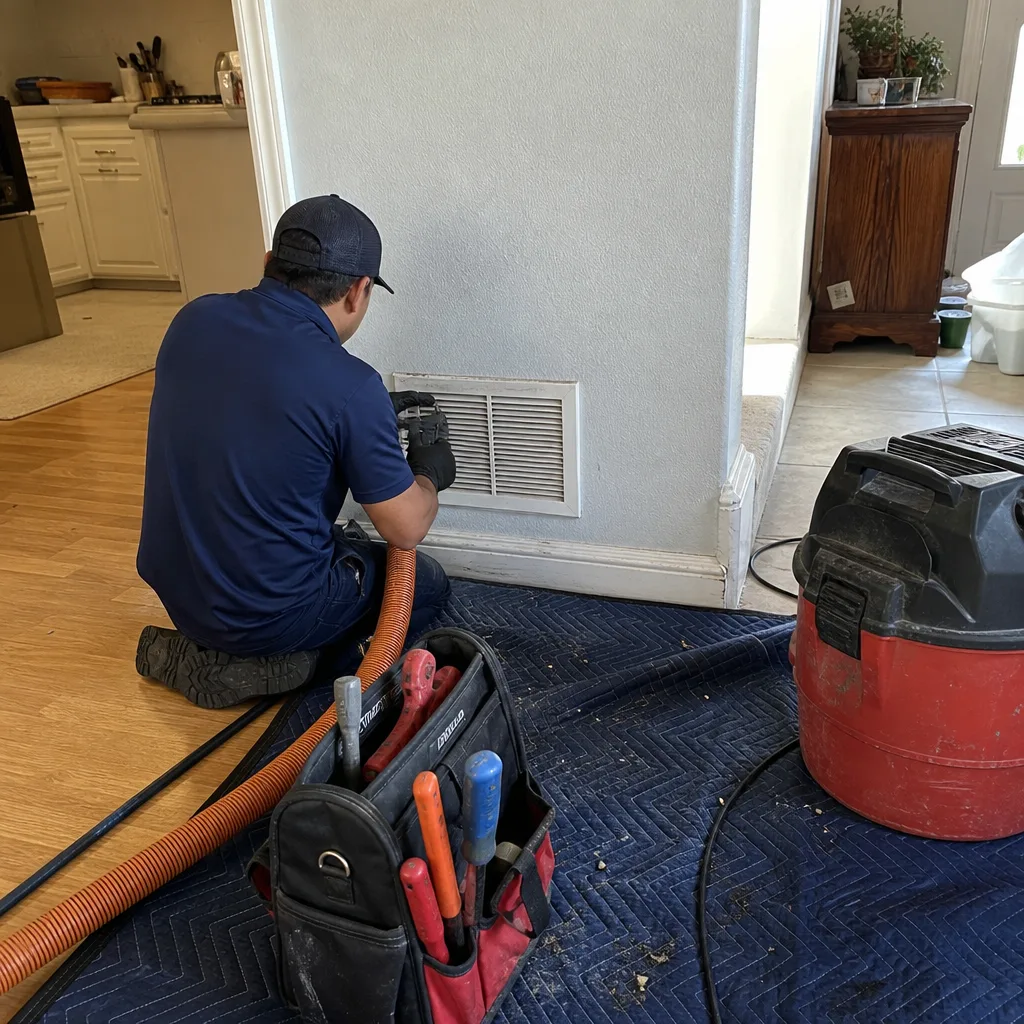
Professional duct cleaning in occupied homes requires containment protocols. This means sealing off the work area to prevent cross-contamination, maintaining negative pressure in the duct system during cleaning, and ensuring that the extraction pathway doesn’t leak into living spaces. The Abatement Technologies equipment standard exists for remediation settings where containment is non-negotiable, and applying those same principles to routine duct cleaning is what separates professional service from what you’d get from a generalist with a portable shop vac. When we say we seal what others miss, this is the specific practice we’re referencing.
Beyond Cleaning: Honeywell and Aprilaire Integration
Cleaning addresses what’s already in the ducts. But Tustin’s air quality challenges don’t stop at the duct interior. Honeywell and Aprilaire indoor air quality products address filtration, purification, and humidity control in ways that complement cleaning. We supply and install these systems because cleaning alone doesn’t solve every air quality problem. A home with significant allergy concerns during Tustin’s spring pollen cycle may benefit from upgraded Aprilaire filtration beyond what standard furnace filters provide. A home with summer humidity issues in the attic may benefit from Honeywell humidity control solutions. The right tool for your duct system sometimes includes what’s installed alongside the ducts, not just what’s inside them.
The equipment question matters because Tustin homeowners deserve to understand what they’re paying for. The price difference between professional cleaning and the coupon specials comes down to exactly this: brush agitation versus suction, HEPA filtration versus recirculation, containment protocols versus plastic sheeting taped to a doorway. If you’re comparing quotes for air duct cleaning in Tustin, ask specifically what equipment will be used and whether it includes mechanical agitation and HEPA filtration. The answer tells you more than the price does.
Common Mistakes to Avoid
- Scheduling cleaning in January because it’s a new year. January through February is the inversion period, after the Santa Ana winds have already deposited contamination. You’re cleaning after the worst has accumulated, then waiting through spring before the system sees real benefit. November or December is the Tustin-appropriate window.
- Thinking spring cleaning applies to duct systems. The national spring-cleaning convention comes from climates with real winters. In Tustin, spring is an inspection window, not a cleaning window. The contamination that matters most arrives in the fall.
- Cleaning the ducts but ignoring the dryer vent. These are separate systems with separate schedules. Dryer vent cleaning should be annual and timed before summer fire-risk peak. Cleaning your HVAC ducts doesn’t clean your dryer vent, and vice versa.
- Using filters that don’t match the contamination profile. Tustin’s particulate is fine. Standard fiberglass filters don’t capture it. Use MERV 8 minimum for basic protection, MERV 11 or higher for allergy concerns. But upgrade carefully; restrictive filters on systems not designed for them reduce airflow and worsen duct condensation issues.
- Waiting for visible symptoms before inspecting. By the time you see dust streaking from registers or smell mustiness when the AC cycles, the buildup is significant and may have already caused secondary issues. Pre-season inspection catches problems before symptoms appear.
- Hiring on price without checking equipment. The coupon specials in Tustin use suction-only methods that don’t remove adhered particulate from duct walls. You’re paying for incomplete work. Ask what machine will be used and whether it includes mechanical agitation and HEPA filtration.
- Ignoring flex duct condition during summer. Condensation inside flex duct creates mold-risk conditions that worsen through summer peak. If inspection reveals damaged flex duct, cleaning alone won’t fix it. Repair and cleaning need to happen together, which is exactly why air duct repair in Tustin should be available from the same contractor.
When to Call a Professional
Call a duct cleaning professional when you notice visible dust accumulation on surfaces within days of cleaning, when registers show dark streaking or visible debris, when rooms consistently fail to reach thermostat set points during Tustin summers, or when you haven’t had ducts cleaned in more than three years. You should also call if you’ve completed renovation work that generated drywall dust, if you’ve had pest intrusion in ductwork, or if occupants have unexplained respiratory symptoms that worsen when the HVAC runs. Inspection is always the first step, and a professional assessment will tell you whether cleaning is the right fix or whether duct repair, filtration upgrades, or dryer vent service addresses the actual problem. Duct Cleaning Tustin offers free estimates in Tustin; call (855) 473-2840 to schedule one.
Frequently Asked Questions
Every 24 to 36 months for most Tustin homes, timed for November or December after Santa Ana wind season. Homes with pets, recent renovations, occupants with allergies or respiratory conditions, or homes near active construction should clean every 12 to 24 months. The timing matters more than the interval; a November cleaning provides measurably better outcomes than a March cleaning in Tustin’s climate.
Air duct cleaning in Tustin typically ranges from $350 to $750 for a standard single-family home, depending on system size, number of registers, accessibility of duct runs, and whether dryer vent cleaning or duct repair is added. Be wary of quotes below $150; they almost always use suction-only methods without mechanical agitation or HEPA filtration, which means the cleaning is incomplete. Call (855) 473-2840 for an exact quote; estimates are free.
The price difference comes down to equipment and process. Budget services use suction-only methods that can’t dislodge adhered particulate from duct walls, and they may not use HEPA filtration, meaning they recirculate dust into your home during the service. Professional services use brush agitation systems plus HEPA-rated extraction and containment protocols, which cost more to operate and take more time. The cheaper quote isn’t a better deal; it’s a different, incomplete service. Ask what equipment will be used before comparing prices.
Ask for before-and-after photos of your actual duct system, specifically the branch ducts and register boxes where buildup accumulates. Professional services using inspection cameras can document what the system looked like before cleaning and what it looks like after. If a company can’t or won’t provide photos, you have no way to verify the work. Duct Cleaning Tustin documents every job with before-and-after images so you can see exactly what was removed.
It can, if the allergies are triggered by what’s inside your ducts: dust mites, accumulated pollen from Tustin’s spring tree canopy, mold spores from condensation in flex duct, or renovation dust. What cleaning can’t do is remove allergens that enter the home through open windows and doors during Santa Ana winds or spring pollen season. Homes with significant allergy concerns often benefit from combining duct cleaning with upgraded filtration from Aprilaire or Honeywell systems, which capture ongoing allergen entry that cleaning can’t prevent.
No, summer is fine for cleaning. The system is running more, which means the service window is shorter and the technician works while the AC is in demand. Summer is actually when dirty duct symptoms are most visible, so if you’re noticing problems during June, July, or August, don’t wait for fall. The only seasonal consideration is that pre-summer inspection is more valuable than pre-summer cleaning; if ducts are clean and flex duct is intact in May, the system is positioned to handle peak cooling load without issues.
The Bottom Line
Tustin’s duct problems follow the calendar, not the national convention. Santa Ana winds deposit the worst contamination in October through December, making post-wind-season cleaning in November and early December the highest-value service window. Summer introduces condensation risk in flex duct systems, making May inspection before cooling season the second key date. Dryer vent cleaning deserves annual attention, timed before summer fire-risk peaks, not as an afterthought when symptoms appear. Matching service timing to these four air-quality cycles produces better indoor air, better system performance, and better value per service dollar than arbitrary annual scheduling. For a free estimate based on your home’s specific system and condition, call Duct Cleaning Tustin at (855) 473-2840 or visit our Duct Cleaning Tustin home page to learn more.
Written by the team at Duct Cleaning Tustin, serving Tustin since 2018.
See the difference
 Before
 After
 Before
 After
 Before
 After